




Morpheus Research’s report alleges that the $7.7B fintech is exaggerating its use of blockchain technology, while Figure and asset manager Van Eck dispute the findings.
Figure Technology Solutions found itself at the center of a public battle this week after short-seller Morpheus Research published a detailed report accusing the blockchain-focused HELOC lender of overstating its use of on-chain technology.
Morpheus, which disclosed it holds short positions in FIGR, called the Nasdaq-listed fintech “little more than a risky home equity lender masquerading as a blockchain innovator.” The firm alleged that Figure’s loan origination system does not rely on blockchain, citing the company’s own SEC filings, and argued that its suite of crypto-native products, including Figure Connect, Democratized Prime, YLDS, and the OPEN equity network, has either stalled or is propped up internally.
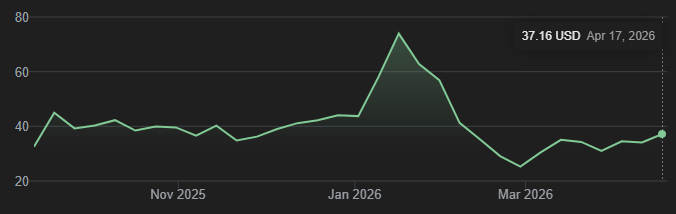
FIGR shares have been under pressure in recent weeks, falling from a January high of $78 to roughly $37 as of today. The company went public in September 2025 at $25 per share, raising $787.5 million.

Figure responded on X, calling the allegations a “misunderstanding of how blockchain is integrated into the Figure loan lifecycle.” The company acknowledged that certain legal steps, particularly for HELOCs, still require traditional documentation to comply with existing regulations. But it said that from the moment a loan is funded, it is represented on blockchain, and all subsequent ownership transfers and pledges are recorded and executed on-chain.
“Participants in our ecosystem are contractually required to transact on blockchain, making it the operational system of record for loan ownership and activity, while traditional documents serve primarily as legal formalities,” the company wrote.
Figure pushed back on claims of deteriorating loan performance, citing a weighted-average delinquency rate of 0.80% across roughly $4.6 billion of securitized assets. It also cited borrower fundamentals, including an average FICO score of approximately 754, average income of around $187,000, and a combined post-loan-to-value ratio of about 62%.
On the question of institutional demand, Figure said over $1.15 billion in whole loan sales were executed on its marketplace in March 2026 alone, and that a recent loan auction on its platform resulted in a record-low spread to the risk-free rate.
Matthew Sigel, head of digital assets research at Van Eck, offered a separate defense of the company. Sigel argued that the bear case relies on a “fundamental misunderstanding of how blockchain features actually work” and focuses on “process issues long solved.” He highlighted Figure’s Digital Asset Registry Technology, or DART, which he said replaces the legacy MERS paper registry with an active digital system that connects via APIs to institutional data aggregators and records liens on the Provenance Blockchain.
Sigel also noted that Figure’s deterministic underwriting model has compressed production costs to roughly $700 per loan, compared with an $11,000 average for legacy banks, and pointed to preliminary Q1 operating data showing marketplace volume of $2.9 billion, up 113% year over year.
Morpheus Research’s report also took aim at the Provenance Blockchain, which Figure describes as an independent Layer 1 network. Morpheus alleged that Figure, its affiliates, and co-founder Mike Cagney collectively control over 65% of the chain’s native HASH governance token, and that a small number of accounts could theoretically halt or alter the network. Figure countered that it holds approximately 25% of outstanding HASH tokens and that key decisions are made through a broader governance framework.
Cagney, who co-founded Figure in 2018, has sold roughly $64 million worth of stock since the IPO at an average price of $28.50, according to the Morpheus report. Figure said the sales occurred pursuant to standard pre-established trading plans or in connection with stock vesting and associated tax obligations.
This article was written with the assistance of AI workflows. All our stories are curated, edited and fact-checked by a human.