










After attackers deposited rsETH from an exploited Kelp bridge and borrowed Wrapped ETH, Aave had frozen WETH across multiple markets.
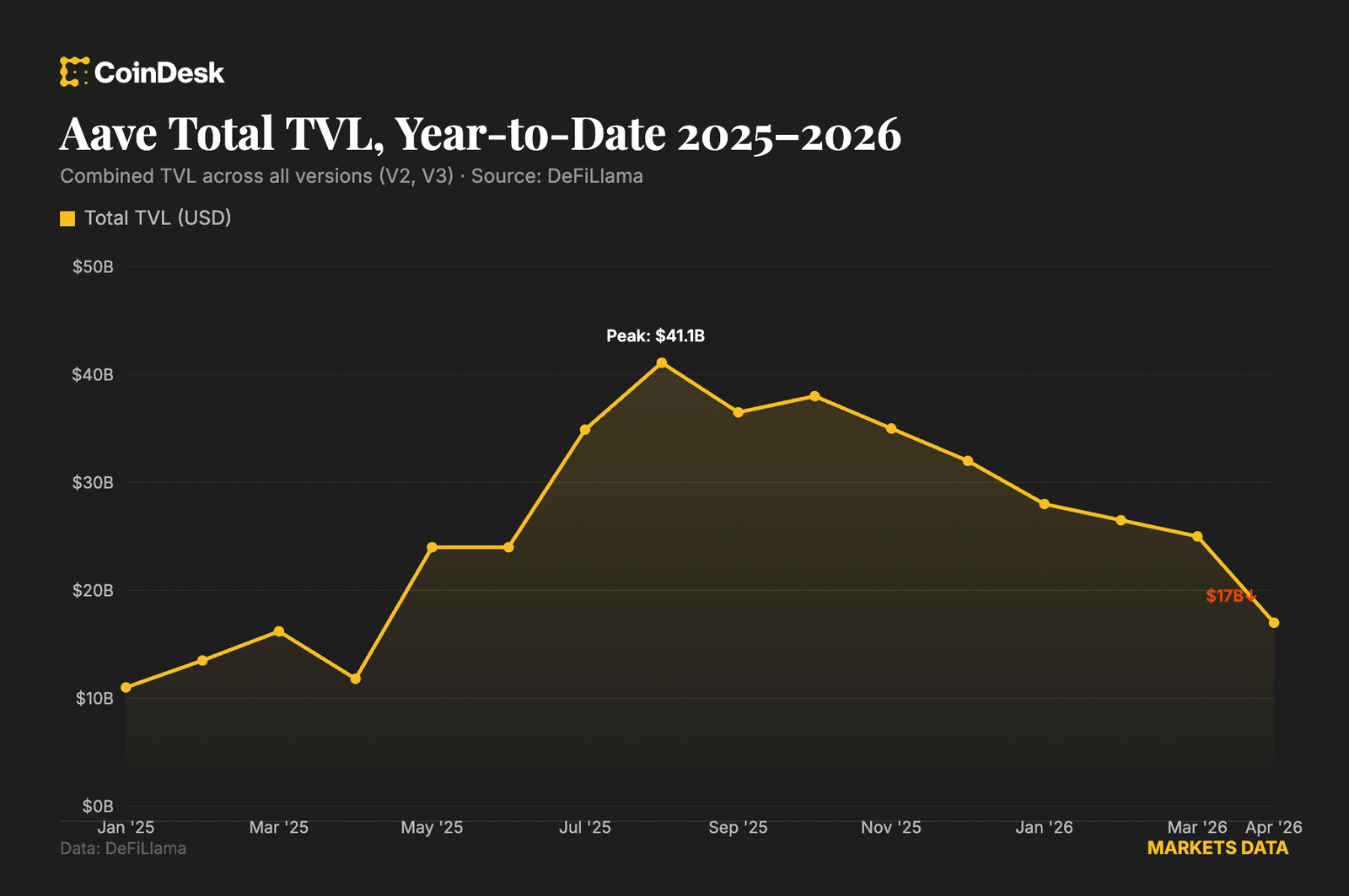
Aave announced earlier today, April 21, that it has unfrozen wrapped ETH (WETH) reserves on its Ethereum Core V3 market, just over 24 hours after locking down WETH across multiple markets in response to the $290 million Kelp bridge exploit.
“WETH reserves on the Ethereum Core V3 market have been unfrozen and users can supply WETH to Ethereum Core V3 again,” Aave wrote on X this morning. WETH is a tokenized version of ETH compatible with decentralized finance smart contracts.
Late evening ET on April 19, Aave had frozen WETH reservers across its Core, Prime, Arbitrum, Base, Mantle, and Linea markets. “This action prevented new borrows against WETH collateral and contained the risk of stress spreading to other reserves, including stablecoins,” and April 20 incident report co-authored by Aae and LlamaRisk explained.
As The Defiant has reported, this year’s largest DeFi exploit so far happened on April 18, when a hacker exploited a vulnerability in liquid restaking protocol Kelp’s LayerZero bridge to forge a cross-chain message, releasing 116,500 KelpDAO Restaked ETH (rsETH), worth over $290 million, without any real tokens being sent.
The attacker deposited most of the rsETH as collateral on Aave and borrowed roughly $190 million in WETH across Ethereum and Arbitrum.
Aave’s risk team froze rsETH across all its markets within hours, then froze WETH itself on April 20 to stop the crisis from spreading further. Users had been unable to withdraw WETH or supply new deposits since.
As of April 21, WETH supply on Ethereum Core V3 is open again, though WETH’s loan-to-value ratio remains at zero, meaning it cannot be used as collateral for new borrowing. WETH on Ethereum Prime, Arbitrum, Base, Mantle, and Linea remains frozen, Aave noted on X.
The decision drew criticism from Spark’s head of strategy, who argued on X that the current interest rate configuration turns the unfreeze into a near-risk-free looping opportunity for holders of liquid staking and restaking tokens (LSTs and LRTs, which represent staked or restaked ETH positions) — keeping WETH locked up and making withdrawals even harder for ordinary depositors.
Depending on how Kelp ultimately allocates losses from the exploit, Aave faces between $124 million and $230 million in bad debt, per the protocol’s April 20 incident report. The Aave DAO holds $181 million in its treasury as of April 20, and says it has already received indicative commitments from ecosystem participants to help cover potential shortfalls.
Kelp is the second-largest liquid restaking protocol in DeFi per DefiLlama data, with $1.55 billion in total value locked across sixteen chains.
This article was written with the assistance of AI workflows. All our stories are curated, edited and fact-checked by a human.