






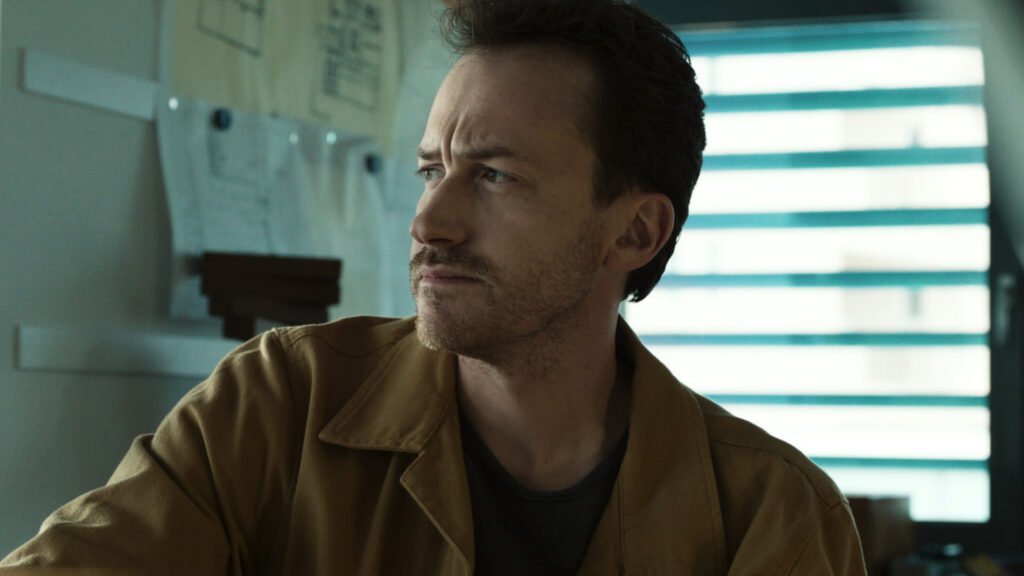
In Monument, directed by Bryan Singer, the Israelis are still in Lebanon after the invasion that began in 1982 with Operation Peace for Galilee. The South Lebanon Army commissions Israeli architect Yacov Rechter, who works together with his son Amnon, to build a monument honoring Lebanese soldiers. While Yacov accepts the deal, Amnon decides to tweak the initial requirements: he will build the monument, but chooses to honor all fallen soldiers, regardless of their origin or cause.
Monument, starring Jon Voight and Joseph Mazzello, is an exercise in drama that, while it doesn’t stand out from others, does a good enough job of telling its compelling story. The film follows the story of the real monument, which lasted only 36 hours before being blown up by those who opposed it. It also follows those who participated in the construction of the massive work of art, and faced the risks of the political climate.
The moral dilemmas in a film of this nature are almost inevitable, given the conflicts portrayed and their relevance in today’s political landscape. Nevertheless, writer Alena Alova simplifies this aspect early on with a first act that heavily relies on a father-son relationship that feels distant from any political matter. This is not the kind of movie that will make you question politics. It is more about the human values that shape art m the driving force that pushes the Rechters to follow through with something they don’t necessarily agree with.
Curiously, the movie depicts the artistic endeavor as a high-risk operation. This fuels the drama beyond the rather sentimental backbone of a father and son bonding over art. When Monument leans into action and thriller elements, it weakens and loses some steam. It’s only when the story embraces its inherent drama that it becomes easier to identify with the characters and, perhaps, understand what they are going through. These dramatic elements feel the strongest in Singer’s return to Hollywood—or at least to the independent side of an industry that has largely distanced itself from him.
Monument is Singer’s first film in years. The director hasn’t recovered after falling from grace and becoming one of Hollywood’s most scandalous figures. How exactly he managed to return to the director’s chair remains a mystery, but Monument is driven by something other than his direction and the presence of Voight, the other controversial figure in the film. Alova’s script and Mazzello’s performance are the standouts.
But beyond the presence of controversial figures like Singer and Voight, there is something valuable here: a deeply emotional movie that takes liberties in telling a story that must be resolved in under two hours, without addressing some of the strongest inconsistencies in its setting. Most of its narrative works, though some moments of humor feel terribly out of place. Does it work in the end? It fulfills its objective of telling a story, bolstered by a strong performance from Mazzello. But is it enough to put Singer back on the map? That’s best left to viewers, as it’s hard to find anything here that might help the director move past his record.


Film critic. Lover of all things horror. Member of the OFCS. RT Approved Critic.