





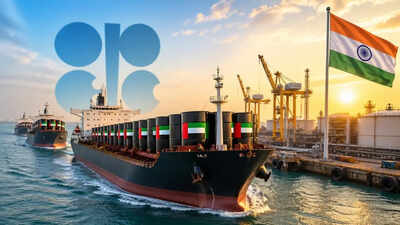
Any increase in UAE’s crude oil production will directly strengthen India’s energy security. (AI image)
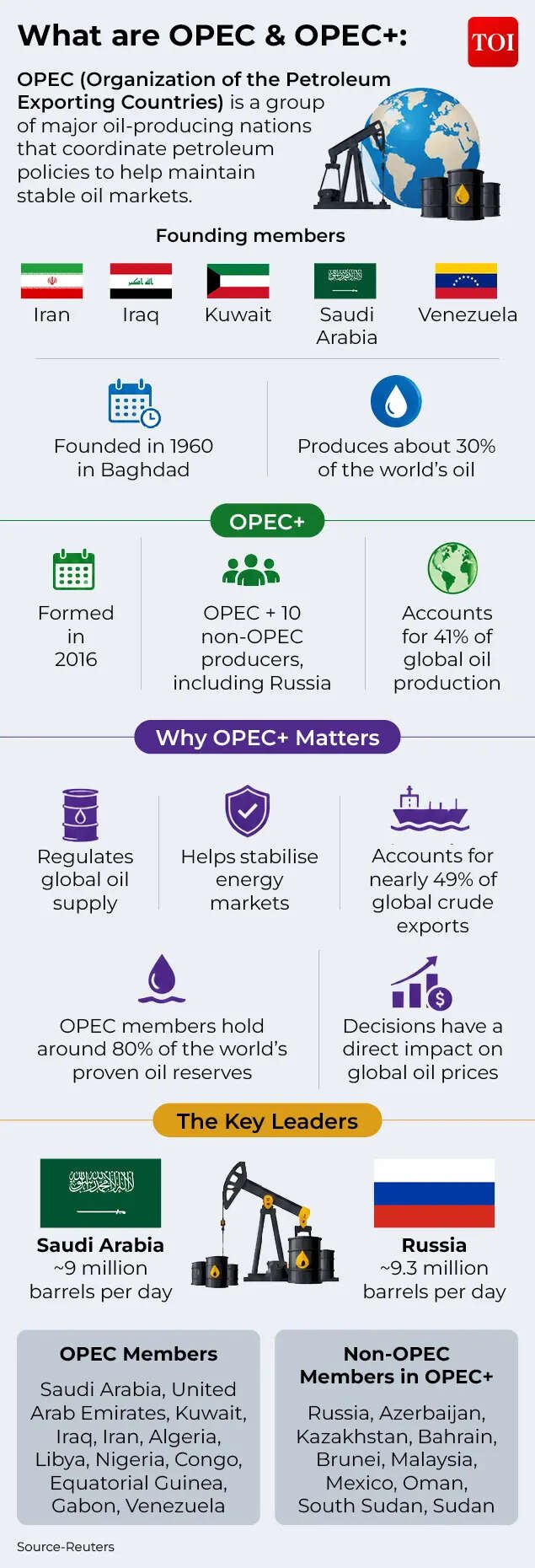
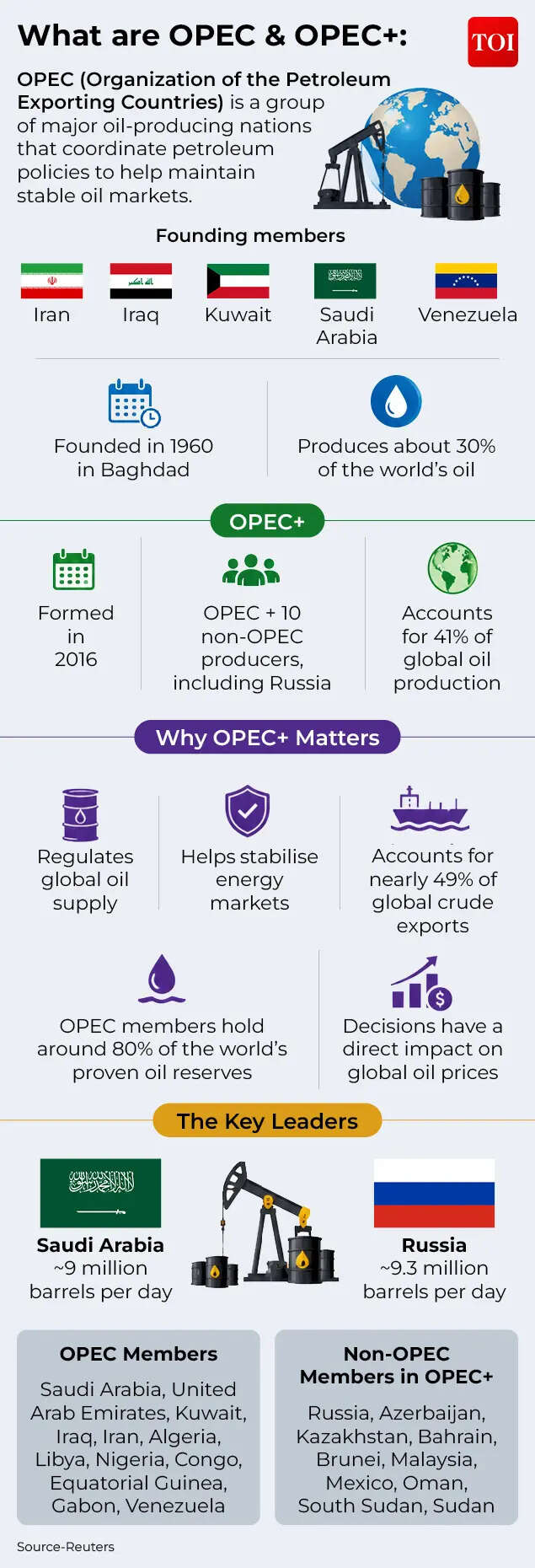
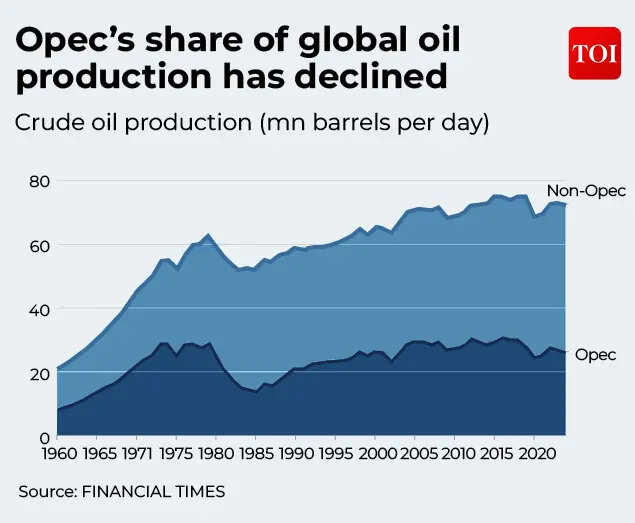
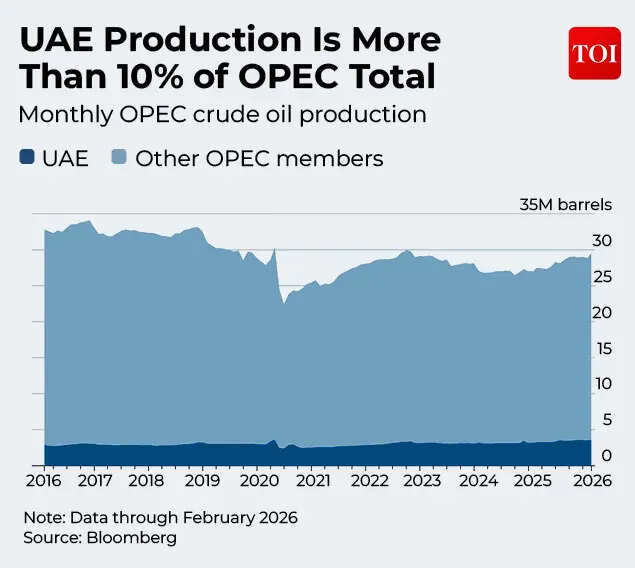
The United Arab Emirates’ (UAE’s) shock move to exit the OPEC and OPEC+ may have far reaching implications for not just world oil markets and oil prices, but also in terms of the relevance of cartels in an increasingly multi polar world. Coming amidst the ongoing blockade of the Strait of Hormuz, through which 20 per cent of the world oil supply transits, UAE’s step taken in what it calls its national interests is a wake up call for the oil market.Experts are saying that UAE’s move, effective May 1, 2026, has completely blindsided OPEC, and in particular Saudi Arabia which de facto controls the grouping. OPEC’s power and ability to influence global oil markets has eroded over years, and UAE’s exit raises important questions on the group’s relevance. Incidentally, OPEC has also faced criticism from US President Donald Trump who has accused them of ‘ripping off the world’ with higher oil prices.
While the OPEC and OPEC+ framework plays a critical role in managing global oil supply, any potential shift by the UAE away from strict quota alignment signals a structural change in supply discipline, says Sourav Mitra, Partner – Oil & Gas, Grant Thornton Bharat.UAE has been investing heavily to increase its production capacity to around 5 million bpd by 2027, and greater production flexibility could lead to incremental supply in the global market. In the short term, this could exert downward pressure on crude prices, especially if it weakens coordinated production cuts, Mitra says.
While the world order evolves, and UAE’s decision impacts other major oil producers around the world, India which imports around 90% of its crude needs may actually stand to benefit.
UAE Among Top 5 Crude Oil Suppliers to India
Data from Kpler, a global real-time data and analytics provider, shows that UAE has consistently ranked among India’s top five crude oil suppliers in the last few years.The UAE has historically been one of India’s top crude oil suppliers, though its share has moderated over time due to diversification. During FY 2024–25, the UAE supplied about 10% of India’s crude oil imports, ranking among the top five suppliers. ICRA data suggests that in the first eleven months of FY2025-26, the share of UAE in India’s oil imports rose to double digit figures of 10.6%.Traditionally, before the surge in discounted Russian crude post-2022, UAE’s share was higher, often in the 10–12% range, competing closely with suppliers like Iraq and Saudi Arabia.However, as Sourav Mitra points out, India’s import basket has become more opportunistic and price-driven, with Russia emerging as the largest supplier (over 30–35% share in recent periods), thereby relatively reducing UAE’s proportion without affecting absolute volumes significantly.UAE remains strategically important due to its geographic proximity, stable supply, and favourable logistics, he says.
How India may benefit
As it looks to diversify its crude procurement sources and reduce dependency on a single source, India may actually benefit from UAE’s OPEC exit. So any increase in UAE’s crude oil production will directly strengthen India’s energy security.Geographical proximity and hence lower transit times is a big advantage of UAE’s oil for India. Hence, as Prashant Vashisht, Senior Vice President and Co-Group Head at ICRA points out, a significant increase in UAE production would aid India in procuring higher volumes.“Accordingly, it is more beneficial for India to procure from West Asia than say US, Brazil due to the lower shipping time, freight costs etc.” he tells TOI.According to Sourav Mitra, in the short term, higher output translates into greater spot crude availability and potentially better pricing terms, especially due to lower freight costs and shorter delivery cycles compared to Atlantic Basin suppliers.
There is also the question of looking for alternatives to Russian crude. India never stopped buying oil from Russia but the volumes reduced drastically at the start of the year as sanctions on some oil majors kicked in. While the US has temporarily waived sanctions amidst the Middle East conflict, the waiver will likely lapse in the coming days or months. Hence, more crude availability from the UAE works in India’s favour as it looks for alternatives to Russian crude to meet demands.Sourav Mitra explains: In the long term, this becomes strategically critical as India evaluates alternatives to Russian crude in case of tightening sanctions by the United States or changes in geopolitical dynamics.“UAE offers a reliable, politically stable, and logistically efficient supply source, making it a viable substitute for a portion of Russian imports. Additionally, long-term contracts with UAE can help India reduce exposure to price volatility and geopolitical risks, ensuring a more balanced import portfolio,” Mitra tells TOI.Gaurav Moda, Partner and Energy Sector Leader, EY-Parthenon India notes that India and the UAE have been stepping up bilateral ties. “In light of recent geopolitical events and UAE’s decisions with regards to its energy priorities, it may open up space for larger bilateral partnerships between India and UAE, particularly in the energy as well as value-add space, given complementary demand-supply positions,” he told TOI.India’s petrochemical ambitions will also benefit – Yet another positive impact would be for India’s ambition to become a global petrochemicals manufacturing hub. Important for building a strong industrial base, increased UAE crude availability can positively support India’s petrochemical expansion strategy.
India is aggressively investing in integrated refining-petrochemical complexes to meet rising domestic demand and reduce imports of chemicals.Mitra of Grant Thornton Bharat says that stable and diversified crude supply from UAE ensures feedstock security, which is crucial for such capital-intensive projects.“Moreover, UAE’s ability to supply specific crude grades compatible with Indian refineries enhances operational efficiency and margins. Over the long term, stronger energy ties with UAE could also extend into downstream partnerships, storage infrastructure, and strategic reserves, aligning with India’s ambition to become a global refining and petrochemical hub. This complements India’s broader goal of increasing the petrochemical intensity of its refining sector from ~13–18% toward global benchmarks,” he explains.Prashant Vashisht says that India procures naphtha from West Asia and is setting up petrochemical capacities. “Any increase in crude sourcing or naphtha from West Asia would aid India’s petrochemicals industry. Generally along with crude natural gas liquids production also ramps up and if UAE increases crude production there could be a possibility of higher natural gas liquids which have a fraction of naphtha as well,” he explains.Yet another benefit could flow in the form of a rise in oil-for-rupee trade. Anindya Banerjee, Head of Research for Currency and Commodities, Kotak Securities told ANI, “…because UAE and India have become strategic partners across various sectors… So I think the oil for rupee program will gain momentum.”“Honestly, we see this as a step towards the ongoing de-dollarisation process, which is happening globally… we are seeing that structure is being unwound, is being reversed, and all these actions are in that direction…”For India, its energy security comes first when it comes to deciding which country to procure crude oil from. Whether it is Russia, Venezuela, US, UAE, or any Middle East country, India is aiming to diversify its crude sources to better manage supply in case of disruptions.In fact, amid the ongoing Strait of Hormuz disruptions, UAE and Saudi Arabia have actually been rerouting supplies to deliver crude to India. It is this reliability that India is looking to secure and UAE’s higher crude oil supply would work to India’s energy security advantage.