







Twenty years is a strange amount of time for a sequel (unless you’re Top Gun: Maverick, in which case you rewrite the rules). It’s long enough for nostalgia to settle into something like myth, but also long enough for the world that made the original possible to quietly slip away.
That tension sits at the center of The Devil Wears Prada 2, and to their credit, director David Frankel and writer Aline Brosh McKenna don’t try to soften it. The first image this sequel gives us is not fashion, or glamour, or even Miranda Priestly; but a table of journalists at an awards ceremony in recognition of the fact that their work still matters. Before one of them comes up to the stage to collect another award, the whole table receives a text message all at the same time. Within seconds, they learn they no longer have jobs. The moment isn’t staged for shock. It unfolds with a kind of bluntness that feels uncomfortably close to how these things actually happen now.
It’s an unusually direct way to begin a film that carries this much cultural baggage, and it immediately changes the terms of engagement. Whatever this sequel is doing, it isn’t interested in simply recreating the pleasures of the first Prada film. It is looking at what remains after those pleasures have faded, and whether they still hold any meaning in a landscape that no longer operates by the same rules.
Here’s where I come clean: I’ve never quite had the same affection for the first film that others seem to carry so easily. Sure, I’ve admired it in parts over the years, particularly in its performances, but it always felt a little too pleased with its own sharpness, more interested in the spectacle of power than in what sustained it. That said, this sequel, arriving with most of the same creative team, caught me off guard not because it improves on every level, but because it feels shaped by the years that have passed.
The World Andy Came Back To Isn’t There Anymore
The Devil Wears Prada 2 reintroduces us to Anne Hathaway’s Andy Sachs as someone who has already lived out the version of success the first film dangled in front of her. She has become a respected journalist, the kind who wins awards, only to have that life collapse in the span of a single moment. Her return to Runway isn’t framed as unfinished business or even temptation. It comes from a much simpler, truer place: there aren’t many options left.
That shift gives the film a different weight. The story is no longer driven by ambition colliding with compromise. It is instead driven by the quieter question of what your work means when the structures that once gave it purpose begin to erode.
You feel that erosion everywhere. Runway, once imagined as an untouchable institution, now exists in a version of the present where nobody seems to be reading magazines anymore. Nigel (Stanley Tucci) says it plainly at one point, and the film doesn’t argue with him. What used to be curated now competes with whatever rises to the top of a feed. The idea of taking time with an image, of building a visual language that asks to be looked at rather than scrolled past, begins to feel almost quaint.
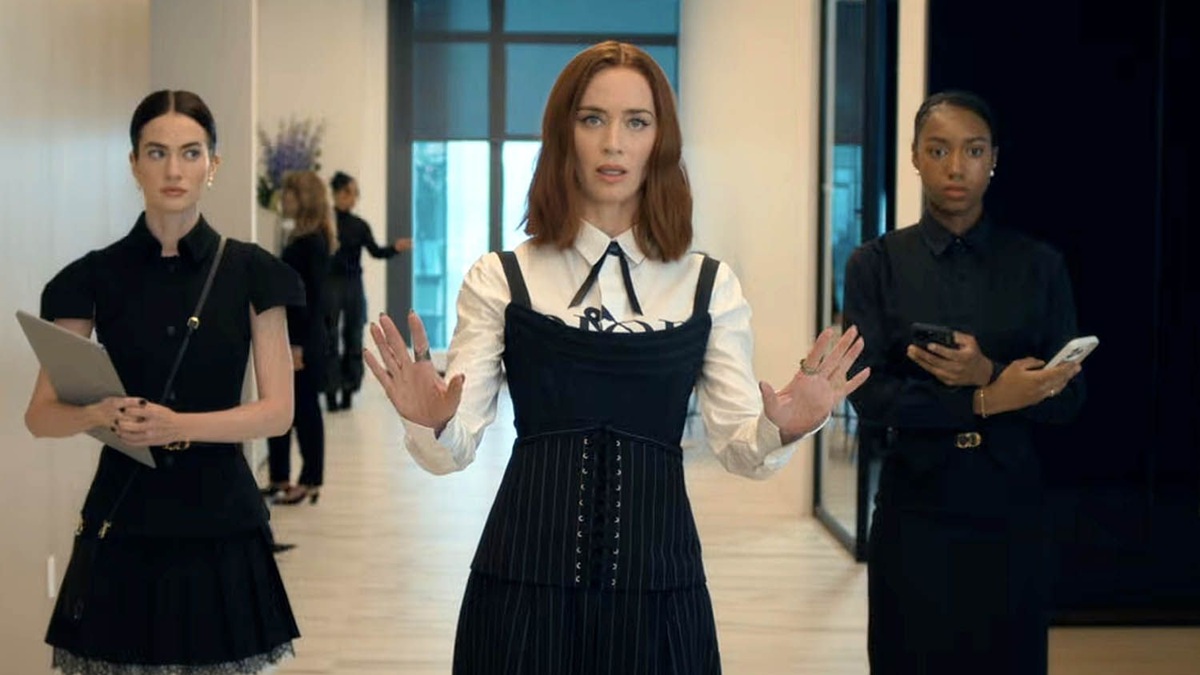
Miranda Priestly at a Time When Taste Becomes Content
Even Miranda Priestly has had to bend, if only slightly. She is still exacting, still capable of reducing a room to silence with a glance, but there are small concessions that accumulate over the course of the film. There is an acceptance of cheaper content, of click-driven thinking, of decisions made to keep the machine running rather than to uphold a standard. Watching her move through that space is one of the more interesting tensions the film sustains. She is not softened so much as she is confronted by a world that no longer needs her in the way it once did.
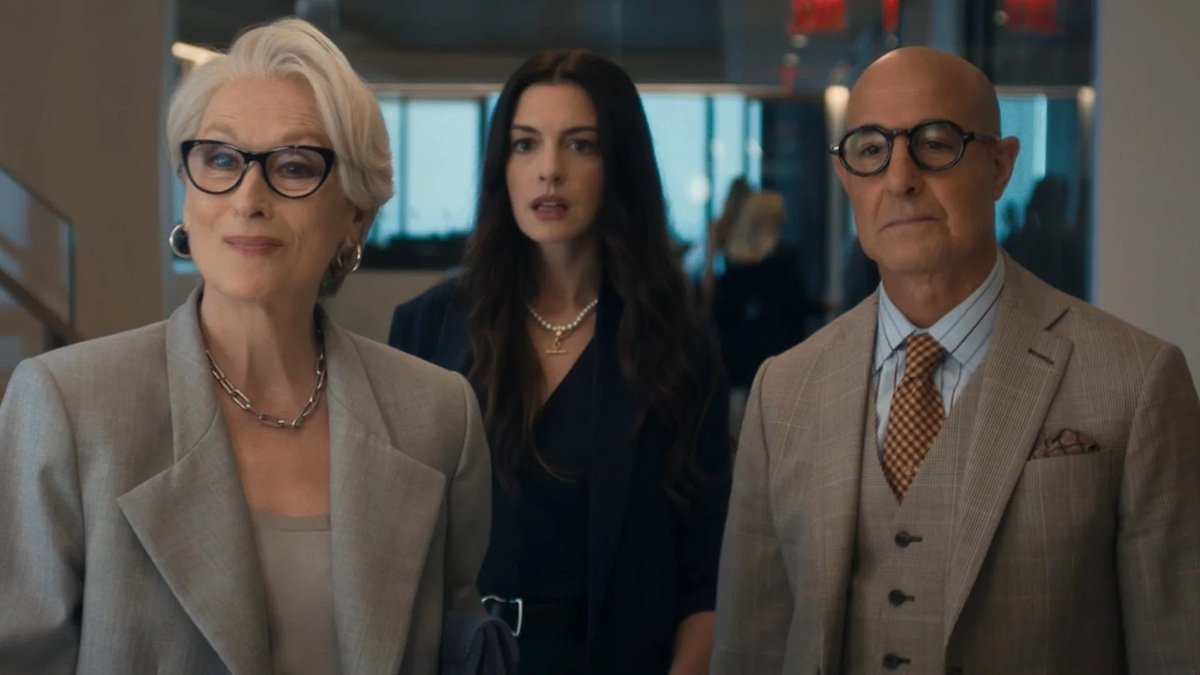
Meryl Streep plays this version of Miranda with a nuance that suggests both control and awareness. There are moments where she seems slightly out of step with the present, as if she is still calibrating herself to rules that have already changed. There are also moments where the performance opens up just enough to show that she understands exactly what is happening. The question is not whether she sees it, but whether she can accept it.
The film expands that anxiety through the introduction of newer forces, particularly Justin Theroux’s Benji, a tech billionaire who speaks with easy confidence about a future shaped by artificial intelligence. His vision of an industry where models, artists, and even the human element become unnecessary is delivered without much hostility, which makes it land more sharply. He isn’t presented as a caricature so much as a symptom of where things are headed. That makes his presence harder to dismiss.
For me, that thread connected directly to what the film seems to be circling around, whether in fashion or journalism. If everything becomes optimized for speed, scale, and efficiency, then the things that once required time, attention, and care begin to feel expendable. The film doesn’t resolve that tension. It lets it sit there, which feels closer to the truth.
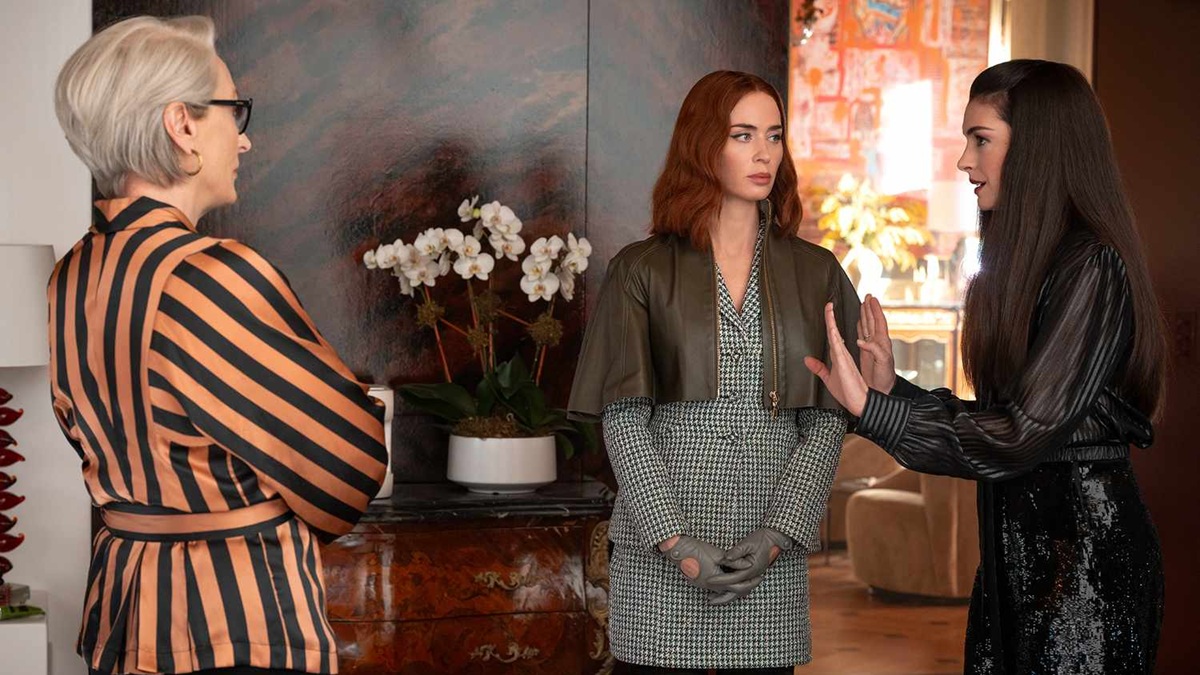
Two Ways to Survive, One Way to Stay
Andy’s own arc carries that uncertainty in a more personal way. Early on, she insists—almost defiantly—that journalism still matters. The line could have come off as self-important in another film, but here it lands because of the context surrounding it. She says it at a moment when her entire profession has just been undercut. It doesn’t sound like a declaration of victory. It sounds like someone trying to hold on to a belief that no longer feels guaranteed.
That sense of searching plays out in her dynamic with Emily (Emily Blunt), now positioned very differently from where we last saw her. They are no longer rivals in the same hierarchy, but they are still measuring themselves against different ideas of success. Andy is looking for purpose, something that justifies the work beyond survival. Emily is operating from a place that feels closer to validation, to control, to staying ahead in a system that rewards it. The film doesn’t force a clean contrast between them, which helps. It allows them to exist as two people shaped by the same world in different ways.
If there is a quiet emotional center here, it might be Nigel. Tucci plays him with a sense of long-held patience, the kind that suggests years of loyalty to a system that has not always returned the same care. He remains sharp, observant, and indispensable, but there is also an undercurrent of fatigue in how he carries himself. Without getting into specifics, the film gives him space to claim something that feels earned, and it lands as one of the more satisfying elements in the story.
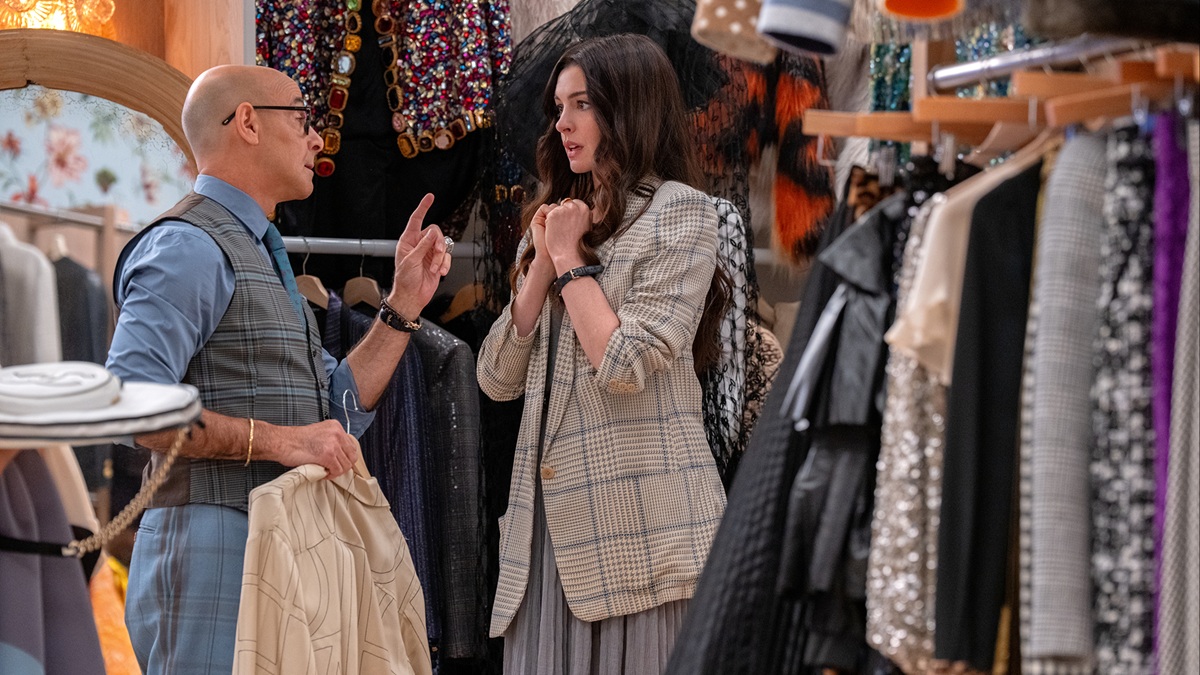
When the Plot Gets in the Way
Unfortunately, the film does not always trust its own strengths. The central plot, which involves corporate maneuvering and attempts to secure Runway’s future through McKinsey-esque means, becomes more elaborate than it needs to be. There are stretches where the narrative feels like it is arranging pieces rather than letting them move on their own. The romantic subplot involving Andy’s new boyfriend never quite finds its footing either. He is present, he serves a purpose, but the film does not invest enough in him for that thread to carry much weight.
There are also moments where the script leans into speechifying, especially when it circles back to the importance of journalism. The ideas themselves are not the problem. The film is already expressing them through its situations and performances. Saying them out loud, more than once, risks flattening what is otherwise a more layered observation.
There are also moments where the film stumbles in ways that feel less excusable. The introduction of Jin Chao (Helen J. Shen), the socially awkward Asian intern who serves as Andy’s assistant, lands with a thud. Even setting aside the name—which feels pulled from a lazy template rather than an actual character—the portrayal leans into familiar shorthand that the film otherwise seems too self-aware to indulge. As someone who doesn’t bristle at every misstep in representation, I still found myself pausing at it. It’s not a dealbreaker, but it does stick out, especially in a film that spends so much time examining how institutions fail to evolve.
Related Review: ‘Michael‘
Looking Good Isn’t What It Used to Be
Also, for a film so invested in surfaces, the visual side is surprisingly uneven. Florian Ballhaus, who returns as cinematographer, doesn’t quite find the same tactile sharpness that made the first film pop; the images here feel flatter, less attentive to texture, as if the world of Runway has lost not just its influence but its visual authority as well. That may be intentional to some degree, but it rarely feels purposeful enough to register as a choice.
Where the film fares better is in Theodore Shapiro’s score, which carries a lighter, more elastic touch than before. While sometimes it’s relentless, it moves with the characters, giving the film the quiet propulsion that the visuals don’t always provide.
To the filmmakers’ credit, the film never quite loses sight of its performers, and that’s ultimately what carries it through the stretches where the narrative slackens. The four central leads, as expected, bring a weight that feels earned. Even functional roles such as Lucy Liu’s Sasha, Benji’s elusive ex-wife, help anchor the larger industrial anxieties the film is trying to wrestle with. Meanwhile, B. J. Novak—playing a successor to a company he neither respects nor emotionally invests in—channels a specific kind of hollow authority that makes the more formulaic plotlines almost forgivable.
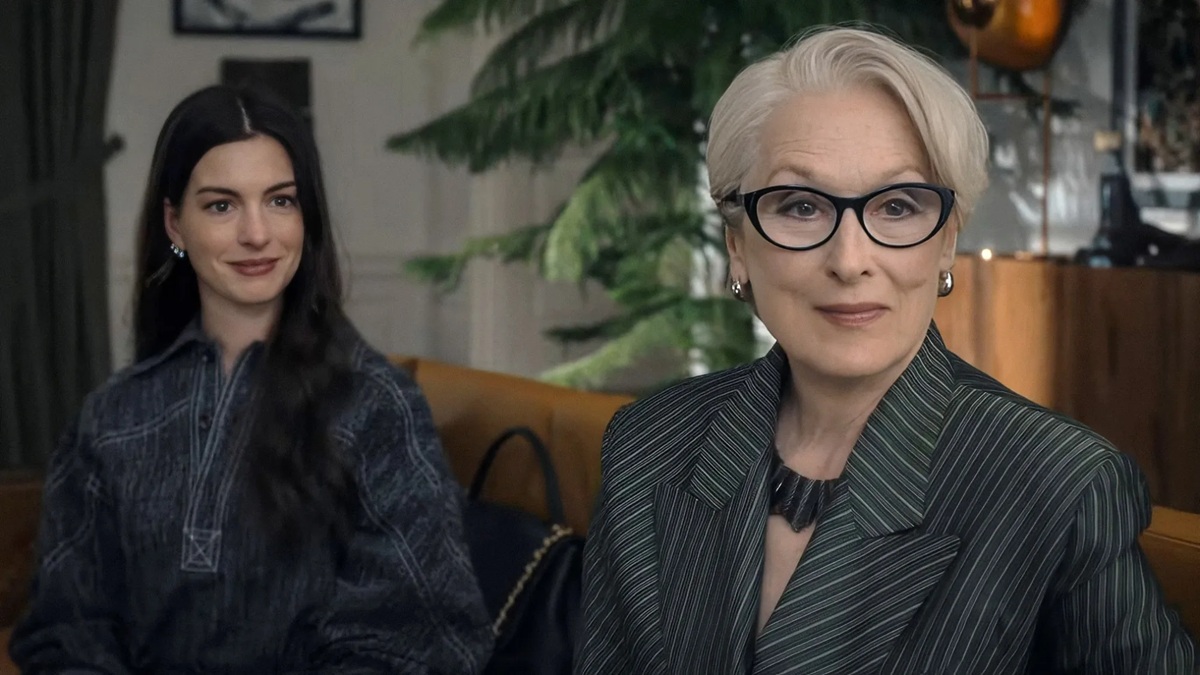
For All Its Flaws, ‘The Devil Wears Prada 2’ Works
Even so, I found myself returning to what the film was doing when it was at its most attentive. It does not try to restore the past, and it does not pretend that things can return to what they were. The callbacks are there, but they feel less like celebrations and more like reminders of a version of the world that no longer quite exists.
What the film understands, maybe better than it lets on, is how much of a person can get wrapped up in a world that no longer has use for them. Not just the job, but the taste, the rhythm of it, the belief that what you’re doing matters in a way that can’t be measured by clicks or reach. Watching that slip—not dramatically, but gradually, almost politely—gives the film its edge.
I didn’t expect to meet The Devil Wears Prada 2 on those terms. I thought it would be lighter on its feet, more interested in revisiting old pleasures than sitting with what’s been lost. Instead, it keeps circling that discomfort, even when it doesn’t quite know what to do with it. Some parts are overworked, others feel half-formed, but there’s enough here that feels lived-in rather than manufactured.
And for once, the return trip isn’t about reclaiming something. It’s about recognizing that it’s already gone, and deciding what you’re willing to hold onto anyway. It shouldn’t work as well as it does, yet here we are. For something I walked into with fairly low expectations, that counts for more than I expected.


A self-described cinephile who can’t stop talking—and writing—about films. Paul also moonlights as ghostwriter and editor for a few memoirs. He currently resides in the Philippines.