






A stunning image of Earth has been making the rounds on social media lately. Captured by astronaut William Anders during the Apollo 8 mission in 1968, Earthrise exemplifies the moment our blue planet was cresting over the lunar horizon. Decades later, the Artemis II space programme brought us another historic image in 2026. Termed Earthset, the planet is seen from the Moon’s orbit once again, this time in sharper detail. It serves as a reminder that humanity’s relationship with space is not a chapter that closed in the 20th century. It is still being written, and today’s children are already part of that story. Today’s generation is growing up in a world where space is not a distant dream. It is a trending topic, a career path, and a source of genuine wonder. When Chandrayaan-3 touched down near the lunar south pole in 2023, making India the first nation to achieve the feat, students across the country erupted in pride. When astronaut Sunita Williams spent months aboard the International Space Station, young minds looked up, literally and figuratively. Earthrise and Earthset, circulating widely on social media, have sparked conversations in classrooms and homes alike. This is not a passing trend. This is a generation that is invested, curious, and ready. The question schools must ask is: are we ready for them? Education today is no longer limited to textbooks and examinations. As technology reshapes how we live and work, schools are expected to prepare students not just for academic success, but also for an uncertain and rapidly evolving future. In this context, subjects like space science, satellite technology, and artificial intelligence (AI) are becoming increasingly relevant. They are no longer niche areas, but fields that influence everyday life, from communication and navigation to national development and innovation. And if we want to turn the children watching Artemis launches on their phones into the scientists and engineers building those missions, the classroom must evolve.
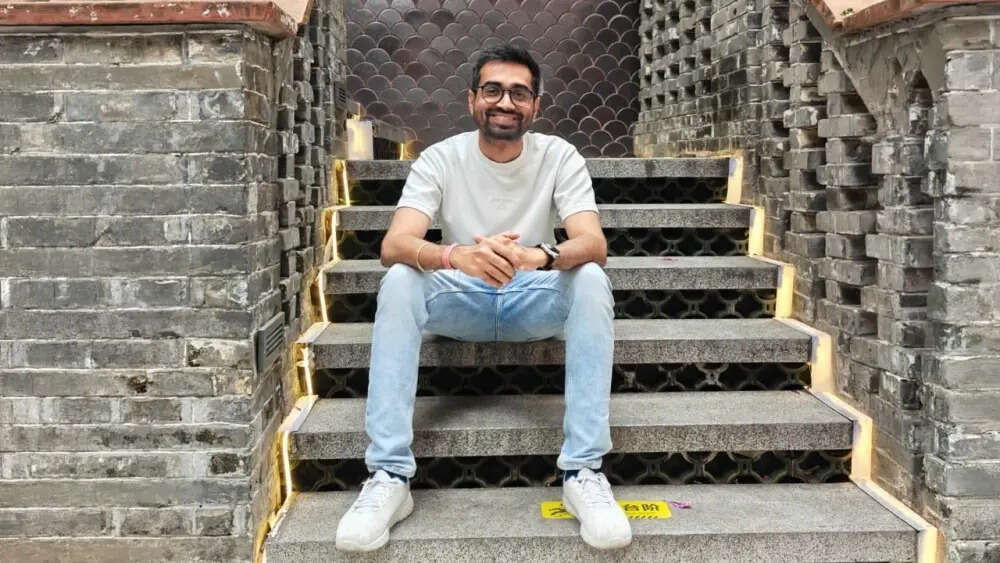
Jimmy Ahuja, Head of STEM, Orchids The International School
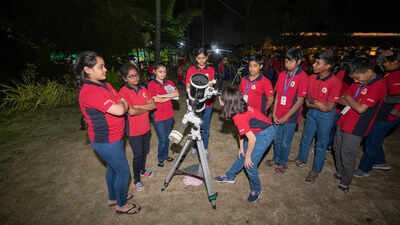
In an exclusive conversation with us, Jimmy Ahuja, Head of STEM at Orchids The International School, sheds light on what future-ready education truly means; how schools can integrate emerging domains effectively; why real-world understanding is more important today, and what it takes to mature the next generation of space champions. Excerpts:Q. Space science has long been seen as a niche subject. What convinced you that it deserves a central place in school education, and what does future-ready actually look like inside a classroom today?A. The expectations from schools have evolved. Beyond strong academics, schools are now expected to prepare students for lifelong learning and change. A future-proof classroom focuses on conceptual understanding rather than on memorisation. Students are encouraged to apply knowledge in unfamiliar situations, adapt to new tools, and take on evolving roles.Space science highlights an important gap. It is no longer seen as niche, as it sits at the intersection of multiple core disciplines: physics, mathematics, engineering, and even data science, making it a powerful tool for integrated learning. While it captures imagination, it is often understood superficially. We began by introducing students to space camps and planetarium experiences and gradually integrated astronomy as a structured part of the curriculum from Grades 3 to 8.In such classrooms, learning is exploratory and student-driven. Technology acts as an enabler, not a distraction. This approach strengthens academic rigour by making learning more meaningful rather than mechanical.Q. Satellites play a crucial role in national security and development. How should schools be incorporating lessons and labs around satellites, rockets, and missiles to prepare young minds for this reality?A. Introducing satellites first requires helping students understand the moon, which is a natural satellite. Once they grasp that certain objects revolve around planets, we begin connecting this idea to everyday experiences. For example, how weather updates or basic wireless phone communication work. This helps them understand different types of waves.Building on this, we explain how these waves are used in real-world applications, such as Google Maps, and how the Global Positioning System works. Students then begin to comprehend that satellites are objects rotating around earth at a certain distance, following fixed orbits.Rockets and missiles are fundamentally linked to gravity and the concept of overcoming it. A satellite can only be launched into space using rockets, which burn sufficient fuel to counter gravitational force. Students first understand gravity through simple experiments and observe how its effect reduces as we move farther away from the Earth’s surface.When they work with basic models like water rockets and observe how they fall back to Earth, they clearly see the effect of gravitational pull. Missiles are then introduced as guided systems that may carry payloads and are designed to detect objects such as drones, missiles, and aircraft.Students explore this through the design of basic radar systems in our Robotics Labs. Using ultrasonic sensors and IR sensors, they create autonomous mini-bots that move along specific paths using signals and detection mechanisms. This helps them connect theoretical concepts with practical applications.Q. With AI rapidly pushing the workforce toward automation, what does shaping and augmenting the capabilities of young minds look like in practice, and why is it the need of the hour?A. As AI transforms industries, the focus must shift from what students learn to how they learn. Schools need to prioritise skills like critical thinking, problem-solving, creativity, and decision-making. Students should be encouraged to question, analyse, and apply knowledge rather than simply recall information.Hands-on learning plays a key role. When students experiment, fail, and iterate, they build resilience and adaptability, which are essential qualities in an AI-driven world. AI literacy is equally important. Students must understand how AI works, its limitations, and its ethical implications. This ensures they become responsible users and creators of technology.As automation increases, human strengths like creativity, empathy, and judgement will become even more valuable. Future-proof education must focus on nurturing these capabilities.Q. Taken together – space science, satellite awareness, and AI readiness – what does a truly future-ready school curriculum look like, and where do most schools fall short today?A. A future-ready curriculum is not just about adding new subjects, but also about integrating them meaningfully into existing learning. One major challenge is teacher preparedness. These are specialised and evolving fields, and not all educators have formal training in them.Infrastructure is another limitation. Access to tools, labs, and technology can be uneven, making implementation difficult for many schools. Additionally, there is an ecosystem gap. While advancements in space science and AI are rapid, their integration into school education is still developing.The focus should be on gradual, consistent progress. Not every student will pursue these fields, but every student should be equipped to understand and engage with them.Q. As the Head of STEM at Orchids, what was the moment or experience that made you personally passionate about bringing space science into school education?A. As the Head of STEM, I have observed that students were deeply engaged in coding, robotics, and DIY activities, such as woodworking and design. At one point, a workshop was planned where students replicated a Mars rover using the knowledge they had gained from these subjects.Around the same time, the launch of Chandrayaan-3 created significant excitement. Students were inspired by India becoming the first nation to achieve a soft landing near the lunar south pole. This moment sparked a deeper realisation that students should not limit themselves to building ground-based robots but should also explore space science. This included learning about satellites, asteroids, planetary surfaces, comets, and even exoplanets through activities that replicate real-world scientific exploration. As learning progressed, it became important to go beyond what is immediately visible and introduce concepts that cannot be observed without tools like telescopes.This exposure helps students become more open to new scientific ideas. It also prepares them to build advanced systems in the future, contribute meaningfully to technology, and grow into capable individuals who can support the development of the nation.Q. Many Indian parents still measure academic success on the basis of marks and board exam performance. How do you convince them that time spent on space science labs and rocketry are equally valuable?A. Rather than dismissing the importance of marks, the approach is to reframe the conversation. Space science learning is closely connected to core academic concepts. Activities in labs strengthen understanding of physics, mathematics, and problem-solving. When students build rockets or study satellites, they apply concepts like motion, force, and data interpretation. This deepens their understanding of traditional subjects.Visible outcomes also build trust. When parents see their children explaining concepts confidently or connecting theory to real-world applications, their perception of learning begins to shift.It is equally important to highlight long-term value. Skills like critical thinking, adaptability, and familiarity with emerging fields are essential for future careers. These experiences are not distractions from academic success. They are contributors to it.If this conversation has sparked something in you, here is a chance to fan that flame. Orchids The International School is bringing Go-Cosmo to several cities, a space-themed event series open to students from all schools, with something exciting for every age group.Disclaimer: This article has been produced on behalf of Orchids The International School by Times Internet’s Spotlight team.