





Senate and House Democrats have launched an investigation into whether pardons and commutations issued by President Trump were driven by “pay-to-play dynamics,” according to letters obtained by CBS News.
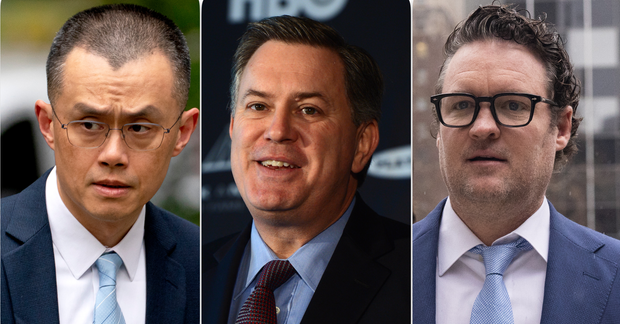
Among the pardons being probed by lawmakers are those granted to cryptocurrency billionaire Changpeng Zhao, who pleaded guilty to money laundering; nursing home operator Joseph Schwartz, who was convicted of tax crimes; and entrepreneur Trevor Milton, sentenced to four years in prison in 2023 after being convicted of lying to investors.
On Thursday, California congressmen Dave Min and Raul Ruiz, as well as Vermont senator Peter Welch sent letters to more than a dozen recipients of executive clemency — seeking to unearth how they may have received favorable treatment from Mr. Trump or his advisers “through intermediaries, financial contributions, or other forms of influence.”
The Democrats are also examining the impact of pardons and commutations on thousands of financial victims. The letters note that Mr. Trump’s acts of clemency are “depriving victims of compensation and justice,” citing the president’s elimination of hundreds of millions of dollars in restitution — money owed to crime victims — and fines.
Clemency has come under scrutiny during Mr. Trump’s second term with his pardons or commutations of the sentences of a number of allies who faced prosecution — as well as those who hired people close to him. In the letters, the Democrats argued the president has appeared to reward his allies in a manner that departs from the Supreme Court’s description of executive clemency “as ‘an act of grace’ exercised for the ‘public welfare.'”
The lawmakers asked for any contracts showing how much money has been paid by the clemency recipients to lawyers, lobbyists, social media influencers and others who advocated on their behalf to Mr. Trump.
Getty Images 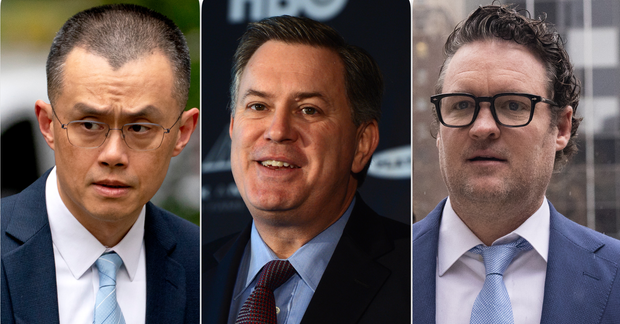
They also requested communications between the recipients or people acting on their behalf with federal officials, records showing any donations to Mr. Trump or groups affiliated with him and other documents related to clemency efforts.
“If they don’t respond, they run the risk of highlighting themselves — of being the subjects of future congressional investigations and creating more of a target on their backs for potential further criminal prosecutions,” Min told CBS News, adding that the idea that people can “get around the justice system” after being convicted “gets to the heart of what is wrong with America right now under this administration.”
Because Democrats are in the minority in both the House and the Senate, they lack subpoena power and can only request cooperation from the pardon recipients. But this unusual pipeline for clemency will likely be a top oversight area for Democrats should they take back majorities in either chamber of Congress in the midterm elections this year. That would give them the authority to compel documents on clemency and other areas of oversight.
Perhaps the most high-profile clemency act that the lawmakers are investigating is Mr. Trump’s pardon last year of Zhao, the founder of crypto exchange Binance. Federal disclosures show that the clemency push was led by Ches McDowell, a lawyer and lobbyist who is a friend of Donald Trump Jr., as well as Teresa Goody Guillén, a lawyer who has represented Zach Witkoff, the son of Mr. Trump’s Middle East envoy, Steve Witkoff.
In a letter to Zhao, Democrats cited reporting on how Binance partnered with World Liberty Financial, a crypto company founded by the Trump and Witkoff families. “Public reporting also indicates that you and Binance played an important role in brokering a massive investment in the Trump family’s crypto business, surging the Trump Stablecoin to a $2.1 billion valuation,” the letter read.
The White House denied any impropriety in the Zhao pardon and others. Press secretary Karoline Leavitt said that anyone “spending money to lobby for pardons is foolishly wasting their money” and that the administration has a “robust pardon review process.” Goody Guillén has also said there was no “quid pro quo.”
“President Trump’s abuse of the presidential pardon has let criminals walk free and deprived victims of hundreds of millions of dollars in restitution, with little to no explanation,” said Welch, a member of the Senate Judiciary Committee, which oversees clemency at the Department of Justice. The DOJ traditionally handles pardons and commutations but its former pardon attorney, Liz Oyer, previously told CBS News that the Trump administration “appears to be working around” the agency rather than with it “to vet and review applications for pardons.”
“This was a departure from over 100 years of practice,” Oyer said, claiming that clemency has been run out of the White House “without input from the Office of the Pardon Attorney.”
The letters to the clemency recipients asked for responses by May 22.
Schwartz, who pleaded guilty to charges stemming from a $38 million payroll tax fraud scheme involving nursing homes he owned, had served just three months of his three-year prison sentence outside New York City when Mr. Trump pardoned him. It followed Schwartz’s payments to right-wing operatives and lawyers who are close to the president and Alice Marie Johnson, Mr. Trump’s “pardon czar,” the New York Times reported.
The lawmakers are also probing clemency to former healthcare executive Lawrence Duran — who was convicted of Medicare fraud and received a commutation from Mr. Trump wiping away $87 million in owed restitution. And they sent questions to Milton, the founder of the since-bankrupt automotive company Nikola.
In March 2025, Mr. Trump pardoned Milton — letting him off the hook for roughly $680 million in restitution to shareholders. It came after Milton and his wife donated at least $3 million to Mr. Trump’s 2024 campaign and other political groups in his orbit.
A White House official said earlier this year that Milton’s donations “played absolutely no role” in his pardon.
Others facing congressional scrutiny include former private equity executive David Gentile, who was convicted of running a $1.6 billion Ponzi scheme and saw his $15.5 million in restitution wiped away when Mr. Trump commuted his sentence. Senate Democrats raised concerns about the commutation last December — arguing that it “represents a betrayal of more than 17,000 innocent Americans from all walks of the political spectrum that lost over $1 billion in life savings because of his crimes.”
Also receiving letters were Paul Walczak, a pardoned tax cheat whose mother raised millions of dollars for Mr. Trump, and real estate developer Timothy Leiweke — who was pardoned after hiring lawyer and Trump ally Trey Gowdy following a conviction for alleged contract bid rigging. After that pardon, senior Justice Department officials “felt completely kneecapped by the president,” a former Trump administration official told The Free Press.
“The thing that rankles me even further is the deprivation of restitution, money that they were supposed to pay back to the victims of their frauds,” Min, a member of the House Oversight Committee, told CBS News.
“Now the victims get hit twice, because not only are the people that defrauded them not serving their time — not paying their debt to society — they’re literally not paying their debts to the people they defrauded,” the congressman added.