






Key takeaways:
- A weakening US dollar and higher government debt favor scarce assets, even as spot Bitcoin ETF outflows and low retail demand spark some concern.
- Traders expect Kevin Warsh to become Fed Chair, which could benefit Bitcoin.
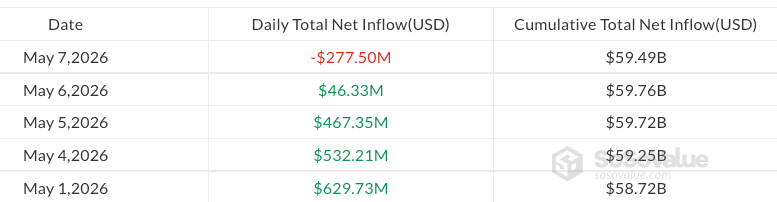
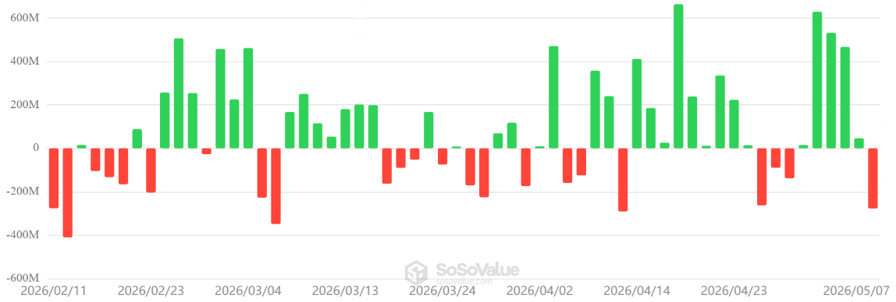
Bitcoin (BTC) stagnated near $80,000 on Friday following a rejection at $82,500. Traders grew anxious after US-listed spot Bitcoin exchange-traded funds (ETFs) posted $268 million in net outflows on Thursday.
Meanwhile, $270 million in leveraged bullish Bitcoin futures positions were liquidated within 24 hours, forcing investors to evaluate whether a sustained bear market is finally taking hold.

Bitcoin US-listed spot ETFs daily net flows, USD. Source: SoSoValue
The reversal in Bitcoin spot ETF flows on Thursday broke a four-day positive streak. This shift is particularly notable because the S&P 500 Index surged to an all-time high on Friday. There is no evidence of a broad derisking trend across traditional markets, as the US small-cap Russell 2000 Index remains within 2% of its own record peak.
Are Bitcoin retail traders jumping ship?
Underwhelming earnings reports from Coinbase and Robinhood indicated a sharp drop in retail engagement, sparking concerns about Bitcoin’s bull run sustainability. Coinbase recorded a 31% revenue decline compared to the first quarter of 2025, while crypto-related revenue on Robinhood plummeted by 47% over the same period.

Exchanges’ top traders Bitcoin long-to-short ratio. Source: CoinGlass
Top traders at Binance have slashed their Bitcoin longs to the lowest levels in over four weeks. In contrast, whales and market makers at OKX added bullish exposure as the Bitcoin price broke above $80,000 on Tuesday, but they subsequently reduced those positions on Friday.
Overall, the 0.27 long-to-short ratio among top traders at OKX remains a far cry from the 1.20 mark seen just ten days prior.
Weaker US dollar and odds of Strategic Bitcoin Reserves
While Bitcoin derivatives show moderate bearishness, two distinct factors support a sustained bull run. The US dollar has weakened against other major fiat currencies over the past two months. Whether intended by the US administration or not, this move reduces incentives to hold US Treasuries, especially given the current high oil prices.

Brent crude oil, USD (left) vs. US dollar strength index (right). Source: TradingView
The growing US government debt creates an environment favoring scarce assets. Even if the stock market and gold remain the primary options for most investors, Bitcoin tends to benefit from a weaker US dollar.
Regardless of the macroeconomic environment, expectations are rising that the US Strategic Bitcoin Reserve could start adding BTC, and Kevin Warsh is expected to replace Fed Chair Jerome Powell in the near term. Warsh recently reported significant holdings in cryptocurrency assets and companies and has previously expressed pro-Bitcoin views.
Related: Bitcoin bulls target $115K by December–Does data back the expectation?

Odds of the US adding any amount of Bitcoin to its reserves by 2027. Source: Polymarket
While still considered a long shot, the path to budget-neutral strategies for acquiring Bitcoin has been cited by US Treasury Secretary Scott Bessent in the past. Consequently, potential outflows from fixed-income investments due to a weaker US dollar and higher inflation increase the odds of sustained bullish momentum in Bitcoin.
The recent outflows from spot Bitcoin ETFs do not necessarily indicate that a bear market is underway, even if top traders’ current positioning signals a lack of confidence in a short-term rally.