





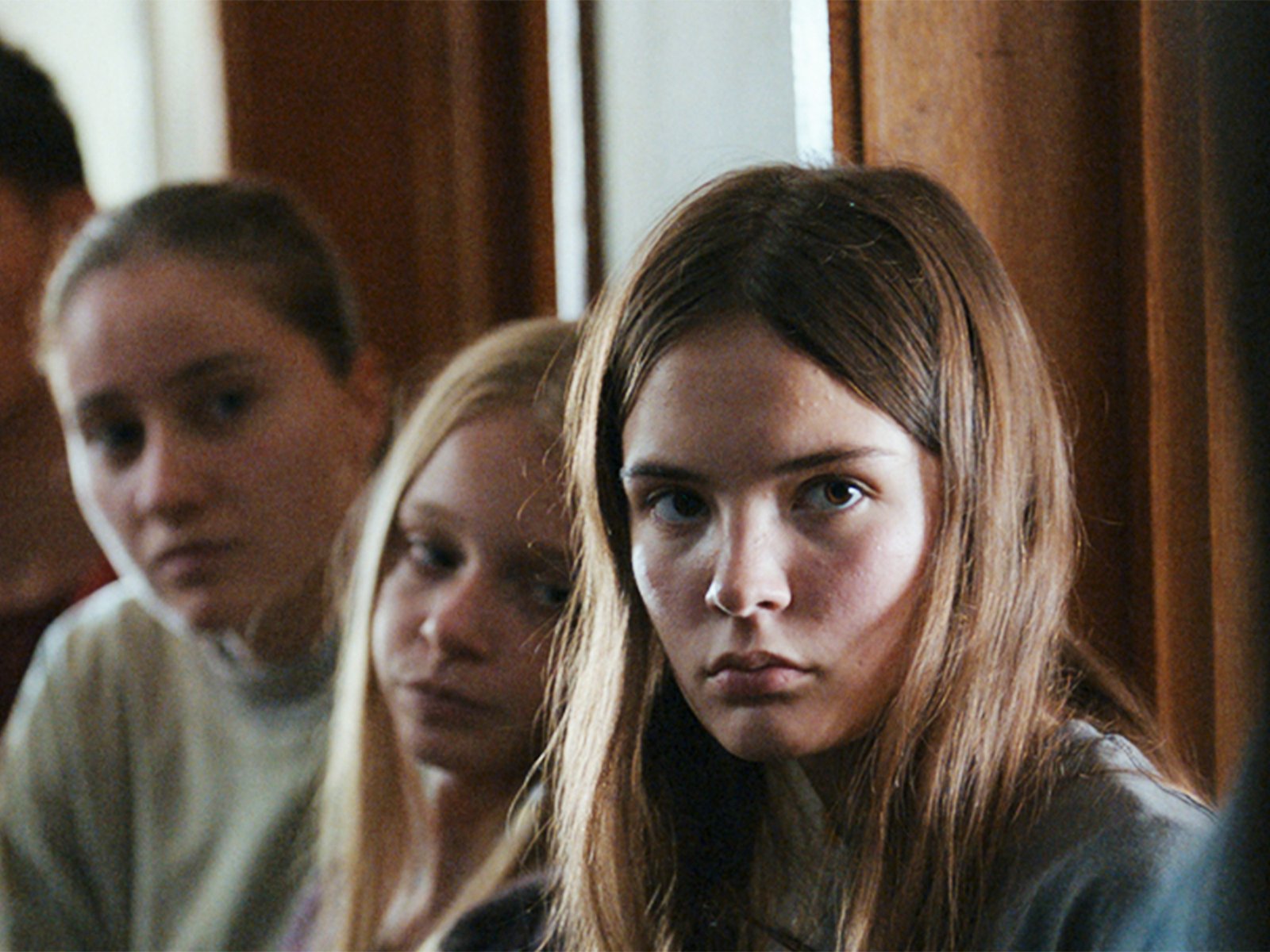
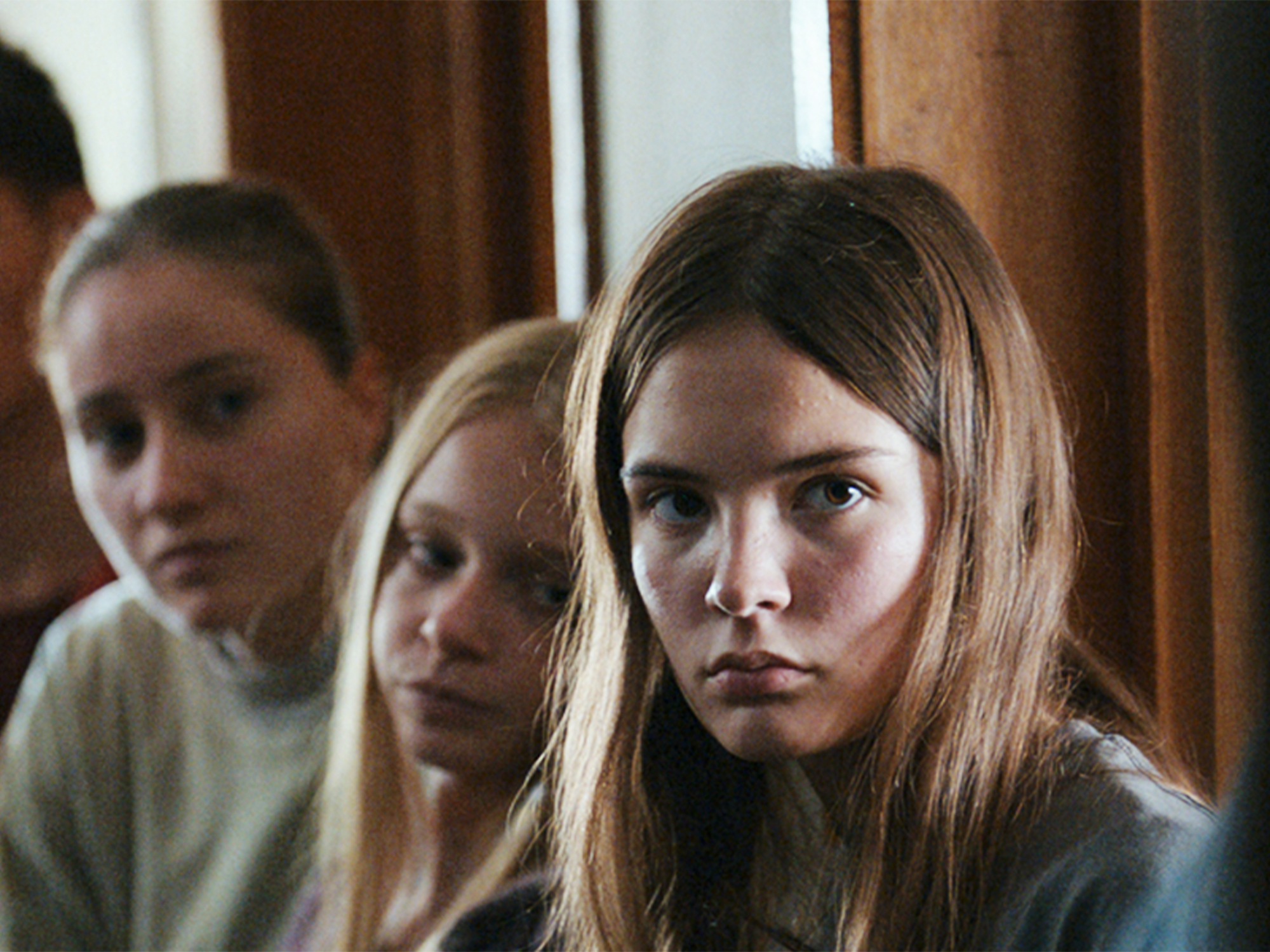
Kids should be able to experience the vital rite of passage that is puberty without a war raging in the background and corpses littering the streets. Yet that’s not the case for the hapless Dua (Pinea Matoshi) a 13-year-old whose burgeoning desires to trade sexless cheek pecks with boys and awkwardly shuffle at the local discothèque are stymied because this is Kosovo in the late ’90s and, what with her being an ethnic Albanian, she is being violently oppressed by Serbian nationalists under the leadership of war-criminal-in-the-making, Slobodan Milošević.
Blerta Basholli’s impressive second feature channels hardcore teen angst into a story about a homespun and rather passive form of guerrilla warfare and the inexorable decimation of Albanian families and communities in Kosovo during that period. Dua appears indefatigable at first, knowing exactly when and where to dash when the police storm the party she’s attending. Yet eventually she’s forced to sideline her natural growing pains in order to accept a wider situation that threatens the lives of her and her loving brood.
Get more Little White Lies
Unlike the majority of war movies, Dua avoids hysteria by focusing on the relatively small instances that can tip a person over the edge. When Dua is scoping out the crime scene of the recently murdered mother of a schoolfriend, a portly Serbian sneaks up on her, gropes her and threatens to rape her if she doesn’t stay away. She is terrified, and revenge becomes a fixation. Dua joins a judo club with her new friend Maki (Vlera Bilalli) in the hope of being able to bodyslam this gurning fiend the next time she spots him.
While there’s a point at which it feels as if things are about to get all Karate Kid on us, the film shifts away from all that and doubles down on the fact that this is not a fair fight, and that it’s going to take more than some finely-honed grappling skills to send the Serbians packing. Basholli emphasises the indignity of being politically and socially neutered in this way, and the family seem to have gotten used to their hardscrabble existence, which can include random beatings by roving patrols of hardened goons.
Formally, things are played a little safe, and Basholli does occasionally succumb to moments of cliché – such as the a fun karaōke sequence set to Skunk Anansie’s ‘Brazen (Weep)’ in which the characters articulate their woes. And the coming-of-age element is parked about half-way through the film, as we refocus more on a landscape that’s been stripped of life and hope. But Matoshi’s performance is impressive, and there’s a credible truth to the idea that there’s no shame in a family prizing self preservation over self sacrifice.