






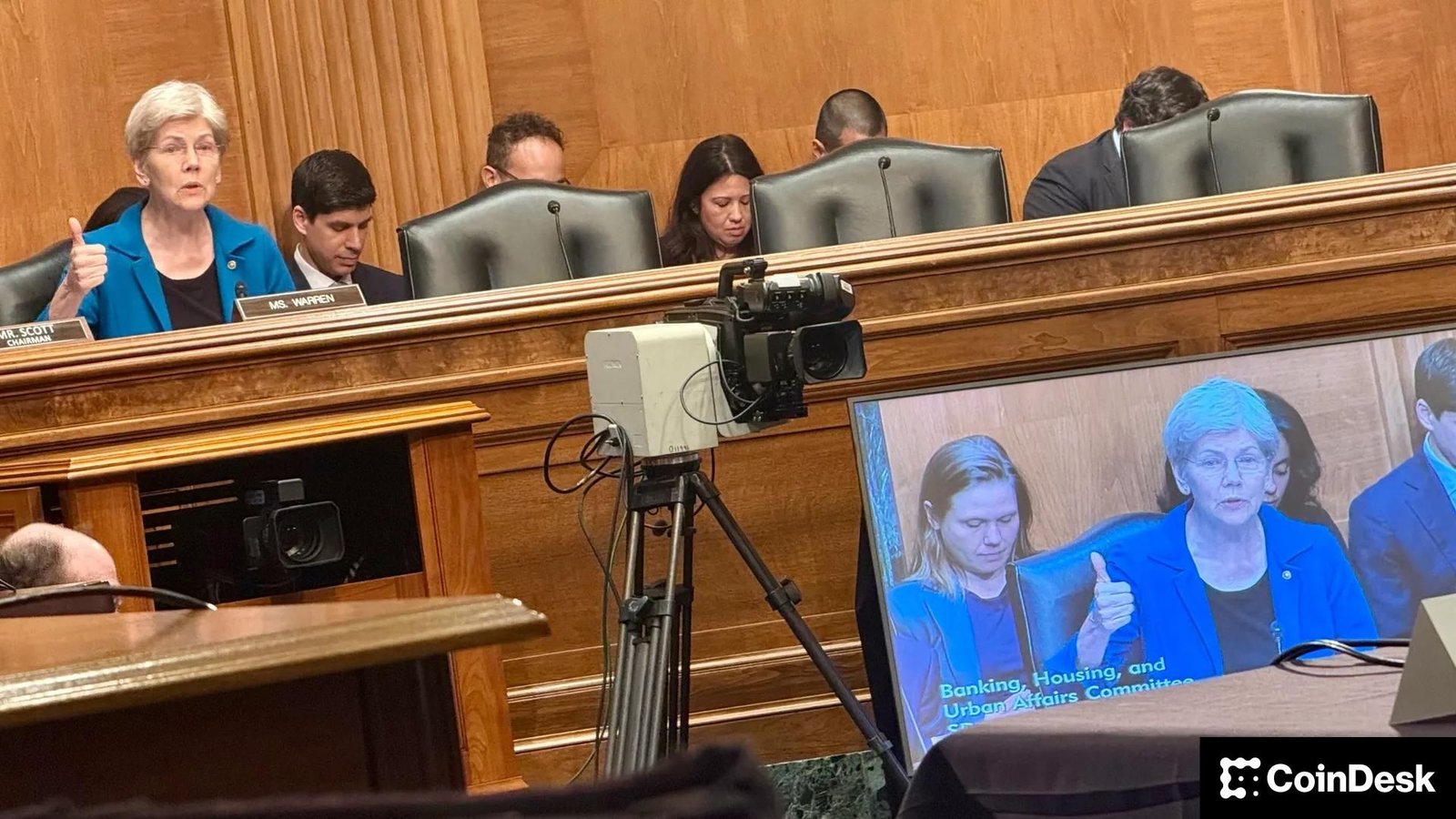
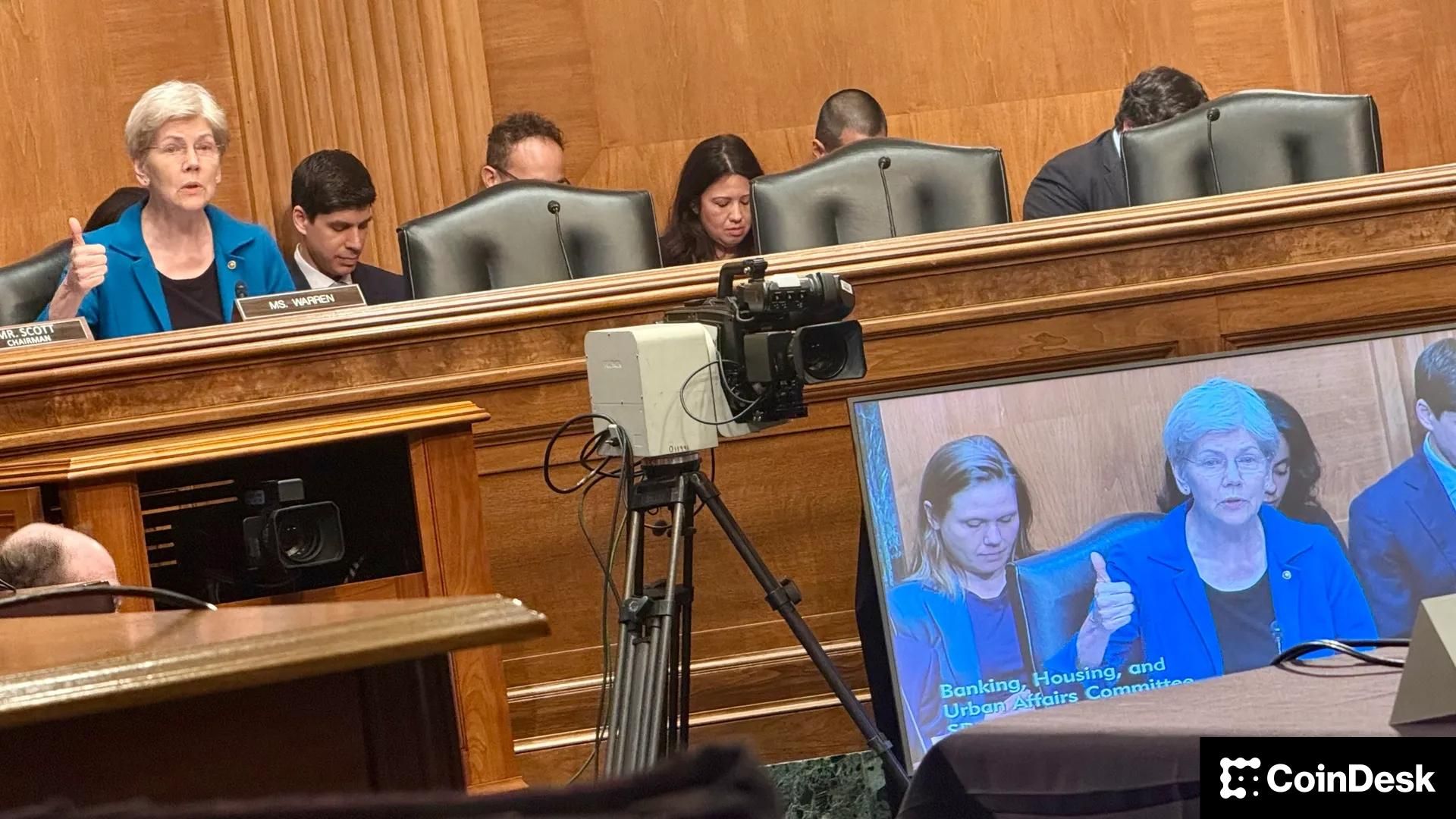
This week’s U.S. Senate Banking Committee hearing to consider edits to the Digital Asset Market Clarity Act has dozens of amendments to weigh, though it’s likely that almost all of them won’t survive the process of Thursday’s event.
Lawmakers have pushed forward a range of proposed changes for the market structure bill as it approaches the hearing known as a “markup,” from amendments that would establish government-ethics rules to others setting safe harbors for developers to one that would cut out a must-have protection for the decentralized finance (DeFi) sector, plus a number of other smaller, technical adjustments.
The list is particularly dominated by a few lawmakers’ names, including Democratic Senators Elizabeth Warren and Jack Reed. Their items are expected to be a rhetorical wish list as other members of the committee — mostly Republicans — seek to advance the bill without significant overhauls.
Each amendment will be discussed during the hearing and will eventually receive a vote, unless they’re withdrawn. A simple majority will be needed to adopt or reject an amendment. Eventually, the Banking Committee will vote to advance the bill itself.
Here are some highlights, according to a list of the proposals circulated ahead of the hearing:
- Senator Reed, a Rhode Island Democrat, wants to adopt some of the requests from bank lobbyists to further restrict stablecoin yields, according to one of his 18 amendments.
- He would also entirely scrap the section known as the Blockchain Regulatory Certainty Act, which shields software developers that don’t control people’s money from being regulated as money transmitters.
- On the same topic, Senator Catherine Cortez-Masto, a Nevada Democrat, wants to “protect software developers by creating a safe harbor from criminal liability for not registering as a money transmitter at the state or federal level.”
- Senator Chris Van Hollen, a Maryland Democrat, is pushing eight amendments, including one that would institute a major Democratic request: banning the president and other senior government officials from “owning, promoting or affiliating with” digital assets businesses.
- Senator Warren would more specifically “prohibit political corruption in banking applications and presidential bank ownership,” seeming to directly target the effort from World Liberty Financial — a company tied to President Donald Trump and his family — to obtain a U.S. banking charter.
- Warren, who is also seeking to cut out whole swaths of the current bill regarding the oversight of digital commodities, went farther afield with some amendments, trying to cap credit card interest rates and calling for bank supervisory records involving “Jeffrey Epstein and his co-conspirators.” (The bill itself does include some non-crypto provisions, including legislation targeted at housing championed by Senator John Kennedy, a Louisiana Republican.)
- Senator Mark Warner, a Virginia Democrat who has been at the center of illicit-finance negotiations involving DeFi, is proposing “a control test to determine when persons operating non-decentralized finance trading protocols are subject to” Bank Secrecy Act anti-money laundering obligations.
- On the Republican side of the committee, Senator Bill Hagerty from Tennessee is seeking a ban of central bank digital currencies (CBDCs) issued by the U.S. Federal Reserve. CBDC bans have already been pushed in various other bills by lawmakers, most recently in the House of Representatives’ bill to reauthorize the Foreign Intelligence Surveillance Act.
Thursday’s session to consider advancing the Clarity Act is likely already well planned for what the Republican majority will allow into the legislation. The last time the Clarity Act was on final approach to a markup in this same committee, it made it to this stage in which some 75 amendments were offered, though that hearing was postponed shortly after.
Previous wrinkles in the negotiation have since been ironed out over four months of talks, clearing a path for committee approval this week. Once that happens, this bill can be merged with the parallel effort that already cleared the Senate Agriculture Committee.
However, some significant changes are still expected after this week, including the effort to resolve the Democrats’ demand for a conflict-of-interest provision on cutting ties between government officials and the crypto sector, most notably seen with the president and his family. A meeting earlier this week on that ethics provision reportedly remained contentious, and Democrats including Senator Kirsten Gillibrand have said the Clarity Act will not get approved in the Senate without it.
Clarity’s advocates need to secure a number of Democratic supporters for the bill if it’s going to clear the 60-vote hurdle that’s standard in the Senate. Then the bill needs to get another approval from the U.S. House, which had already passed a similar bill last year.
In a Wednesday posting on social media site X, Coinbase CEO Brian Armstrong called the bill “strong” and said it “will benefit the American people by making the US financial system faster, cheaper and more accessible.”
“Mark it up,” he said.
Read More: Clarity Act, in the flesh, unveiled by U.S. Senate Banking Committee before hearing