









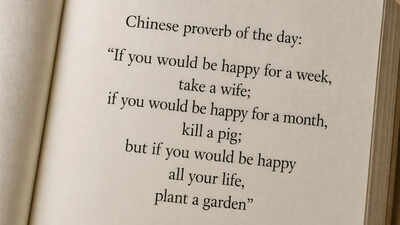
Chinese proverb of the day (AI-generated image)
Some old proverbs survive because they sound poetic. Others survive because people keep realising they were probably right all along. This traditional Chinese proverb has been shared for generations.At first glance, the saying almost feels humorous. The comparison is unusual. Marriage, food, and gardening all appear in the same sentence. But underneath the simplicity sits a surprisingly thoughtful message about happiness, patience, and the difference between temporary pleasure and long-term fulfilment.And honestly, the proverb feels strangely relevant today.Modern life often pushes people toward quick satisfaction. Fast entertainment. Instant delivery. Constant scrolling. People are surrounded by short bursts of pleasure all the time, yet many still feel restless or emotionally exhausted afterward.That is probably why this old proverb continues resonating online. It quietly suggests that lasting happiness usually grows slowly.Much slower than most people expect.
Chinese proverb of the day
“If you would be happy for a week, take a wife; if you would be happy for a month, kill a pig; but if you would be happy all your life, plant a garden”
What does the proverb actually mean
The proverb compares three different kinds of happiness.The first two are temporary. Marriage brings excitement and joy for a short period. A feast or celebration creates pleasure for a little longer. But planting a garden represents something entirely different. It symbolises care, patience, routine, and long-term reward.A garden does not grow overnight.Someone plants seeds, waters them regularly, waits through seasons, deals with failures, and slowly watches life develop over time. The happiness comes not just from the final result but from the process itself.That seems to be the deeper point behind the proverb. Quick pleasures fade quickly. Meaningful satisfaction often takes patience.
Why the proverb feels so modern today
It is interesting how a proverb likely created centuries ago fits almost perfectly into modern conversations about burnout and mental health.People today live in an environment built around immediacy. Food arrives within minutes. Entertainment never stops. Social media delivers constant stimulation. Even success stories online often appear instant, although reality is usually much messier behind the scenes.The problem is that short-term pleasure does not always create long-term fulfilment.Someone may spend hours scrolling online and still feel mentally drained afterwards. Buying something expensive may create excitement for a few days before the feeling disappears completely. Even achievements people chase for years sometimes lose emotional impact surprisingly fast once they finally arrive.The proverb quietly pushes against that cycle.A garden represents slower happiness. The kind connected to routine, purpose, growth, and consistency rather than instant excitement.
Why gardens became symbols of peace in many cultures
Gardens appear repeatedly throughout Chinese philosophy, literature, and art. In many traditions, gardens symbolised balance, harmony, reflection, and connection with nature.Even today, people often describe gardens as calming spaces. There is probably a reason for that.A garden forces slowness.Plants grow at their own pace regardless of how impatient somebody becomes. Seasons cannot be rushed. Nature ignores deadlines, notifications, and online trends completely.That slower rhythm may partly explain why gardening has reportedly become increasingly popular in stressful periods, especially after the COVID-19 pandemic. Many people began growing plants during lockdowns simply because the routine felt calming and grounding.The proverb seems to understand something modern psychology now discusses often: repetitive care and connection with nature can genuinely improve emotional well-being.
The proverb is not really about gardening alone
The “garden” in the proverb can mean many different things.For some people, it may literally mean gardening. For others, it represents relationships, meaningful work, creativity, family, community, health, or personal growth. Anything requiring patience and steady care over time fits the idea.That flexibility is part of why the saying survives.People apply it differently depending on their own lives.A person building strong friendships over decades is “planting a garden” in one sense. Someone learning a skill slowly over the years may be doing the same thing. Parents raising children often describe a similar feeling, too. The reward grows gradually through attention and consistency rather than instant gratification.The proverb suggests lasting happiness is usually cultivated, not suddenly discovered.
Why temporary pleasures fade so quickly
Human beings adapt surprisingly fast to excitement.Psychologists sometimes call this “hedonic adaptation.” A person buys something new, achieves a goal, or experiences a burst of pleasure, but eventually the emotional high fades and normal feelings return.That cycle appears everywhere in modern life.People chase constant upgrades, hoping satisfaction will finally last longer next time. A newer phone. Better salary. Bigger house. More followers online. Yet the excitement often disappears faster than expected.The proverb quietly recognises this pattern.The pig feast creates temporary pleasure. The garden creates ongoing meaning because it continues demanding care, attention, and participation over time.That difference matters more than many people realise.
Why younger generations seem drawn to ideas like this
A lot of younger people today appear increasingly interested in slower lifestyles, hobbies, and routines that feel more grounded.Gardening videos attract millions of views online now. So do cooking channels, slow living content, home cafés, reading routines, and peaceful lifestyle vlogs. Part of that trend probably reflects exhaustion with nonstop digital stimulation.People seem to crave calmness more than before.The Chinese proverb almost feels like an older version of that same idea. It gently argues that sustainable happiness usually comes from nurturing something meaningful rather than constantly chasing excitement.And perhaps modern audiences are rediscovering that lesson because fast-paced lifestyles often leave people emotionally tired.
Why old proverbs continue surviving online
The internet constantly creates new phrases and trends, yet ancient proverbs still spread widely. That says something interesting about human nature.Technology changes quickly. Human emotions do not change nearly as much.People still search for happiness. They still struggle with impatience, stress, ambition, loneliness, and meaning. A proverb written centuries ago can still feel personal because the emotional experiences underneath remain familiar.This Chinese proverb works especially well because the imagery is simple.Almost anyone understands the difference between a quick pleasure and something slowly nurtured over years.That clarity gives the saying staying power.
What the proverb teaches about happiness
One of the most interesting parts of the proverb is that it does not reject pleasure completely.The feast matters. Celebration matters. Relationships matter too. The saying simply points out that those experiences are temporary by nature. Lasting happiness usually needs deeper roots.That idea feels important today because many people accidentally build lives focused entirely around short-term stimulation without noticing the emotional emptiness that sometimes follows.The proverb offers a quieter alternative.Plant something. Care for it consistently. Allow time to do its work.Whether that “garden” becomes a relationship, a skill, a family, a meaningful routine, or an actual piece of land probably depends on the person.The larger message stays the same. The happiest parts of life often grow slowly.