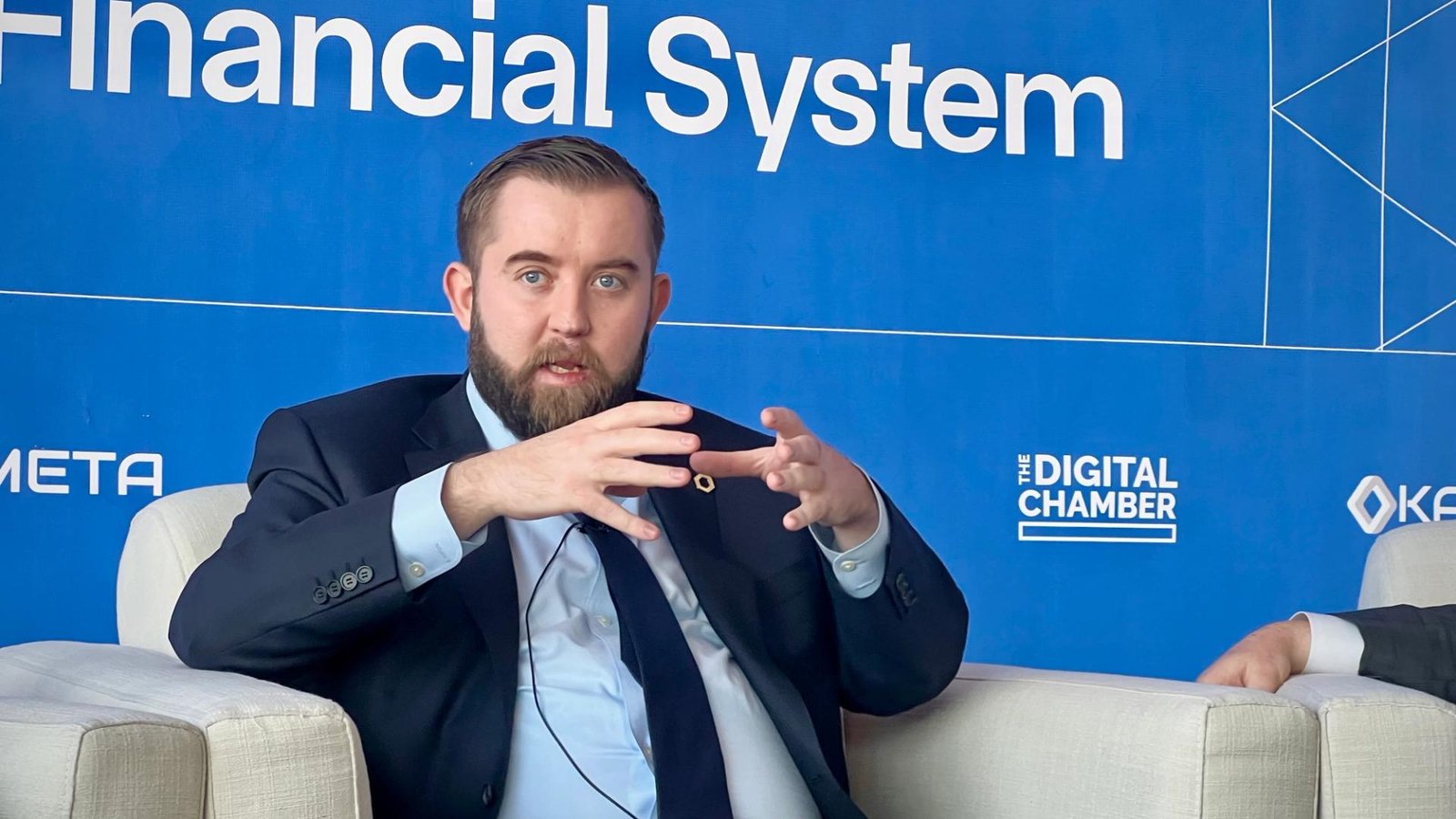











The Hyperliquid Policy Center disputed the framing.
CME Group and Intercontinental Exchange (ICE), the parent company of the New York Stock Exchange, are lobbying the CFTC and U.S. lawmakers to impose federal oversight on Hyperliquid, Bloomberg reported Friday.
The exchanges cited concerns that the platform’s largely offshore, lightly regulated trading environment could be vulnerable to market manipulation and sanctions evasion.
The exchanges argue that Hyperliquid’s growing trading volumes in crypto and commodity-linked markets could begin to distort price discovery in critical sectors like oil, where global benchmarks are formed, warning that anonymous trading environments may allow insiders or state-linked participants to influence prices. Their ask: registration with the CFTC, which would require the platform to implement customer identification programs and trade surveillance measures.
HYPE declined about 6% following the news, dropping from above $45 to below $43.
The lobbying push carries an obvious competitive dimension. CME is advancing plans to expand its own 24/7 crypto trading offerings, with Bitcoin Volatility Futures scheduled to begin trading June 1 and Nasdaq CME Crypto Index Futures — covering BTC, ETH, XRP, and others — launching June 8.
Hyperliquid Pushes Back
The Hyperliquid Policy Center, an advocacy group formed in February by a Hyperliquid-affiliated foundation, disputed the framing in a post on X Friday. The group called the CME/NYSE characterization inaccurate, arguing that traditional exchange operators — which match buyers and sellers and collect fees — operate fundamentally differently from Hyperliquid’s model, and that conflating the two misrepresents the platform’s structure and risk profile.
The Policy Center has already been engaging with the CFTC in meetings aimed at establishing a legal route for U.S. participation in Hyperliquid’s markets. The group argues its markets are more beneficial and present fewer risks than traditional centralized exchanges, and expects the CFTC to develop a tailored regulatory framework for on-chain derivatives platforms.
Regulatory Vulnerability
Hyperliquid’s bridge, the single point of custody for all user funds, is secured by a 3-of-4 multisig. At its April 2025 high point, Hyperliquid accounted for roughly 70% of the on-chain perpetual futures market.
That scale, combined with its relatively centralized custody structure and IP-based geo-restrictions, could heighten regulatory risk.