








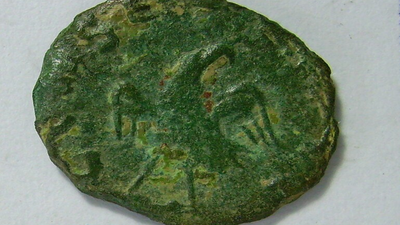
An ancient Spanish coin, minted 2,000 years ago, was mistakenly used as bus fare in Leeds in 1950. Image Credit: Wikimedia Commons
Imagine opening your wallet after an exhausting commute, only to pull out a couple of normal pennies, only to find a piece of currency once used to circulate through the old Mediterranean. This is precisely what took place in Leeds, in the north of the English town of Leeds, at the beginning of 1950. The commuter who paid for his journey on the local bus by coin was completely off the mark. Instead of the standard British copper, the cabbie handed them an ancient coin that was minted for 2,000 years by the sun-drenched shores of Spain.It was technically not a valid tender; it created the creation of a multi-generational puzzle. The moment Leeds City Transport chief cashier James Edwards sorted through the everyday stash and found the odd token from its place. Instead of throwing it out the door, he took it home to his son, Peter. Over the course of seven decades, the item was stored inside a wooden box with other treasures. Today, Peter Edwards, 77, has offered the family heirloom to the Leeds Museums and Galleries, providing a permanent home for an explorer who travelled hundreds of miles, and even several millennia, just to purchase a basic bus ticket.The gods and fish of the past from the MediterraneanThe experts from Leeds Museums and Galleries finally examined the object, which they found had been created in the early century B.C.E. in Cadiz, which was a famous Carthaginian settlement along the Spanish coast. The design of the coin depicts the history of the ancient maritime empire. The face on one side is of Melqart, the major Phoenician god who was dressed in a lion-skin headdress, which is a representation of the Greek goddess Heracles. On the reverse, you can see two bluefin tuna swimming together.The imagery wasn’t just artful. It was also an intentional branding effort to promote the ancient trader. According to an historical research that was published in ICCAT Collective Volume of Scientific Papers, ancient coins of the Iberian coast often used the symbol of tuna to show off their lucrative fish-salting monopolies, traders from other countries (Di Natale 2014). It was essentially an advertisement in the size of a wallet for the country’s most powerful industrial force that was designed to bridge the cultural differences with traders throughout the Mediterranean.
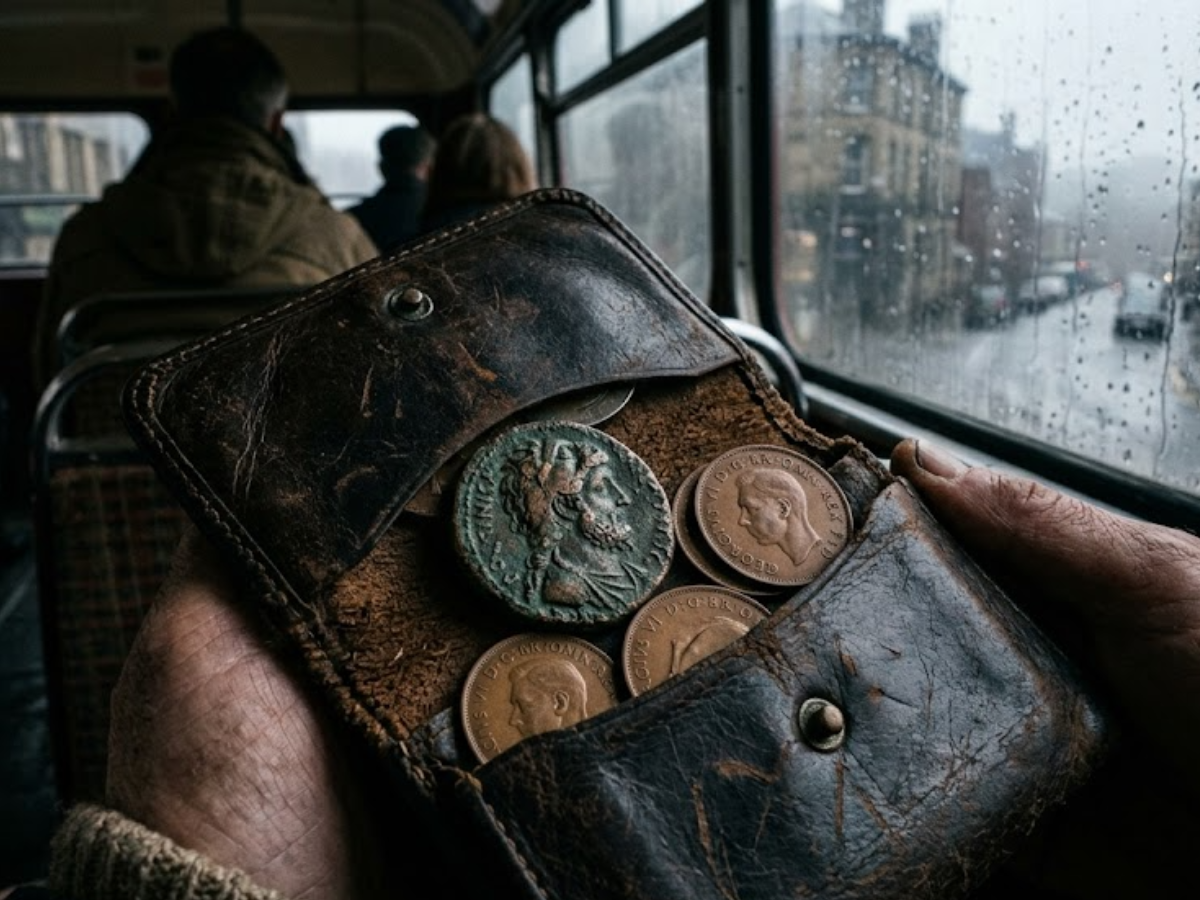
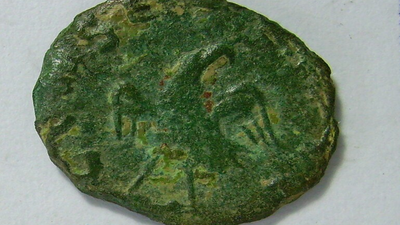
Experts identified it as a Carthaginian artifact depicting the god Melqart and tuna, highlighting ancient trade routes and the coin’s incredible journey. Image Credit: Gemini
The journey ranges from Phoenician trade routes to stormy British busesThe most important question is the way in which a remnant from an Iberian fishing town was able to hold up through the decline of Rome, as well as in the Middle Ages, and the Industrial Revolution, only for it to show up on a rainy morning in post-WWII England. Peter Edwards suspects the answer is in the geopolitical shifts during the early 20th-century. Following World War II, thousands of British soldiers returned to their homes after deployments throughout Europe and across the Mediterranean with a variety of bags of currency, overseas souvenirs, or battle-related finds.An ancestor likely threw the object into a container in the home, where it lay until an innocent relative seized it years ago to hurry to work. In the 1950s in Leeds, the dark and worn-out old coin could be regarded as an ordinary penny inside an unlit bus.Museum curators frequently depend on a broad range of tracking techniques to determine how objects traverse continents throughout time. Based on a doctoral research project conducted by the University of Leeds White Rose Consortium, the shift of old Mediterranean artefacts to modern British collection of institutions is often accompanied by unpredictability of hoarding by private collectors or wartime travel, unravelling the chance discoveries (Sassine 2020). The Leeds bus ticket is the latest in a lengthy history of globalisation that has been accidental.The permanent residence of the enduring travellerAlthough the details of the commuter who used the money remain a mystery, its time as an unwelcome piece of transportation fare is now officially at an end. The curators are delighted to have added the coin to the public collections that combine the local history of transit with archaeology from around the world.In the case of Peter Edwards, giving the money to the museum will ensure that the wonder the child he was is passed down to generations to come. It is no longer necessary to remain in a bookcase. It serves as a reminder that history is never really forgotten; often the artefact is waiting within our pockets as spare coins.