








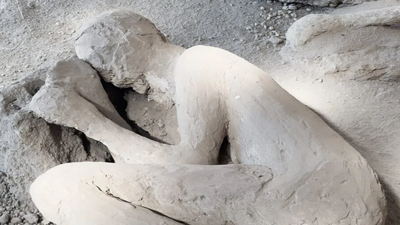
131195117Imagine running to your death while a mountain erupts around you, ash rain imperceptible, obscuring the sky, but refusing to let go of the tools you use to make your living. Over the course of nearly two millennia, Pompeii’s deadliest victims were kept in a trance, hidden beneath the thick volcanic ash of Mount Vesuvius in CE 79. The latest technology of the day is finally allowing this quiet person to talk, and revealed that he wasn’t just an unnamed casualty; however, he was an actual Roman physician who tried to save his own life and his patients’.The horrific scene took place in the garden of Fugitives, which was an old vineyard in which fourteen fell in the process of trying to make a daring escape via the Porta Nocera gate. The archaeologists, headed by Amedeo Maiuri, first discovered these corpses in 1961, using fluid plasters to fill in gaps left by the decomposition of flesh. The result was haunting, lifelike castings that tourists across the globe can see. But the techniques in the 1960s were unable to examine the inside of the cast. The bodies of the victims were veiled images of pain until a group of researchers from the present determined to look at the underside of the plaster.The secret is unlocked with the help of modern scannersIn the past, a small chunk of plaster casting was left ignored, discarded as one more piece of trash. The discovery came about when scientists who were working in the storage areas at the Pompeii Archaeological Park decided it was time to revisit the findings of these past excavations. They teamed up with radiologists from Pompeii’s Maria Rosaria Clinic in Pompeii to submit the delicate plaster to X-rays that are more advanced and ultra-high-resolution CT scans.The scans’ findings shocked the entire team. In the vicinity of the victim’s body was a tiny, modern, high-end doctor’s kit. The images showed a gorgeously constructed case, made from organic materials, with a sophisticated locking mechanism that included a tiny wheel. Inside, the doctor included a slate tablet that Roman doctors would use to crush and make medicated ointments, or gentle cosmetic blends. On top of it was a cloth bag that was filled with bronze and silver coins. Alongside them were many distinctive tools made of metal that looked like surgical instruments.To look closer without breaking the historic cast, the international team turned to artificial intelligence-assisted imaging and 3D digital reconstructions. The approach enabled them to open up the container and look at the complex details of the work. It was an enormous collaboration, which brought experts from anthropology, digital modelling experts, and numismatists to discover the story that traditional brushes and shovels simply couldn’t achieve.The innovative approach is reminiscent of the work that was done in the beginning by Pompeii and the Pompeii Cast Project, which was described in the highly regarded journal Papers of the British School at Rome. The initial research project demonstrated to archaeologists that scanning non-invasive castings can reveal bones, fragments of clothing, and other personal possessions which were never discovered in the first excavations.
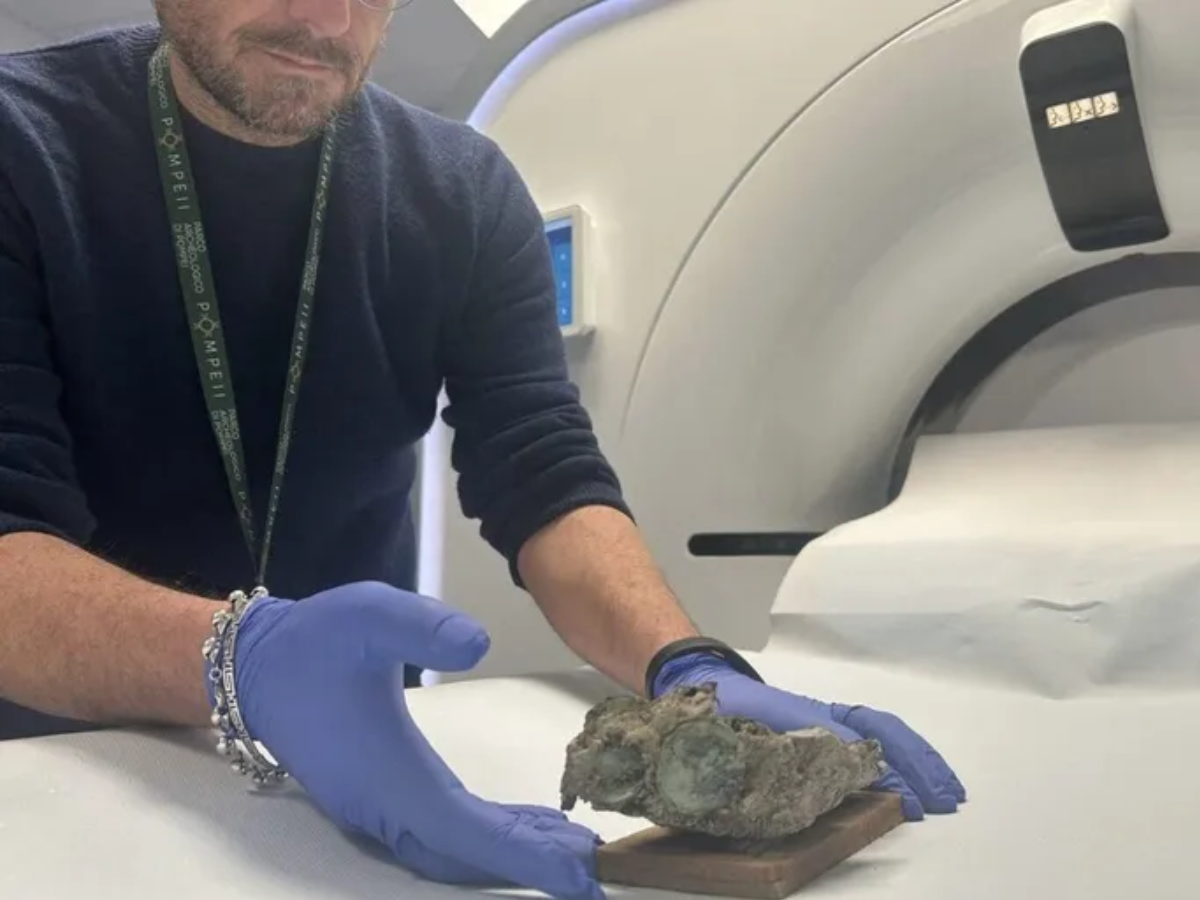
Advanced X-ray imaging shows the man’s case contained surgical instruments and a tablet of slate for preparing medicines. Image credit: Pompeii Archaeological Park
A tale of hope and optimism in the midst of disasterA definitive record that a person’s job is at Pompeii is extremely rare. Gabriel Zuchtriegel, the director of the Pompeii Archaeological Park, shared an emotional perspective on this discovery. Zuchtriegel said that the doctor probably gathered his tools at a rapid pace due to his strong belief that he would survive. He was not seeking to save his life; He wanted to ensure the continuation of his work and assist injured victims once they were safe.Sadly, a rapidly moving, burning pyroclastic cloud filled with explosive gas and ash took over the entire crew before they were able to remove the city’s wall. The instruments he valued so extremely stayed at his side throughout the final hours of his life, before being entangled in the exact structure that held his body.This finding fundamentally alters the way we think about the remains of Pompeii. The story shifts away from grand structures and stats to focus on the real personal experience. With the help of modern technology and radiology, the unnamed person changed from a solitary victim to a shrewd professional. It gives us an incredibly moving look at a terrible afternoon millennia back.