






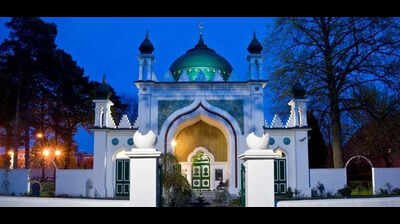
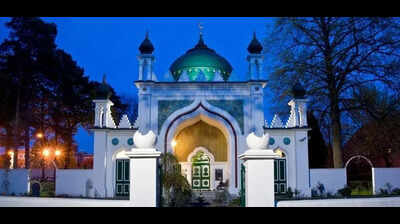
Bhopal: As the sun sets on the quiet skyline of Bhopal, gold dust shines bright on the white and pink minarets of Taj-ul-Masjid. In Woking, 30 miles from London, that same glint catches the rising English sun on the green dome of a 137-year-old mosque. The thread between them is a Bhopal queen.With its elegant minarets and intricate fretwork, the Shah Jahan Mosque in Woking isn’t just a place of worship; it’s a more than a century-old bridge between the British Empire and the Princely State of Bhopal. It is a story of a Hungarian-British polymath, a visionary Indian Queen, and a legal battle that saved a sanctuary from the wrecking ball.A Scholar’s DreamThe story begins with Dr Gottlieb Wilhelm Leitner, his intellect was much ahead of the era he lived in. A British-Hungarian Jew and a linguistic prodigy, Leitner was a professor at King’s College London by the age of 21. After two decades of being immersed in the culture of undivided India — where he helped found the University of the Punjab — India got under his skin. Leitner returned to England with a grand dream.He didn’t just want to study the East; he wanted to house its soul in England. In Woking, 30 miles from the bustle of London, he established the Oriental Institute. His grand ambition was a multi-faith citadel: a mosque, a synagogue, a temple, and a church, all standing side by side.The Queen ConnectionTo build a piece of the Orient in the Surrey countryside required more than just academic passion; it required a fortune. Enter Nawab Shah Jahan Begum, the formidable ruler of Bhopal.Captivated by Leitner’s project, the Begum became its primary patron. While the exact figures are lost to time, local lore suggests she donated between £3,000 and £5,000 — a staggering sum in 1889, considering Leitner had purchased the seven-acre site for a mere £200. Her generosity was so absolute that many believe she didn’t just fund a building; she bankrolled the entire dream.Architect William Isaac Chambers was commissioned to bring the vision to life, blending 19th-century “Orientalism” with the stately dignity of Mughal design. When the gates opened in 1889, it became the first purpose-built mosque in the United Kingdom and all of Northern Europe.The Fall and the PhoenixHistory, however, is rarely a straight line. When Leitner passed away in 1899, the institute began feeling his absence. The minarets fell silent, the land was sold off by his heir, and by the turn of the century, the mosque sat in a state of melancholy disuse.By 1912, Leitner’s son was on the verge of selling the site to a commercial developer. The first mosque in Britain was nearly destined to become a forgotten footnote.The rescue came in the form of Khwaja Kamal-ud-Din, an Indian lawyer who saw the building not as real estate, but as a consecrated sanctuary. He took the fight to the British courts, arguing that the mosque held the same sacred status as an English church. He won.Alongside Lord Headley, a prominent British peer who had embraced Islam, Kamal-ud-Din restored the building to its former glory. On May 28, 1922, during a vibrant Eid ul-Fitr celebration, he officially named it the Shah Jahan Mosque, ensuring the Begum’s legacy was etched into the English landscape forever.A Living LegacyThough the Begum herself never saw the dome she funded, the connection remained personal. In 1925, her daughter, Sultan Jahan, travelled from Bhopal to Woking to walk the lawns of the mosque her mother had made possible.Today, the mosque stands as a Grade I listed building, a status reserved for the most significant historical treasures in Britain. It remains the beating heart of the Woking community, a white-walled symphony of stone that looks as striking today as it did in the 1880s.“The entire community here knows the Begum’s legacy,” says Mohammad Habib, the mosque’s manager. As the mosque looks toward a future of expansion and development, there is a lingering poetic mystery. “The question is,” Habib muses, “whether any of her descendants know she built a mosque here. It would be interesting to hear from them.”For now, the Shah Jahan Mosque remains a silent, beautiful witness to a time when an Indian Queen and a European scholar conspired to build a home for faith in a foreign land.