







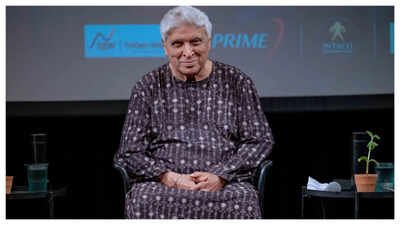
He has penned lines that have outlasted decades. But at a panel discussion last week, Javed Akhtar set aside the poet’s pen to become something rarer; a student, humbled before a 2,500-year-old text. The occasion was Rasa: Feeling as Form, an ambitious cultural conversation that brought Akhtar together with classical dancer Shovana Narayan and filmmaker-thinker Sumantra Ghosal, moderated by Rama Pandey, held at G5A. The subject: the Natyasastra, the ancient treatise on performance and aesthetics so revered it is often called the Fifth Veda. What unfolded was less a panel discussion and more an act of collective wonder.
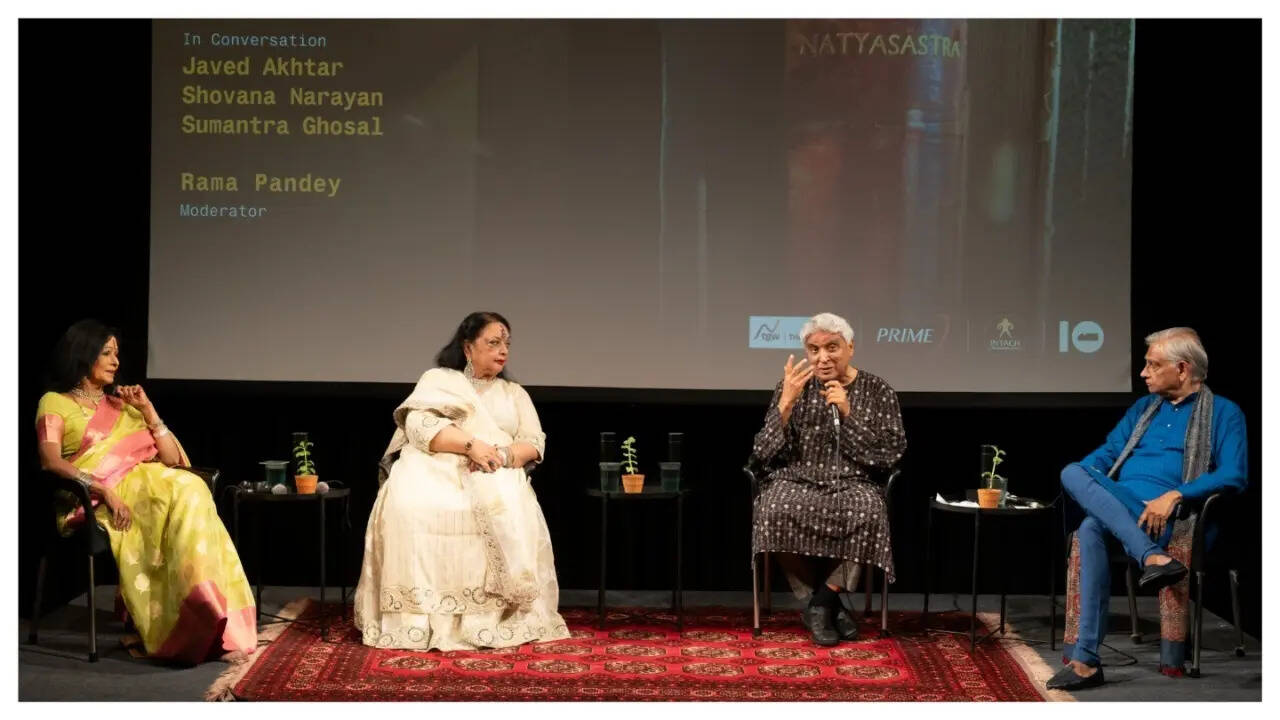
(L-R) Shovana Narayan, Rama Pandey, Javed Akhtar and Sumantra Ghosal“You feel so humbled when you read this,” Akhtar told the room. “Dhai hazar saal pehle someone thought of this, we Indians had reached that point already. Even today we look at this book with such wonder. How did those people think like that, so many years ago?” He paused, letting the weight of the question settle. “So, this is about pride. And this is also about shame.” But it was not the antiquity of the Natyasastra alone that moved him. It was its form. The text, Akhtar pointed out, is structured as a dialogue – question and answer – when its author, Bharat Muni, could simply have handed down commandments. “Kitab likh dete, yeh yeh baat sahi hai, follow karo.” That formal choice, he argued, is not incidental. It connects the Natyasastra to the other great pillar of Indian thought. “Ek aur bhi kitab aisa hai jiske bina Hindustan complete nahi hai. Uska naam hai Gita – aur woah bhi sawal jawab hai.” The Gita, he reminded the audience, stands alone among the world’s sacred texts in being structured as an inquiry, a conversation between Arjuna and Krishna on a battlefield, doubt and answer woven together. “No other book in the world is like the Gita. In all the others, there are principles written, rules to be followed – sawal jawab nahi hai. Khabardar jo sawal poocha.” The room laughed. But Akhtar was not entirely joking. “Yeh sawal jawab bahut badi baat hai – it shows that you are allowed to be curious, you are allowed to ask questions. And that,” he said, with the quiet conviction of a man who has thought about this for a long time, “is the definition of India. It would be such an un-Indian thing, if you are stopped from asking questions.”