






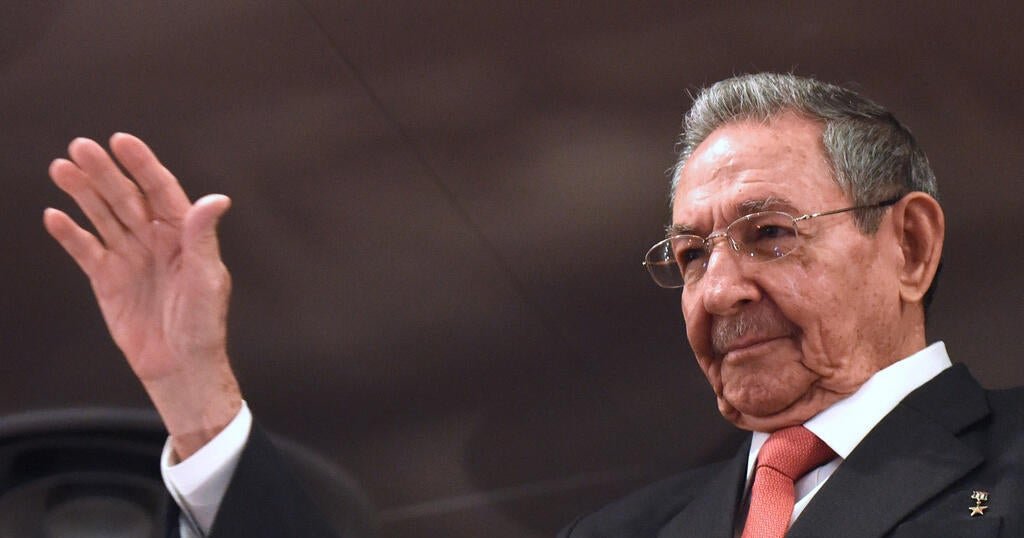
Washington — Federal prosecutors in Florida on Wednesday unsealed an indictment charging former Cuban leader Raúl Castro and five others in connection with the Cuban military’s fatal downing of two planes 30 years ago, with officials unveiling the charges at a press conference in Miami.
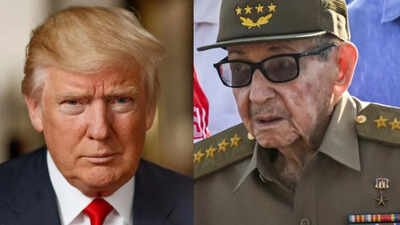
The federal criminal charges against the 94-year-old Castro — brother of the late Fidel Castro and widely seen as one of Cuba’s most powerful figures — mark an escalation in the Trump administration’s pressure campaign against the Cuban government. Castro served as president of Cuba from 2008 to 2018 and as the top official of the country’s Communist Party from 2011 to 2021.
CBS News was first to report that the U.S. was preparing to indict Castro.
Castro was indicted in Miami on April 23 on one count of conspiracy to kill U.S. nationals, four counts of murder and two counts of destruction of aircraft. A judge granted prosecutors’ request to unseal the 20-page indictment on Wednesday.
The charges focus on the Cuban air force’s decision to shoot down two civilian planes flown by Florida-based exile group Brothers to the Rescue in February 1996, killing four people. The indictment says the planes were outside of Cuban airspace at the time of the shootdown.
The other five named defendants are identified as Cuban fighter pilots, including one who was initially charged in connection with the shootdown more than two decades ago.
“For nearly 30 years, the families of four murdered Americans have waited for justice,” acting Attorney General Todd Blanche said at the news conference. “My message today is clear: The United States and President Trump does not and will not forget its citizens.”
It’s not clear whether Castro will ever stand trial, since Cuba does not extradite people to the United States. Former Venezuelan leader Nicolás Maduro was indicted on drug charges in 2020. Earlier this year, he was captured by U.S. forces and flown to New York for trial, a daring operation that led to the installation of an interim leader who is now working closely with the U.S.
Asked by reporters how Castro might be brought to the U.S. to face trial, Blanche did not offer any details, but said “this isn’t a show indictment” and that the Justice Department intends to try the case. He said “there’s all kinds of different ways” to bring in defendants who are located in other countries.
The indictment alleges that Castro — who led Cuba’s armed forces at the time — “met with military leaders and authorized them to use decisive and deadly action” against Brothers to the Rescue planes in January 1996, following several earlier rounds of flights by the group to drop leaflets.
“All orders to kill by the Cuban military traveled through [the armed forces’] chain of command with [Raúl Castro] and Fidel Castro as the final decision makers,” prosecutors said.
The indictment also alleges that Cuba’s intelligence agency tasked a network of spies in Florida with informing on Brothers to the Rescue. Several members of that spy ring were charged more than two decades ago, including one man who was convicted of murder conspiracy in connection with the 1996 shootdown.
The indictment offers sweeping criticism of the Cuban regime.
“The Castro Regime established and maintained control over Cuba and her people through a reign that eliminated dissent, preserved their power, territory, and reputations, and, through expropriation and nationalization of private business, funded those objectives,” the indictment reads.
Brothers to the Rescue planes shot down
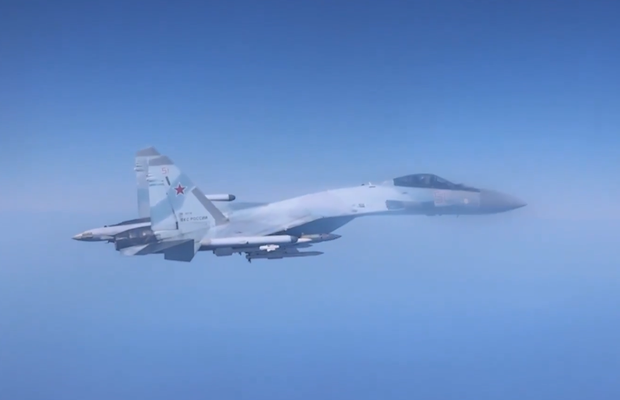
The 1996 incident involved a Cuban MiG-29 fighter jet that shot down two Cessnas operated by Brothers to the Rescue, which searched for Cubans seeking to flee the island nation in rafts. Three U.S. citizens and one green-card holder aboard the planes were killed.
The United Nations’ International Civil Aviation Organization found that the planes were flying outside Cuban airspace when they were shot down, which Cuba denies. The organization also said Cuban authorities did not make any attempt to deal with the planes through some other means, including contacting them over the radio or guiding them out of the area.
The shootdown was met with outrage. The Organization of American States alleged Cuba violated international law, and then-President Bill Clinton condemned it “in the strongest possible terms.” Congress reacted by tightening U.S. sanctions on Cuba.
The Cuban government denied wrongdoing, insisting the planes had entered Cuban airspace. Cuba accused Brothers to the Rescue members of repeatedly violating Cuban airspace to drop leaflets, and claimed the group had planned to sabotage Cuban infrastructure.
On Tuesday night, Cuba’s top diplomat Lianys Torres Rivera posted on social media a link to the declassified FAA records from 1996 in which U.S. officials foresaw a “worst case scenario that one of these days the Cubans will shoot down one of these planes and the FAA better have all its ducks in a row.”
At the time of the shootdown, Raúl Castro was the country’s defense minister, and the indictment alleges he authorized force against Brothers to the Rescue. In a 1996 interview with “CBS Evening News” anchor Dan Rather, then-Cuban President Fidel Castro acknowledged that he issued “general orders” to stop planes from encroaching on the country.
In addition to Castro, the indictment charges one of the fighter pilots who allegedly shot down the two planes, Lorenzo Alberto Perez-Perez, with conspiracy, murder and destruction of aircraft. Perez-Perez was previously indicted for the incident in 2003, along with the other pilot on his MiG-29 and the now-deceased former head of Cuba’s air force. The case was never tried.
Four other fighter pilots were charged with conspiracy in the new indictment. They were accused of engaging in “training missions using Cuban military aircraft to find, track, pursue, and intercept small, civilian aircraft off the coast of Cuba” in the lead-up to the Brothers to the Rescue incident.
The indictment also describes an extensive effort by the Cuban government to infiltrate Brothers to the Rescue and gather information on the group’s flights, deploying a web of spies known as the Wasp Network.
That spying effort — known as Operation Scorpion — allegedly involved an accused Cuban double agent named Juan Pablo Roque, who defected to the U.S. in the early 1990s but returned to Cuba one day before the flights were shot down. The indictment alleges that Roque “falsely informed the FBI that [Brothers to the Rescue] would not be flying during the weekend of February 24, 1996.” It also says Cuban intelligence officials told Roque and one other person not to fly with Brothers to the Rescue on the weekend of the shootdown.
Roque, who died last year, denied serving as a Cuban spy.
Several members of the spy ring were convicted in federal court more than a decade ago, including alleged leader Gerardo Hernandez, who was sentenced to life in prison for murder conspiracy in connection with the shootdown. Hernandez returned to Cuba in a 2014 prisoner swap.
What’s next for Cuba-U.S. relations?
Now, with the indictment of Raúl Castro, prosecutors are charging a figure who has held senior roles in Cuba since his brother Fidel overthrew the country’s U.S.-backed leader in 1959. Raúl succeeded his brother as head of Cuba’s Communist Party in 2011. He stepped down as party leader a decade later, but he has remained influential, and his grandson — often known as “Raulito” — is a key point of contact with U.S. officials.
The indictment comes after months of tensions between the U.S. and Cuba. The Trump administration has threatened steep tariffs against any country that ships oil to Cuba, leading to widespread energy shortages and electrical grid failures on the island.
Meanwhile, the U.S. attorney in Miami launched an initiative earlier this year to look into prosecuting Cuban leaders, including for economic, drug, immigration and violent crimes.
Secretary of State Marco Rubio has argued that Cuba needs to make sweeping economic and political reforms, and suggested the existing Cuban regime — which he says is led by “incompetent, senile men” — needs to change. Hours after Maduro’s capture, Rubio pointed to Cuba’s reliance on Venezuela and told reporters: “If I lived in Havana and I was in the government, I would be concerned, at least a little bit.”
In a video message posted online Wednesday morning, Rubio urged the people of Cuba to choose “a new path.” Meanwhile, Cuba’s deputy foreign minister Carlos F. de Cossio posted on social media early Wednesday that Rubio “lies” about Cuba because he “knows full well that there is no excuse for such a cruel and ruthless aggression.”
President Trump has not ruled out military action, saying at various points that he is interested in a “friendly takeover” of Cuba and that the country could be “next” after the U.S.’ war with Iran. Mr. Trump has also suggested he’s open to negotiation.
“Cuba is asking for help, and we are going to talk!!!” he wrote in a Truth Social post last week.
Despite the tensions, American officials have visited Havana for talks at least twice this year, with CIA Director John Ratcliffe meeting with Raúl Castro’s grandson last week. The administration also separately offered Cuba $100 million in humanitarian aid.
A CIA official said Ratcliffe told Cuban leaders the Trump administration was offering “a genuine opportunity for collaboration” and a chance to stabilize Cuba’s struggling economy. But Ratcliffe warned, the official added, that the opportunity would not remain open indefinitely and the administration would enforce “red lines” if necessary.