







God forbid a woman have hobbies: What suspense there is in Summer Drift, a charming French-language Swiss hybrid doc, comes from whether or not Joanna Schopfer (directors Céline Carridroit and Aline Suter’s subject and protagonist) will overcome the various internal and external obstacles standing between her and her dream of competing in a drag race in the 1970 Volkswagen Beetle she spends much of the film refurbishing.
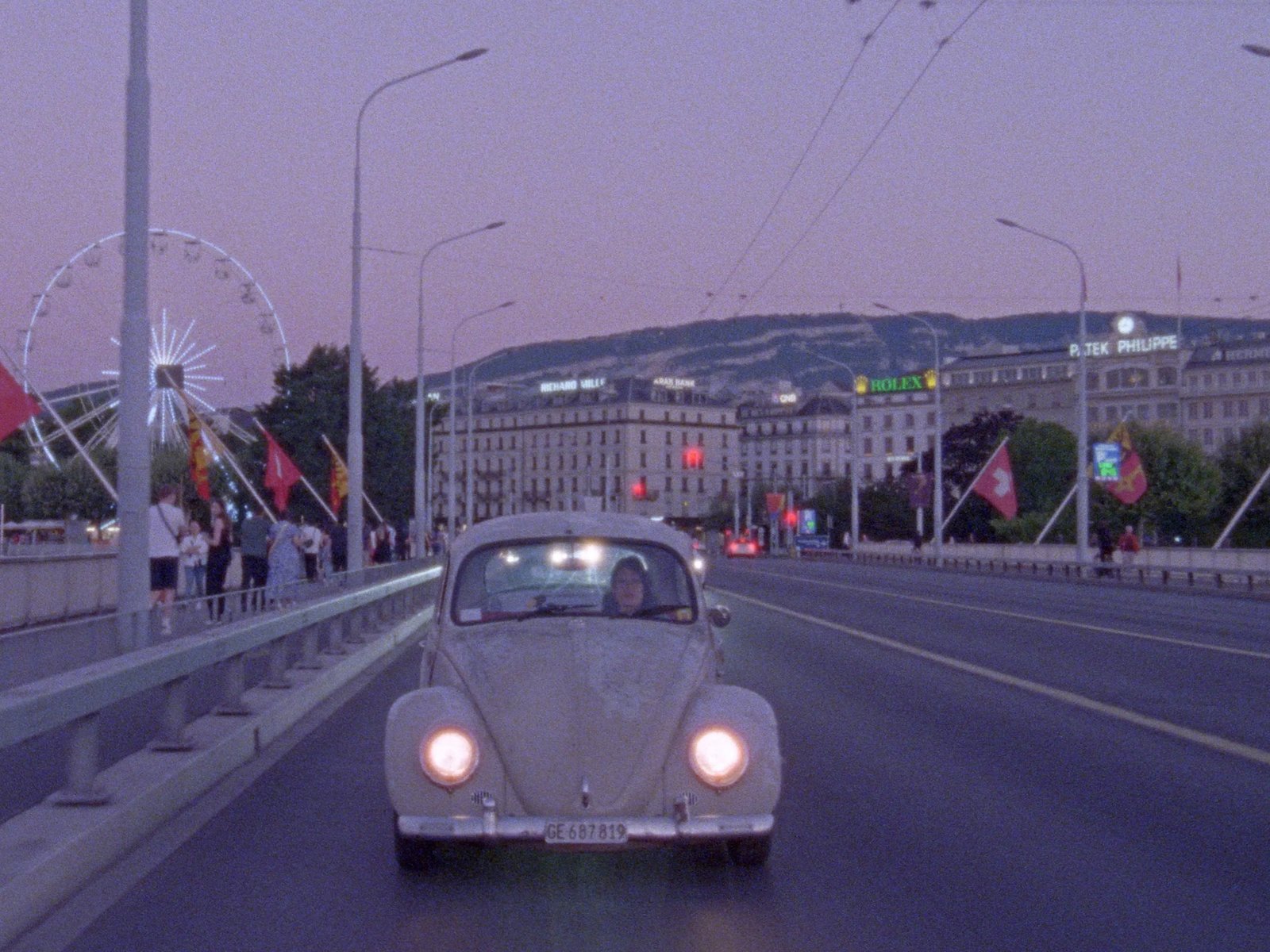
Joanna, 38 years old during the summer in which the film takes place, met the director years ago; Summer Drift came about when she finally felt stable enough in her life to participate in a portrait, one in which the camera follows her through semi-staged slices from her life. The VW Bug in her garage – off-white except where it’s rusty or covered in stickers – is a vestige from her younger days, and a readymade metaphor for the reintegration of older aspects of her identity into her present-day life, one loaded with implications about gender stereotypes (the car started gathering dust when she could no longer abide being harassed and underestimated by other mechanics and hobbyists), and which also suggests something of the duality of precision and imperfection at work in her own life. Despite Joanna being a dab hand with welding and up for engineering challenges, the Beetle remains endearingly slovenly, and a noted contrast to the environment at her day job at a watch factory, where the women gossip about Botox while tweezing gems and gears into place, and Joanna wears a white lab coat over her everyday uniform of Converse sneakers, jean shorts, and Metallica or Celtic Frost tees.
Get more Little White Lies
Though not out at work, where she also claims to have a husband instead of a wife when pressed on her personal life, Joanna is transgender, a fact which is confirmed 20 minutes into this 85-minute film, via a flashback to a car show told through one of Joanna’s own comics. Full of lurid accounts of slobbering objectification and harrowing assault, the comics have something of R. Crumb’s vivid vulgarity. Through these drawings, and dramatic dream sequences and whimsical fantasy interludes meant to dramatize a roiling psyche and quirky interior life, the filmmakers attempt to break through Joanna’s natural propensity to solitude. Joanna is intriguing and relatable in part because her prim, upright, self-consciously femme posture seems to button down a capacity for effusive obsessiveness. (At work, she occasionally strikes her colleagues as standoffish, because she blocks out distractions by listening to heavy metal on earbuds.) We get glimpses: She shows up stag to an outdoor screening of one of her favorite films, The Road Warrior, wearing light cosplay and carrying a homemade wooden prop that looks vaguely like a gun from the film, then locks into the movie so hard that she drops it during a climactic scene.
But the film largely moves along at the pace of its English title, evocative of the lazy river Joanna floats down with a friend who is preparing a craft for some form of DIY regatta. She’s a tricky subject for a genre that, with its anthropological emphasis on the rhythms of a person in their environment, already tends low-key. Carridroit and Suter shoot in 16mm that gives Geneva the dusty pastel accents of a matte nail polish in a girly color, which is lovely to look at, but also rhymes with an overall recessiveness. More than Joanna walking around or making small talk or FaceTiming with her wife in Mexico, the film is at its best when she’s geeking out, with bit-lip focus, about her car, interacting with the apparently boundless community of Volkswagen enthusiasts reselling old parts, designing custom spoilers, making content, and gathering at conventions, or simply toot-tooting along in her squat little lovebug.
Summer Drift is uncharacteristically crowd-pleasing for a hybrid documentary off the Western European festival circuit. Carridroit and Suter highlight the personal and professional obstacles between Joanna and her objective of attending the climactic rally alone; they contrive a circumstance under which she can dance on her own to Queen’s “I Want to Break Free”; they find an ending that emphasizes queer uplift and found family. Somewhat insistently, if also quite sweetly, Summer Drift makes the story of one woman’s special interest into a political affirmation.