








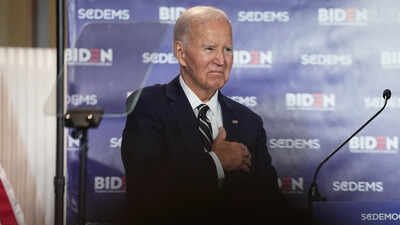
Former US President Joe Biden has sued the Department of Justice (DOJ) in an attempt to prevent the release of audio recordings and transcripts from his interviews with a ghostwriter. These are files gathered during the special counsel investigation into his handling of classified documents.The lawsuit was filed on Tuesday in federal court in Washington. It targets the department’s plan to hand the materials over to Congress and the Heritage Foundation, a conservative think tank. The move reverses the DOJ’s earlier position that the files were exempt from disclosure under public records law.As reported by AP, Biden’s attorneys argue the release would amount to an unwarranted invasion of their client’s privacy. “Every American, including a sitting or former Vice President, has a right to privacy in the personal conversations he has within his own home,” they wrote. “When the US Department of Justice obtains that private information through a criminal investigation, the Department bears a particular responsibility to protect it.”What the recordings containAt the center of the dispute are recordings and transcripts of Biden’s 2016 and 2017 conversations with Mark Zwonitzer, the ghostwriter who collaborated with him on two memoirs. Special counsel Robert Hur obtained the files during his yearlong probe into Biden’s retention of classified documents from his time as a senator and vice president.Hur’s investigation produced a 345-page report that recommended no criminal charges against the then-81-year-old, citing insufficient evidence for a successful prosecution but drew widespread attention for its pointed questioning of Biden’s age and mental acuity.A longer battle over disclosureThis lawsuit is the latest chapter in a protracted fight over what the public can access from the investigation. In 2024, the House voted to hold then-Attorney General Merrick Garland in contempt of Congress after the White House invoked executive privilege to block the release of a separate audio recording: Biden’s interview with Hur himself. Transcripts of that five-hour session were eventually released, revealing a president who, while insisting he had taken classified material seriously, was at times vague on dates, details, and the paper trail surrounding sensitive documents.The case has split predictably along partisan lines. Republicans argued Biden received preferential treatment from a Justice Department run by his own administration, and drew comparisons to the criminal case against Donald Trump, who was accused of refusing to return classified documents to the National Archives. Democrats countered that Biden’s full cooperation with investigators stood in sharp contrast to Trump’s conduct.