








The Dallas-based payments company is now the issuer of a U.S. dollar token on a public chain, with Stripe-owned Bridge as the regulated minter, M0 smart contracts handling supply, and Fireblocks holding the float.
MoneyGram launched MGUSD on Tuesday, a U.S. dollar-backed stablecoin native to the Stellar blockchain, making the 85-year-old remittance operator the first global cash-payments network to issue its own dollar token on a public chain. The company announced the launch from Dallas and Amsterdam at 5 a.m. Eastern.
MoneyGram serves more than 60 million active customers across nearly 500,000 retail locations and a digital app, with more than 70% of transactions now digital, according to the company.
MGUSD launches in the U.S. and will be integrated into the MoneyGram app as a self-custodial wallet, with plans to scale globally.
PayPal’s PYUSD, launched in 2023 and now has nearly $3 billion in market cap. PYUSD is the closest precedent for a non-bank consumer-payments brand running its own dollar stablecoin. Unlike PayPal, though, MoneyGram operates a half-million-location cash network.
MGUSD positions MoneyGram to capture the float economics that previously accrued to Tether or Circle when their tokens crossed its corridors.
“The stablecoin market has largely focused on the asset itself. MoneyGram is taking a fundamentally different approach,” Anthony Soohoo, MoneyGram’s chairman and chief executive officer, said in the announcement. “Starting with our distribution platform, we’re using stablecoin as a foundation to build future applications on our global network.”
MGUSD’s Issuance Stack
MGUSD is issued by Bridge, the stablecoin-orchestration platform that Stripe acquired for $1.1 billion in February 2025. MoneyGram described Bridge in its release as the “regulated, GENIUS Act-ready issuer” — a reference to Senate Bill 1582, the federal stablecoin law President Donald Trump signed on July 18, 2025, which restricts payment-stablecoin issuance to permitted federal- or state-licensed issuers once implementing rules take effect.
Minting and burning run on smart-contract infrastructure from M0, the modular stablecoin platform with more than $300 million in on-chain supply across other issuers, including Usual’s UsualM. Custody of the float sits with Fireblocks, whose wallets MoneyGram uses to distribute MGUSD into customer self-custodial wallets inside the company’s app.
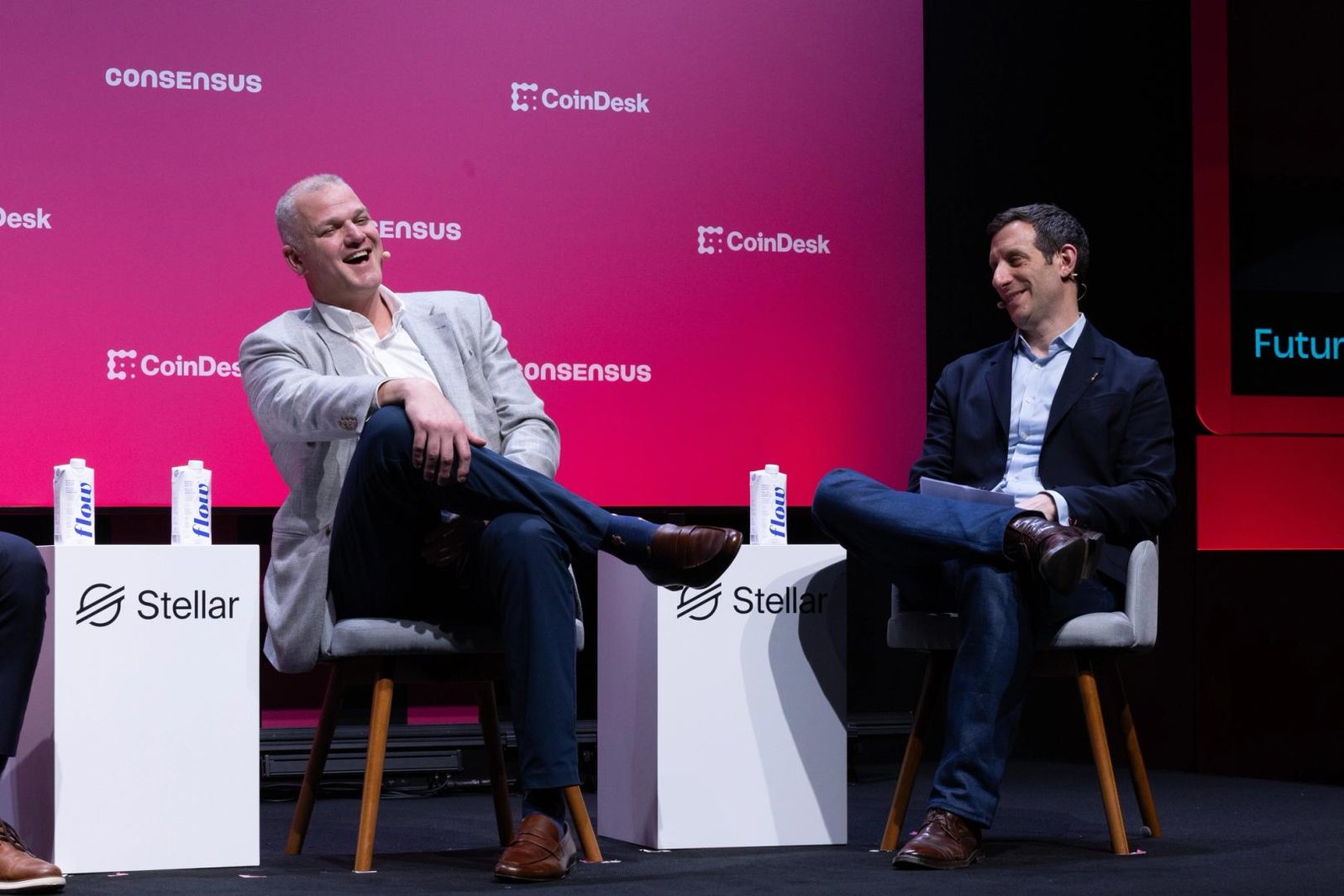
The Stellar Development Foundation, MoneyGram’s blockchain partner since 2021, provided the chain.
“Our five-year partnership with MoneyGram is proof that stablecoins have moved well beyond pilots,” Denelle Dixon, the foundation’s chief executive officer, said in the release. “MGUSD is the next milestone that demonstrates what purpose-built blockchain can deliver when paired with a trusted payments network.”
The Remittance-Corridor Calculation
Cross-border remittance is the use case where stablecoins have moved out of crypto-native demos and into actual volume. Industry estimates put more than 85% of digital remittance flow on stablecoin rails, with USDC carrying most of the institutional corridor traffic — Latin America, the Philippines, parts of Africa.
MoneyGram’s roughly half-million agent locations and 60-million-plus customer base are the largest physical-plus-digital remittance footprint in the industry, and until Tuesday those flows touched stablecoins only when MoneyGram served as a fiat on- and off-ramp for someone else’s token.
Luke Tuttle, the company’s chief product and technology officer, said in the announcement that “MGUSD enables MoneyGram’s monetary layer to run on stablecoin rails by design,” adding that the company had spent the past year re-architecting issuance, orchestration and settlement to accommodate the digital dollar.