







Bearish bets on privacy-focused zcash (ZEC) climbed to a record as the token slumped as much as 50% in 24 hours after a now-plugged vulnerability in its Orchard pool was disclosed.
ZEC recorded roughly $118 million in forced liquidations over the period, CoinGlass data shows.
That is remarkably small for a token whose price halved, suggesting the selling came mostly from spot held tokens rather than a futures-driven move. Only about 14% of zcash’s leveraged positions got wiped out; the number would have been far larger if a leverage cascade had driven the slide.
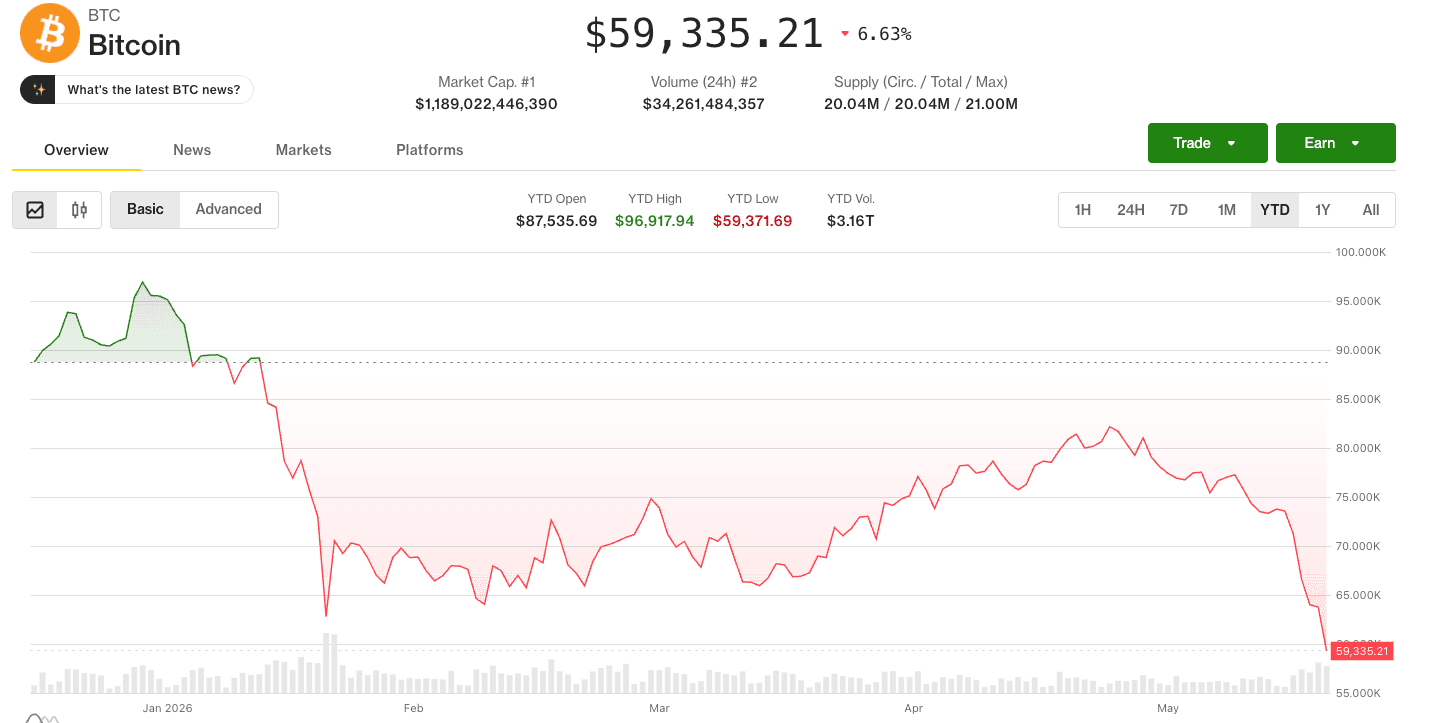
In comparison, about $335 million in bitcoin -tracked futures were liquidated over the same window even though the largest cryptocurrency fell only a few percent. Ether slipped a similar amount and liquidated $278 million.
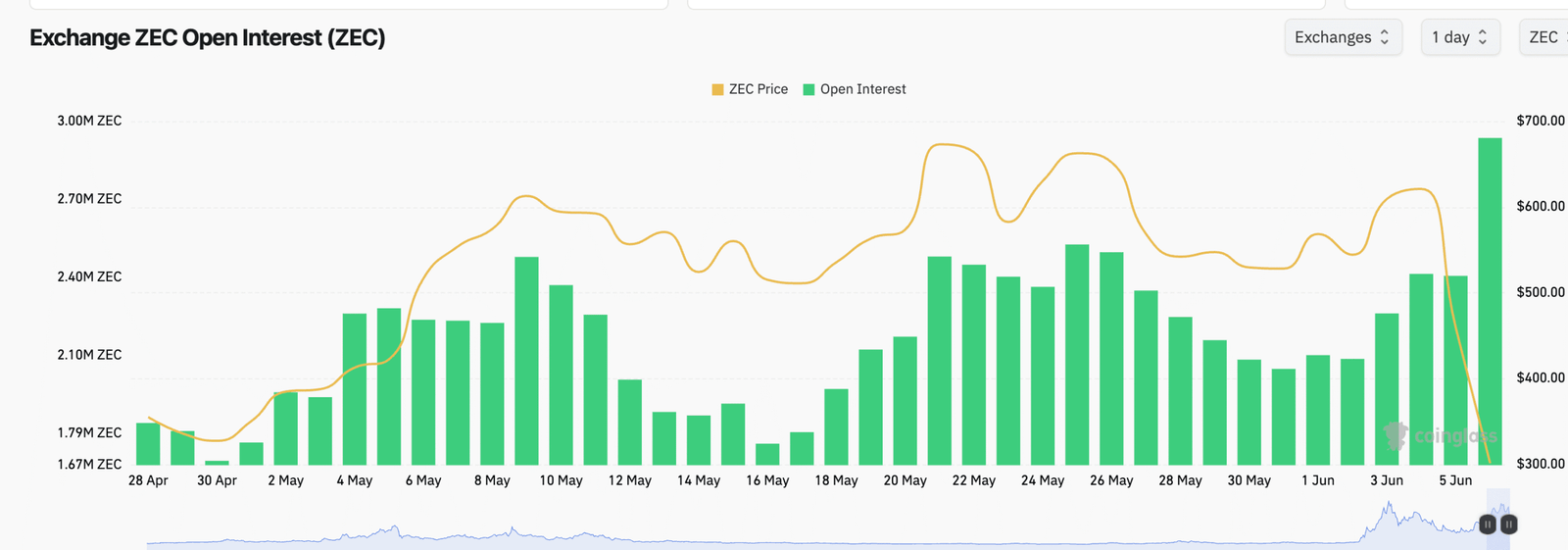
Open interest — the total value of unsettled futures bets — rose to a record high in ZEC terms, suggesting traders opened new positions rather than closing them.

The long/short ratio, the number of traders betting on an increase versus a decline, shows those positions skewed bearish. On Binance, the ratio sat below 1 across retail investors at 0.77, whale accounts at 0.80 and whale positions at 0.85. Traders on OKX were more bearish, with retail at 0.67 and whale accounts at 0.72. Only Bybit’s retail traders leaned long, at 1.49.
Short investors sell securities they don’t actually own, betting the price will drop before they need to close out their positions and they’ll profit from the difference. Long investors own the securities to benefit from any increase.
The ratio indicates zcash is heavily shorted after a spot-led drop. If the selling slows and the price steadies, those shorts could be forced to buy to cover their positions, fueling a sharp bounce.
It’s worth remembering that ZEC, even after losing more than half its value in two weeks, is still up roughly 490% over the past year.
No way of knowing
The catalyst for the price drop was the disclosure by nonprofit Zcash developer Shielded Labs of a vulnerability in Zcash’s Orchard privacy pool that, if exploited, could have let an attacker create counterfeit ZEC that no one could detect.
The Orchard flaw had been live since the pool debuted in May 2022, going unnoticed for four years. It was found only last week by security engineer Taylor Hornby using Anthropic’s Opus 4.8 model and patched in an emergency fix by June 1.
The damage is less about the bug itself, which is now closed, than what Shielded Labs admitted alongside it. Because of the way Orchard’s privacy works, there is no cryptographic way to prove whether anyone exploited the flaw before it was fixed.
The firm said it probably was not, but it cannot be sure, and that uncertainty hangs over the token’s entire supply.
Arthur Hayes, the chief investment officer of Maelstrom, said he sold his entire zcash position as a result.