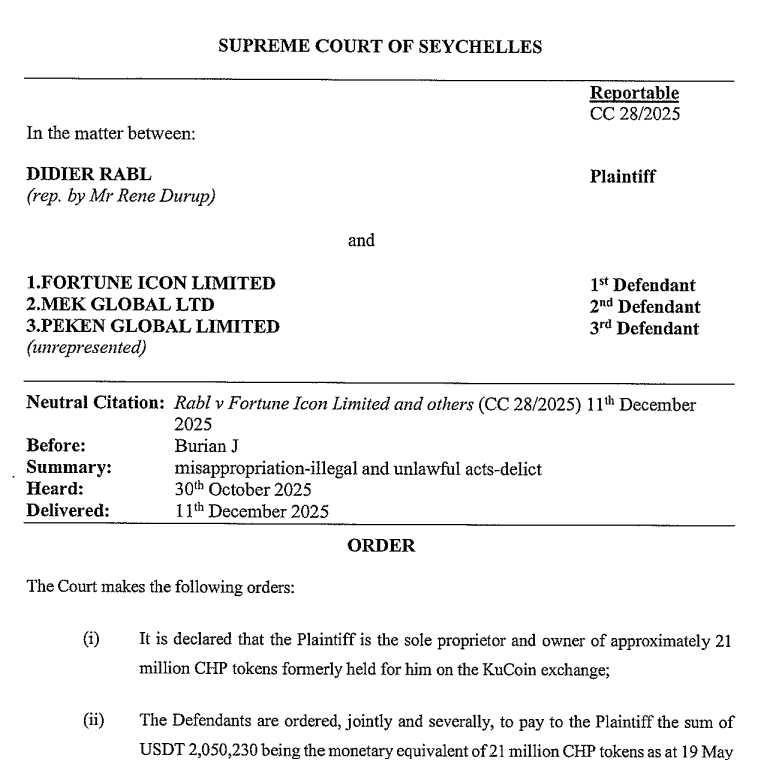







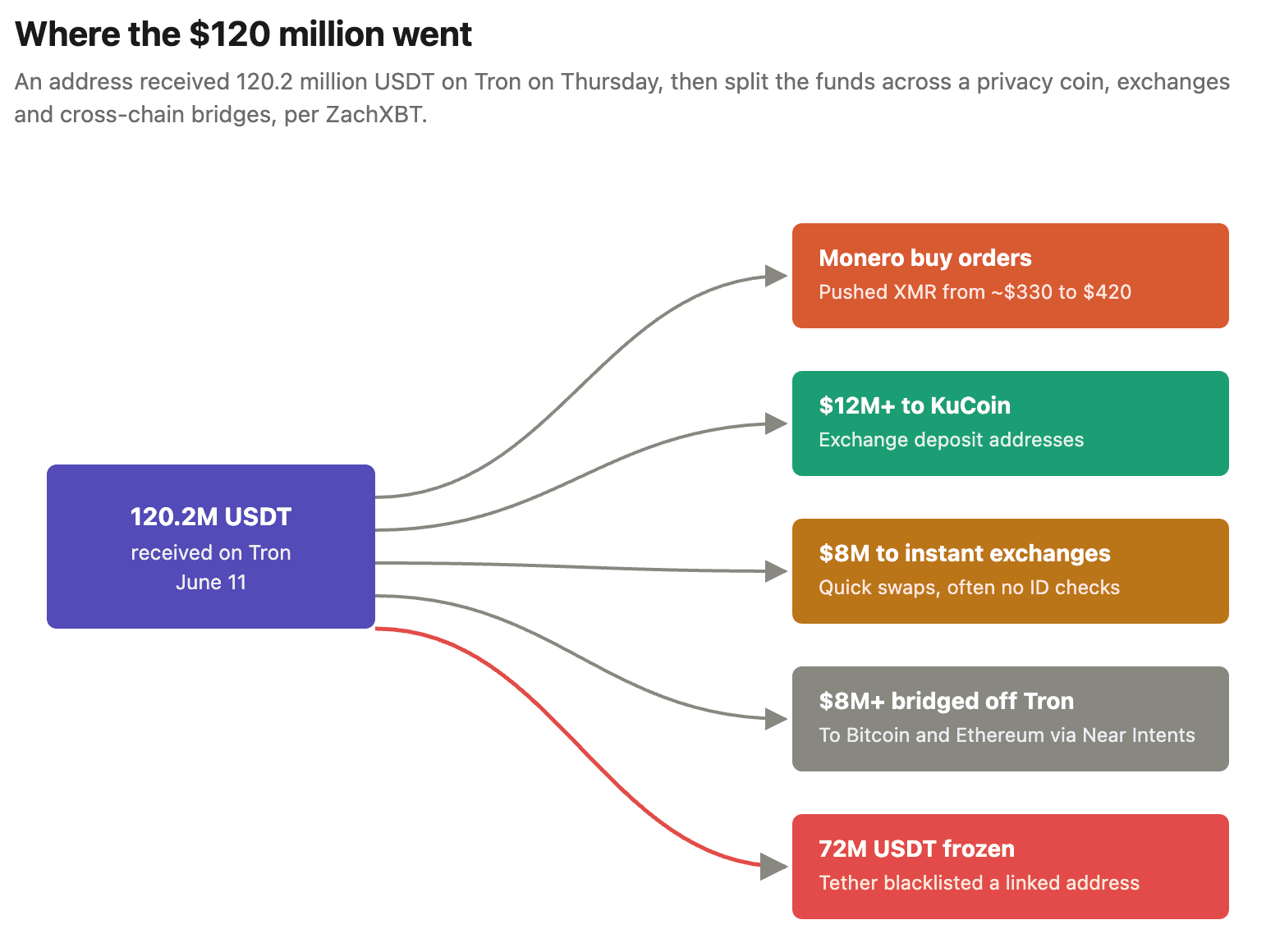
The rest was scattered. ZachXBT traced more than $12 million to deposit addresses at the KuCoin exchange and about $8 million to instant swap services, which convert one coin into another quickly and often without identity checks.

Another $8 million was moved off Tron onto the Bitcoin and Ethereum networks through Near Intents, a cross-chain swap tool. Spreading funds across coins, exchanges and blockchains is a common way to break the trail.
Then Tether stepped in. The company can freeze USDT held at a specific address, and ZachXBT said it blacklisted an address tied to the entity holding 72 million USDT. Once frozen, those tokens cannot be moved or cashed out.
It is unclear where the $120 million originally came from. But the pattern, fast movement into a privacy coin, instant swaps and cross-chain hops, is the kind used to launder illicit funds, and Tether’s freeze suggests it reached the same conclusion.