







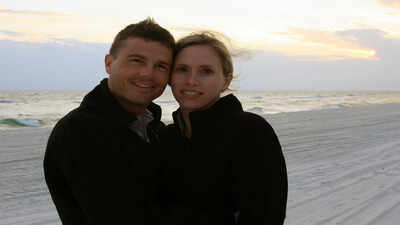
“Distance makes the heart grow fonder…it didn’t take 219,669 miles to remind me how much love I have for Ellie and Katey. They have been incredible supporters during this journey, and they now fully understand why it was important for me to go explore into the unknown,” wrote Artemis II mission commander Reid Wiseman today on X (formerly Twitter). From the launch to almost touchdown time (April 11), we have seen heartfelt moments of joy, awe and kindness from Reid and all his crewmates. It was a poignant moment when his Canadian crewmate, named a moon crater, in the memory of Reid’s wife, Carroll Taylor Wiseman, who died in 2020 after battling cancer. Today, we are talking about Reid Wiseman the father, who has been a single dad for the past six years to his daughters, Ellie and Katey. As Wiseman prepared to command the Artemis II mission, before its launch, he did something quietly extraordinary. A widower since 2020, he sat down with his two teenage daughters and spoke to them about death. Not in abstraction, but in detail. It was pragmatic advice as a necessary one for astronauts venturing into the unknown. It carries immense risks. And it must have been a hard thing to do for him. Apart from the practicalities, like: “Here’s where the will is, here’s where the trust documents are”, he also added: “if anything happens to me, here’s what’s going to happen to you.” The image of a father preparing his daughters for his possible death is not one we instinctively associate with space exploration. Yet, in many ways, it is the most human part of the story. It is a conversation many parents avoid for a lifetime. His daughters, who have already experienced profound loss, supported his decision to undertake a mission that would carry him farther from Earth than any human in over half a century. Wiseman later reflected that he wished more families spoke this way—openly, honestly, without euphemism—about risk, death, and what comes after when a parent dies.This is where this story leaves orbit and returns to Earth. Because if a father preparing to travel 250,000 miles into space can sit down and talk about death with his children, what stops the rest of us?
Why children need to understand death—from their parents
Death is the one certainty of life, and yet it remains one of the least discussed realities within families. Children are often shielded from it, not because they cannot understand, but because adults are uncomfortable explaining it. The result is not protection, it is confusion. Research in developmental psychology has consistently shown that children begin forming concepts of death much earlier than adults assume. By the age of 5 to 7, most children start understanding its permanence. What they lack is not capacity, but context. In traditional societies like India, such conversations are almost unheard of; but it’s necessary. So, if you ever consider having this discussion with your children, here are a few pointers to help you out.
Death is the one certainty of life, and yet it remains one of the least discussed realities within families. Children are often shielded from it, not because they cannot understand, but because adults are uncomfortable explaining it.
Silence does not protect; it isolates
In many households, especially in traditional societies like India, death is treated as something to be hidden, softened, or deferred. Euphemisms replace clarity: “gone to sleep,” “gone somewhere far,” “God has taken them.” While well-intentioned, these phrases can create more anxiety than comfort. A child who hears that someone has “gone to sleep” may begin to fear sleep. A child told that a loved one has “gone away” may wait endlessly for their return. The absence of clear language does not shield them from grief; it deprives them of the tools to process it. Open conversations, by contrast, anchor children in reality. They create a framework within which grief can exist without becoming overwhelming.
The Indian context: Death as a cultural paradox
India presents a unique contradiction. On one hand, death is deeply ritualised. From the chanting of mantras to the 13-day mourning period, from cremation rites to annual shraddha, death is embedded in cultural and religious practice. Philosophies from the Bhagavad Gita to Buddhist teachings speak of impermanence, detachment, and the cyclical nature of life. On the other hand, within the family unit, death is rarely discussed directly with children. They are often excluded from funerals. Conversations are held in hushed tones. Questions are deflected. The philosophical acceptance of death at a societal level coexists with emotional avoidance at a personal level. This creates a disconnect. Children grow up participating in rituals they do not fully understand, absorbing grief without language, witnessing mourning without explanation. The result is not reverence, it is distance. Bridging this gap requires bringing philosophy back into the home, not as doctrine, but as dialogue.
Naming fear reduces its power
Children are not strangers to fear. What magnifies fear is ambiguity. When death is not explained, it becomes unknowable. And what is unknowable is often imagined as something far more frightening than reality. By speaking openly, parents give shape to the abstract. They help children understand that death is not a sudden disappearance into nothingness, but a natural part of life’s cycle. They allow some uncomfortable questions to surface, and possibly be addressed like, “Will you die?”, “What happens after?”, “Will I be alone?” These are not questions to be avoided. They are invitations to build trust.
Preparing children builds resilience, not fear
There is a persistent belief that discussing death will traumatise children. Recent research has shown the opposite is often true. Children who are gradually and honestly introduced to the concept of death tend to develop stronger emotional resilience. They learn that loss, while painful, is survivable. They learn that grief has a shape, a beginning and an evolution. Practical conversations matter as much as emotional ones.
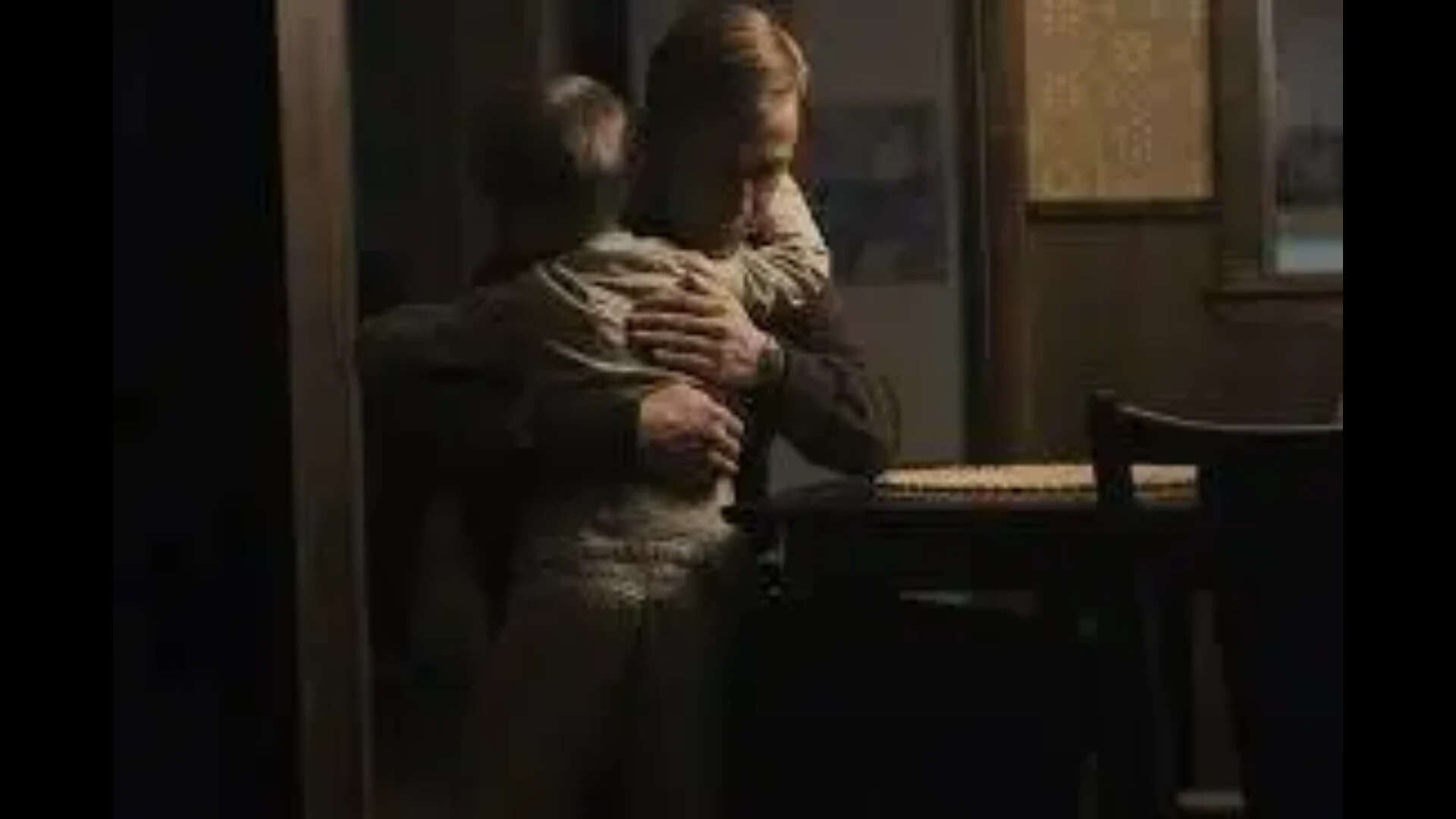
An image from the movie, First Man, where Ryan Gosling’s character Neil Armstrong has a difficult but necessary conversation with his sons about the possibility that he may not come back
One of the most striking aspects of Wiseman’s discussion was its practicality. He spoke not just about death as an idea, but about what would happen if he died—where documents were, how their future would unfold. This is a dimension often missing in family conversations. Talking about death is not only about philosophy or emotion. It is also about logistics, responsibility, and continuity. For children, especially teenagers, this clarity can be grounding. It replaces uncertainty with structure. In the Indian context, where financial and legal planning is often opaque even among adults, this becomes even more critical. Wills are unspoken. Assets are undisclosed. Responsibilities are assumed rather than explained. The result is chaos layered on top of grief. Wiseman’s approach offers a template: clarity is not cold, it is compassionate.
Grief shared is grief transformed
When parents include children in conversations about death, they also include them in the process of sharing that grief. This does not mean burdening them with adult emotions. It means acknowledging that they, too, are participants in loss. That their feelings are valid. That their questions deserve answers. In many Indian families, crying is often discouraged and mourning becomes performative rather than personal. But grief, when shared openly, becomes less isolating. The naming of the lunar crater “Carroll” by the Artemis II crew is a powerful example of this. It transformed personal loss into collective remembrance.
Death as a teacher of life
Ultimately, conversations about death are not only about endings. They are about meaning. When children understand that life is finite, they begin to understand its value. Relationships become more significant. Time becomes more precious. Actions acquire weight. Philosophies across cultures have long recognised this. The Bhagavad Gita speaks of the soul as eternal, the body as transient. Buddhist teachings emphasise impermanence as a path to compassion and awareness. But these ideas cannot remain abstract. They must be translated into lived understanding, and parents are always the first translators.
The courage to speak
What Wiseman demonstrated by having this conversation with his daughters was emotional courage. It is easier to train for a space mission than to sit across from your children and talk about your own death. It is easier to calculate trajectories than to navigate vulnerability. And yet, that conversation may be the more enduring legacy. Because long after missions conclude and records are broken, what remains are memories we leave behind. We cannot stop grieving our dead. But we can remember that the first lessons of endurance and hope came from our parents.