






Meet China’s new humanoid robot: It can cook dinner, wash clothes and care for seniors, but one everyday problem still stops it |

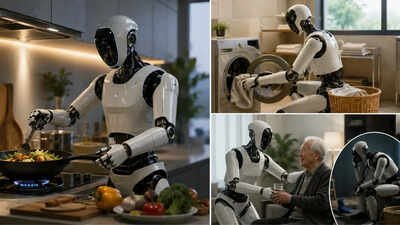
China’s race to build practical humanoid robots has mostly played out behind factory doors so far. Machines have sorted parcels, carried components, and repeated carefully programmed movements in controlled environments. But a different challenge is beginning to emerge, one that appears far messier and far more personal. As reported by the South China Morning Post,…


Read More

Stanford scientists cured Type 1 diabetes in a breakthrough experiment |

Researchers at Stanford Medicine have reported a breakthrough in Type 1 diabetes research after successfully curing the disease in mice using a new method designed to “reset” the immune system. The experimental treatment combined stem-cell transplants, insulin-producing pancreatic cell transplants and a much gentler preparation process involving low-dose radiation and immune-targeting drugs. After treatment, the…

Read More

Brazil races to lab-grow donkey collagen as China’s chase for youth pushes species toward collapse

Brazil is developing lab-grown donkey collagen to counter a global decline in donkey populations driven by rising demand for China’s traditional anti-ageing medicine, ejiao. Through the effort, scientists are aiming to deliver a scalable alternative by 2027 that could reduce slaughter and stabilise the species.At the centre of this effort is Carla Molento, a veterinarian…

Read More

Massive gravity “hole” beneath the Indian Ocean finally gets a possible explanation after decades of scientific mystery |

For decades, a vast region south of India has quietly refused to make sense. Satellites mapping Earth’s shape kept returning the same unsettling result: the ocean surface there sits noticeably lower than it should, as if something invisible is pulling it down from below. Ships passing through would never notice anything unusual, yet space-based measurements…

Read More

What began as a bizarre 1959 metal experiment could end up changing how the world reuses heat and generates electricity |

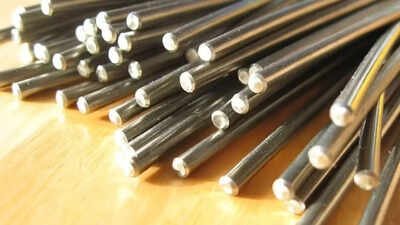
Inside factories, data centres and power plants, heat is usually treated as a problem rather than a resource. It drifts away in plumes, warms the surrounding air, and disappears into the atmosphere with little thought given to its potential. Yet some engineers are now circling back to that wasted energy and asking a slightly unusual…

Read More

California chemical leak: What is methyl methacrylate, the chemical forcing 40,000 residents to evacuate? |

A major chemical emergency in Garden Grove, Orange County, has forced around 40,000 residents to leave their homes after a storage tank at the GKN Aerospace facility began overheating and releasing hazardous vapours. The chemical inside the tank is methyl methacrylate, or MMA, a volatile industrial liquid used in plastics and resin manufacturing. Officials warned…

Read More

Quote of the day by English physicist Brian Cox: “We explore because we are curious, not because we wish to develop grand views of reality or better widgets.” |

Brian Cox (Image: Wikipedia) Something is interesting about human beings that appears very early in life. Children ask endless questions before they know anything about science, philosophy or technology. They ask where stars go during the day. They ask why the sky changes colours in the evening. They ask why birds fly, why oceans seem…

Read More

Scientists finally discover why gold never loses its shine after thousands of years |

Gold has fascinated civilisations for millennia because of one remarkable quality: it rarely loses its shine. Ancient coins, jewellery and royal artefacts buried for thousands of years can still emerge gleaming with their familiar golden glow. Scientists have long known that gold resists corrosion better than most metals, but the exact atomic mechanisms behind this…

Read More

How streetlights may be affecting birds, bats and insects at night in ways scientists did not expect |

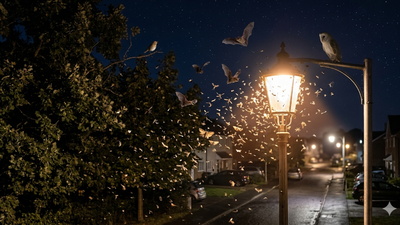
The link between artificial light at night, street lights, light pollution, biodiversity destruction, nocturnal fauna, bats, insects, and birds is becoming more evident in modern environmental science. It has been suggested that too much light during the night not only causes comfort for humans but also becomes a serious threat to the environment. Research concerning…

Read More