







Banks and corporates across Europe are moving beyond exploration and are now actively selecting infrastructure partners to support stablecoin adoption, according to Lamine Brahimi, co-founder and managing partner at crypto custody technology provider Taurus.
Brahimi told Cointelegraph that 18 months ago, most conversations were still educational, focused on understanding stablecoins and their risks. Today, firms with board-level approval are preparing to go live. He said the introduction of the EU’s Markets in Crypto-Assets Regulation (MiCA) has accelerated that transition by replacing fragmented national rules with a single bloc-wide regulatory regime.
“In the past 12 months alone some of Europe’s most stringent financial institutions are all arriving at the same conclusion, digital assets, including stablecoins, belong inside the existing banking stack, not beside it,” he said.

Corporate treasury teams are driving much of the demand. Initially focused on payments and settlement, companies are looking to use stablecoins to move funds faster, reduce costs and operate outside traditional banking hours, Brahimi said.
Related: Bank of France calls for tougher MiCA limits on stablecoin payments
Stablecoin conversation now more immediate, more practical
Brahimi said adoption is increasingly driven by practical needs rather than long-term strategy. “Once clients start asking for better settlement, more flexibility, or more efficient cross-border movement of value, the conversation becomes much more immediate and much more practical,” he added.
On Thursday, ClearBank Europe announced that it has become the first Dutch credit institution to secure approval under MiCA to operate as a crypto asset service provider. A consortium of major European banks, including ING, UniCredit, CaixaBank and BBVA, is now pursuing Qivalis, a MiCA-compliant euro stablecoin initiative designed to enable regulated onchain payments and settlement across Europe.
European banks are also moving ahead with their own stablecoin initiatives. Paris-based Societe Generale has positioned its stablecoins around cross-border payments, onchain settlement, FX and cash management, while another Paris-based bank, Oddo BHF, has launched a MiCA-compliant euro stablecoin.
A consortium of banks, including ING, UniCredit and BNP Paribas is preparing a Swiss-franc stablecoin for the second half of 2026.

Konstantin Vasilenko, co-founder and chief business development officer at Paybis, said the platform has seen rising demand for compatible stablecoins in Europe. Between October 2025 and March 2026, USDC (USDC) volume on Paybis in the EU climbed about 109%, while its share of total stablecoin activity increased from roughly 13% to 32%.
Vasilenko added that in the EU, Paybis stablecoin buyer volume remained roughly five to six times higher than seller volume between October 2025 and March 2026. He also noted that average stablecoin transaction sizes were about 15% to 35% larger than typical Bitcoin (BTC) or Ether (ETH) trades. “That usually points to working capital, settlement use and more deliberate business flows,” he said.
Related: Hong Kong grants first stablecoin licenses to Anchorpoint and HSBC
Stablecoin volumes could reach $1.5 quadrillion by 2035
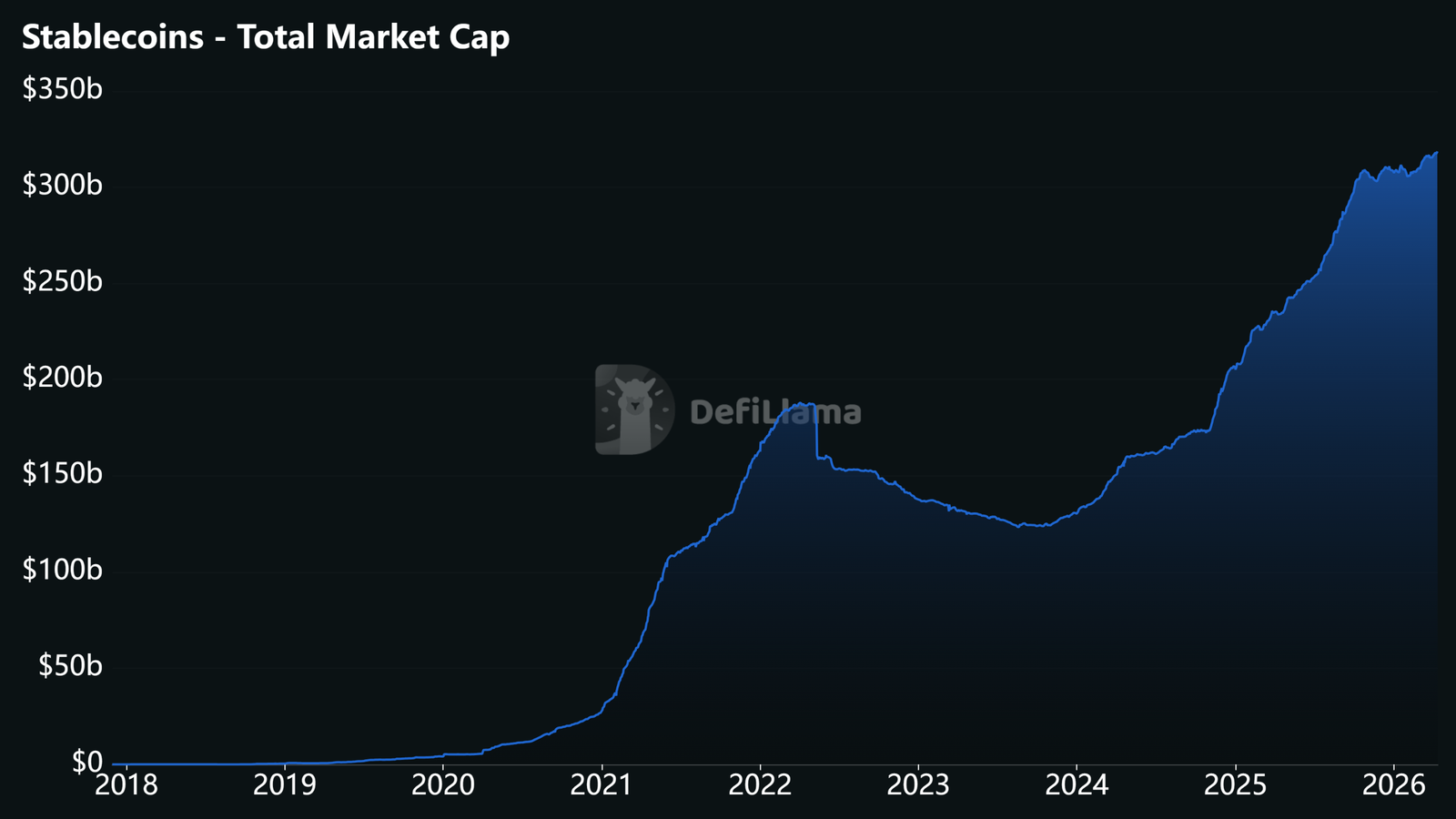
A new report from Chainalysis projects that stablecoin transaction volumes could grow dramatically over the next decade, reaching as high as $719 trillion by 2035 under organic growth scenarios, up from about $28 trillion in 2025.
In a more aggressive scenario, volumes could climb to $1.5 quadrillion if stablecoins become a dominant payment infrastructure and wealth transfer from baby boomers to younger, more crypto-native generations accelerates adoption.
Will Harborne, CEO of stablecoin infrastructure provider Rhino.fi, said that stablecoins will become increasingly important for corporate treasury, cross-border settlement, and FX between euro and dollar stablecoins over the next few years.
“I think every business will eventually start accepting and using stablecoins in some form, and the companies that prepare early will be in the best position when that shift becomes mainstream,” he said.
Magazine: How crypto laws changed in 2025 — and how they’ll change in 2026