







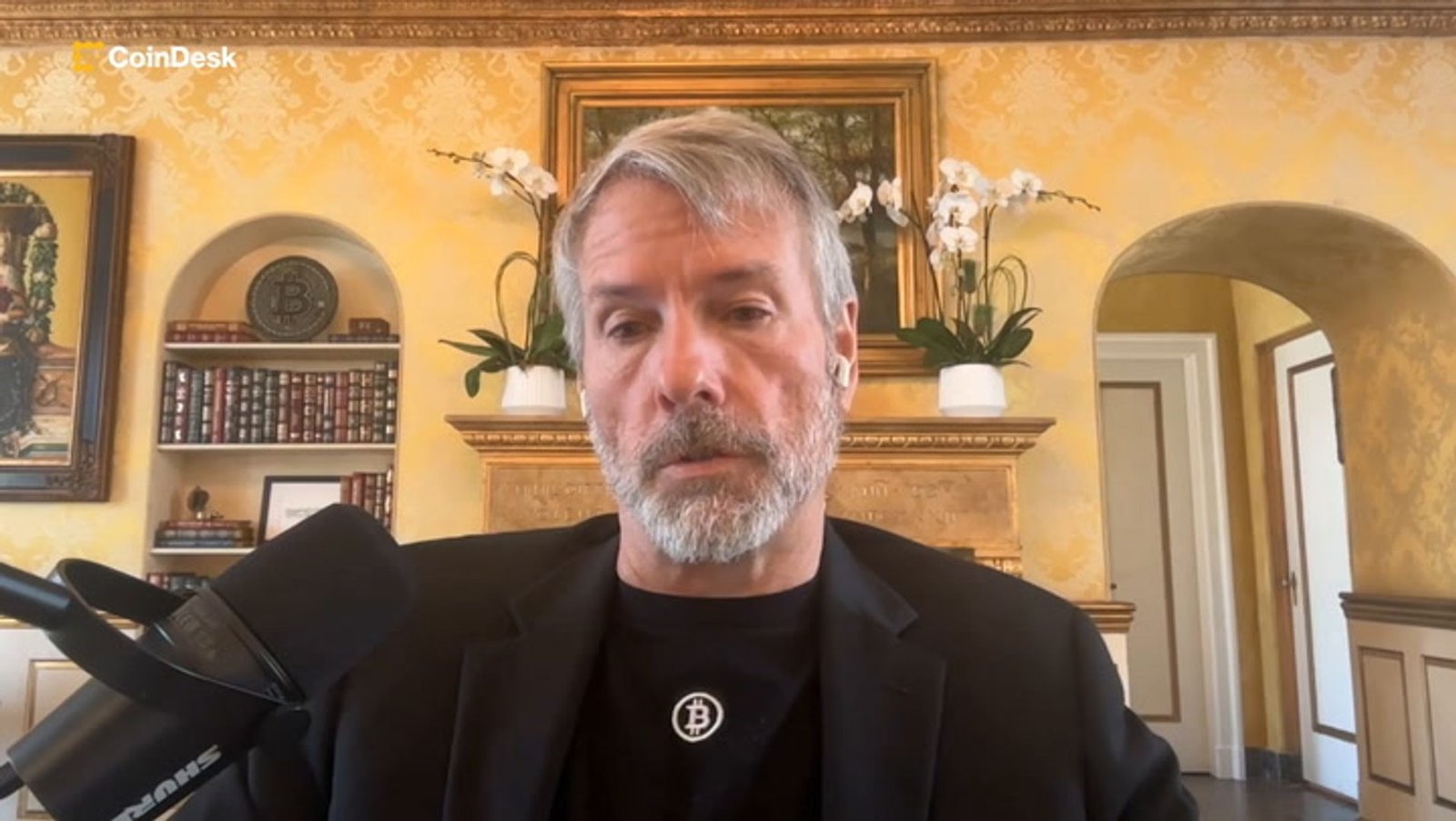
While bitcoin -holder listed firm Strategy’s chairman Michael Saylor blamed the AI boom for last week’s bitcoin selloff, crypto investment firm Arca is pointing the finger squarely at Saylor himself.
“The selling pressure last week was clearly due to the Saylor/MSTR news,” wrote Arca’s Chief Investment Officer Jeff Dorman in his weekly note, pushing back on what he called “gaslighting from MSTR and other Bitcoin bulls.”
Bitcoin, the leading cryptocurrency by market value fell nearly 14% to $60,000 last week. The sell-off happened after Strategy on June 1 disclosed that it sold 32 BTC in the preceding week. Strategy still holds 845,256 BTC worth billions of dollars.
Saylor attributed the sharp slide to AI infrastructure spending absorbing capital at historic scale.
“The AI buildout is absorbing capital at a historic scale, creating temporary pressure across global markets. That does not weaken Bitcoin. It strengthens the case for scarce, liquid, digital capital. Bitcoin remains the premier asset for the long term,” Saylor said.
Arca isn’t buying it.
Dorman’s argument is straightforward. What crashed the market waqs not the amount of BTC sold, which was just 32, worth roughly $2.5 million, but the realization of what that sale implied: that Strategy may need to sell significantly more bitcoin to meet the cash dividend obligations on its preferred shares, including STRC.
In Arca’s view, Saylor has made a series of missteps over the past three weeks. He used his only cash to pay off zero-coupon debt, then rattled markets by teasing a $2.5 million bitcoin sale, which is barely enough to cover one month’s preferred dividends. Strategy currently has roughly five months of cash flow remaining, Dorman noted, leaving the market to wonder what comes next.
The bullish scenario
Dorman says there is one scenario that could stabilize things quickly. If Saylor announces via 8-K filing that Strategy has raised $2 to $4 billion by selling MSTR stock and bitcoin, enough to cover preferred dividends through September 2028, Dorman believes markets would rally sharply. That buffer would remove the forced-seller overhang and give bitcoin room to breathe.
But Dorman doesn’t think Saylor will do it.
“Saylor is basically addicted to buying Bitcoin,” he wrote, suggesting the more likely outcome is continued drip selling, just enough each month to cover the dividend, which keeps steady pressure on the market.
“When the world’s biggest buyer becomes a forced seller, the market will keep pressing until there is blood,” Dorman wrote.
The bright spot
Last week’s BTC selloff was initially confined to Bitcoin itself and did not immediately spill over into the wider market, a bright spot that points to growing market sophistication, according to Dorman.
BTC’s dominance rate, or its share of the total crypto market, fell for the second consecutive week, hitting lows under 58% for the first time since September.
He noted that early in the week, bitcoin fell on its own idiosyncratic news while other crypto assets held steady. This, he said, was a clear sign that investors are now assessing each digital asset on its individual risk profile rather than indiscriminately selling everything when the market leader weakens.
“If BTC can move lower on its own idiosyncratic bad news without taking down the whole market, this would be yet another sign that digital asset market participants are becoming more sophisticated,” he added.
By week’s end though, BTC’s selloff became too intense and most assets joined the downtrend.