







Last weekend’s operation to recover an American weapons system officer hidden deep inside Iran lasted about eight hours — and sources familiar with the mission described the tense moments leading up to his successful rescue.
During the operation, U.S. surveillance planes monitored the area around the mountain where the airman was hiding. Intelligence showed Iranian forces were also searching with small drones, but they lacked sophisticated night vision and didn’t know where the airman was.
The colonel had been on the ground in Iran for nearly two days. Just before 10 p.m. ET on Thursday, his F-15E Strike Eagle — with the call sign Dude 44 — was shot down by Iran. The fighter jet’s pilot was rescued by U.S. forces on Friday, but a search-and-rescue mission for the second crew member, a weapons system officer, continued for more than a day after that.
For hours before the rescue mission, A-10s and B-1 bombers had been pounding Iranian targets, including one bunker with 50 Islamic Revolutionary Guard Corps leaders in it, and another bunker sheltering an IRGC commander, the sources said.
At 4:30 p.m. Saturday, Defense Secretary Pete Hegseth said, “Go get our boy. Godspeed.”
U.S. Army Lt. General Jonathan Braga quarterbacked the mission to send special forces to save the officer
President Trump’s national security inner circle followed the developments.
“Every single minute was excruciating,” one official said. “We just really wanted to get our guy out of there.”
As he waited, Hegseth told those around him he wanted to read a prayer because it felt appropriate for what the weapon systems operator was going through.
It was from Exodus: “Then the Lord said, ‘There is a place near me where you may stand on a rock. When my glory passes by, I will put you in a cleft in the rock and cover you with my hand until I have passed by. Then I will remove my hand and you will see my back; but my face must not be seen.”
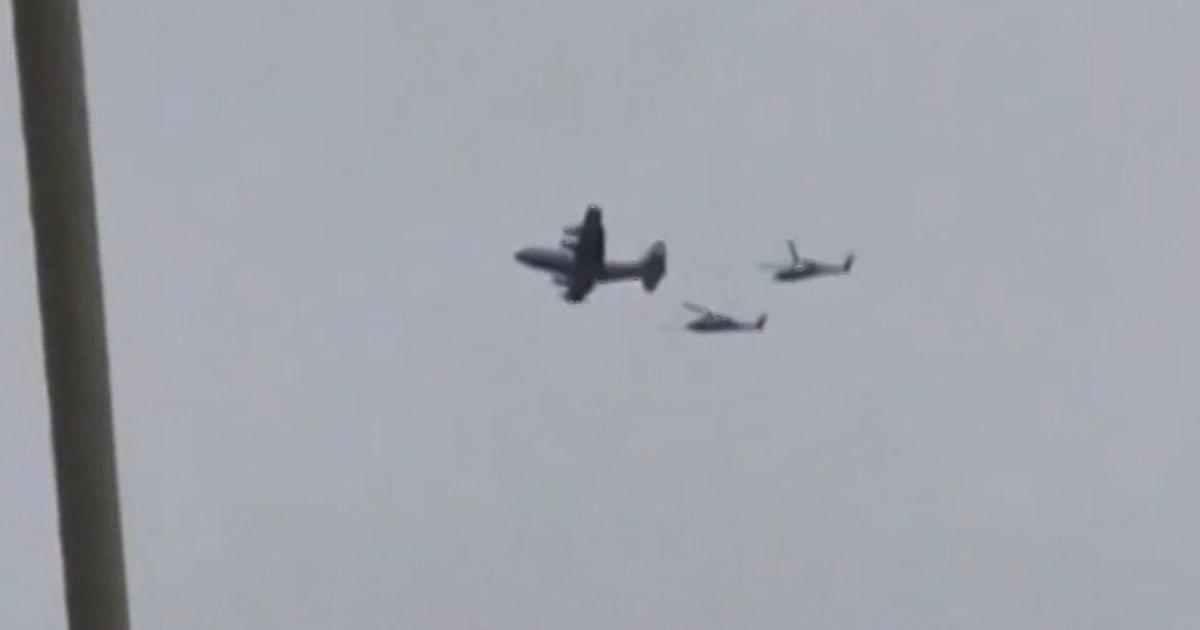
The Army’s Delta Force used a rudimentary airfield on agricultural land to bring in transport planes.
Ten miles away, members of the Navy’s SEAL Team Six plucked the missing weapons system officer from the mountainside.
Enemy forces had moved within two miles of the airman’s position. But there was no firefight.
Some 339 munitions were expended during the entire mission, sources said: 123 for the pilot’s rescue and 216 during the rescue of the weapons system officer.
It took several minutes to find the airman, and get him down the cliff face and into a Little Bird helicopter. “It was a long 15 minutes,” one official said.
Once the airman was secured, Adm. Brad Cooper, chairman of the Joint Chiefs of Staff, told Hegseth: “We have 44 Bravo. He’s safe.”
Hegseth phoned the president.
.