










NEW DELHI: When the Indian team steps up to the court on April 7 at the Delhi Lawn Tennis Association (DLTA) Complex to compete in the Billie Jean King Cup’s Asia/Oceania Group 1, they will have a former player, Vishal Uppal, cheering from the sidelines.Uppal has been at the forefront of the Indian team twice now — first from 2019 until 2023 and then again from 2025 onwards.
The 49-year-old represented the country twice in the Davis Cup, in 2000 and 2002. Now, he has turned his professional learnings into being a non-playing captain.“It’s a big difference. If I’ve played tennis before, at a competitive level, I know the ups and downs a player goes through, what’s happening in their mind, you can obviously look at your opponent and look at tactically what changes you need to make,” he told TimesofIndia.com on what makes a former player vital for a team competition.
In competition, technique pretty much goes out of the window. It is your head, it is your mentality. So, you can only pick up on those finer nuances if you have played at a certain level. And if you have not played at a certain level, you are not going to pick it up.
Vishal Uppal
“You can look at your own player and say this is what you need, we need to get behind them and get them to pick their energy up. There’s so many facets of it, which you can only kind of look at it if you’re trained in that fashion. And if you’re not trained in that fashion, a layman will always go to, let’s say, if a player makes an error, a layman will always go to technique.“But in competition, technique pretty much goes out of the window. It’s your head, it’s your mentality. So, you can only pick up on those finer nuances if you’ve played at a certain level. And if you haven’t played at a certain level, you’re not going to pick it up. “It’s such a big pressure. There’s privilege, there’s people looking at you, people are judging you. You know, the passion, the pride you must feel representing your country. Whether it is here, whether it’s overseas, you’ve got to have that sense of pride. And I think from a younger age, if we can start helping kids understand that, then I think by the time they come to this level they’re more prepared so they don’t get awed or overawed,” continued Uppal who was ranked as high as 488th in the world in 2005.

Vishal Uppal (back) during a practice session for Team India ahead of the 2026 BJK Cup Asia/Oceania Group 1 tie. (Instagram)
He and the Indian team face a daunting challenge when they face New Zealand, Korea, Indonesia, Mongolia and Thailand in the round robin format in the coming week.If they get through this hurdle, India will qualify for the playoffs for a second year running and the third time since 2020. But Uppal and his team are not taking anything for granted.
I already have my strategy against which team, what we are going to do and you know, barring a few surprises we can not really cater for. But other than that, yeah, we are just focusing on our own preparation and come match day, our plans will be in place.
Vishal Uppal
“It’s a very tough group. All the teams in the group are quite good and you know even Mongolia has done great to qualify for Group 1, which is the top group in Asia. So yeah, I expect a tough battle. I expect everyone to really work hard and Team India will be ready to fight hard,” said Uppal while watching India train on a light day with Zeel Desai, Ankita Raina and Rutuja Bhosale stepping up to the court.“New Zealand’s great. Indonesia is extremely tough. I already have my strategy against which team, what we’re going to do and you know, barring a few surprises we can’t really cater for. But other than that, yeah, we’re just focusing on our own preparation and come match day, our plans will be in place,” he continued.

File photo of Vishal Uppal, former India tennis player and current non-playing captain of the Indian BJK Cup team. (Instagram)
For Uppal, the current BJK Cup team and the week ahead are a stepping stone in what he wishes to create with the women’s team. He stressed that it is important to focus on a group of players rather than select individuals if a culture is to be built.“We’ve qualified for the (BJK Cup) playoffs twice in the last five years, something we never did before 2020. In 42 years, we never did it. Obviously, that shows you that the depth in women’s tennis is getting better. The way to balance it is, in my opinion, to try and provide opportunities for a larger group of people to play international competitions in India, to make sure they’re getting good training and their needs are being met. Instead of just focusing on one or two players, I think if we start really paying attention to, let’s say, 50, 75, 100 players, then the cream will rise to the top.
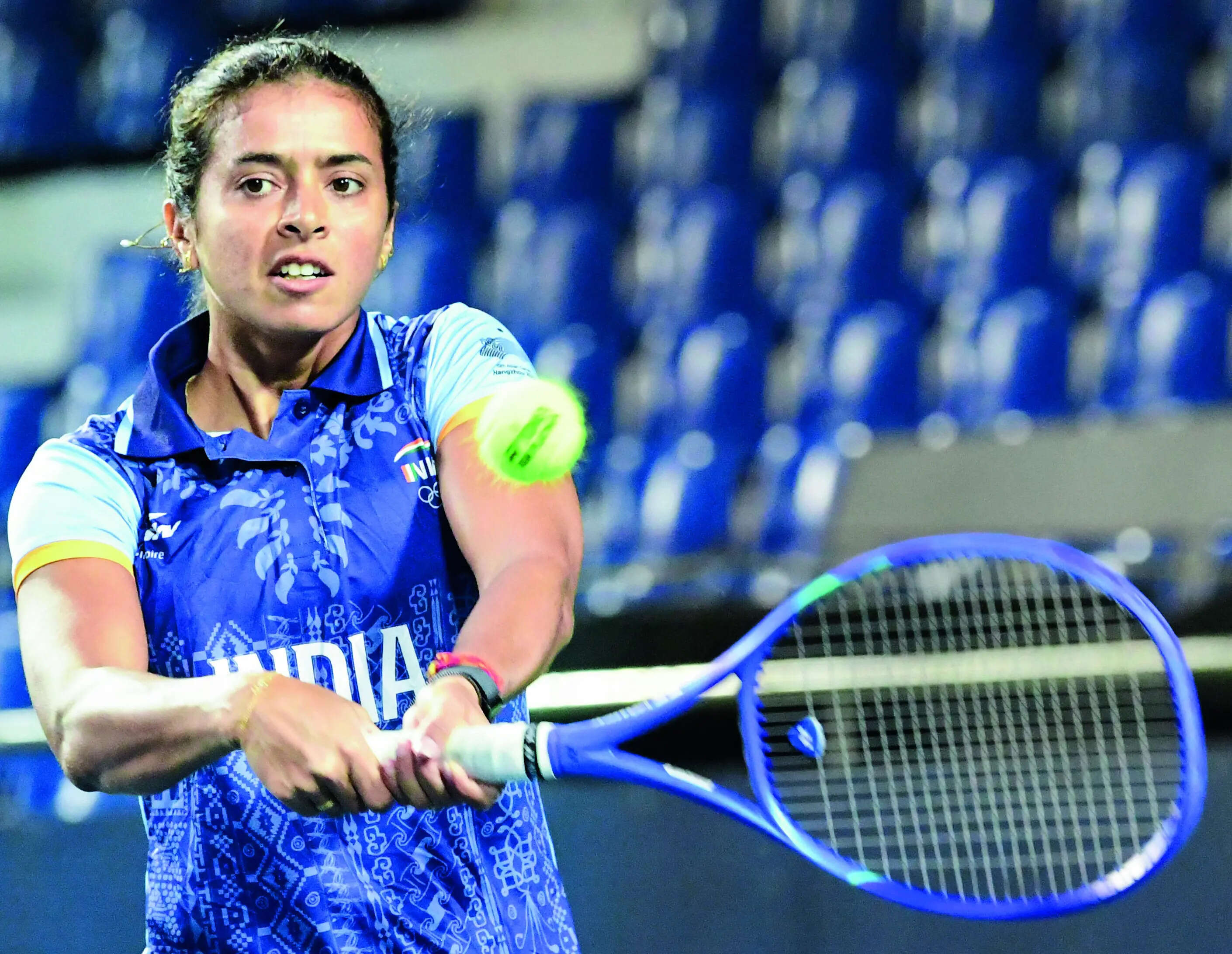
Ankita Raina during practice for BJK Cup.
“We’ve got to do strategic planning, even with the tournaments. Obviously, now we’ve started doing a lot more W15s, which I think really helps the 15, 16, 17-year-old girls get international competition under their belt and get some exposure.“So it has to be strategic planning. All the stakeholders in the game of tennis coming together and working together as a team and seeing how we can develop and elevate the levels of tennis in India,” he stated.