







Key takeaways:
- Aggressive Bitcoin buying by Strategy helped to offset the recent leveraged long liquidations.
- Rising bond yields and a heavy US government debt burden are driving investors toward scarce assets.
- A potential deal between the US and Iran could quickly restore traders’ risk appetite.
Bitcoin (BTC) faced a rejection following a failed attempt to break above $82,000 on Thursday. A subsequent retest of the $76,000 level on Monday triggered $400 million in liquidations for bullish Bitcoin positions over a four-day period. While traders’ confidence took a hit from the 7% price decline, the prospects for recovering the $80,000 mark remain valid.
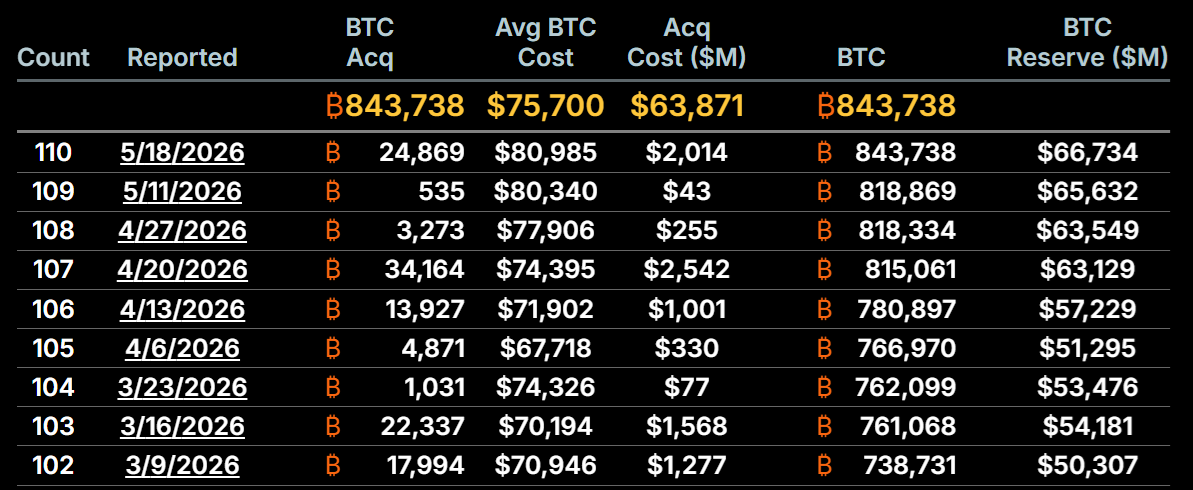
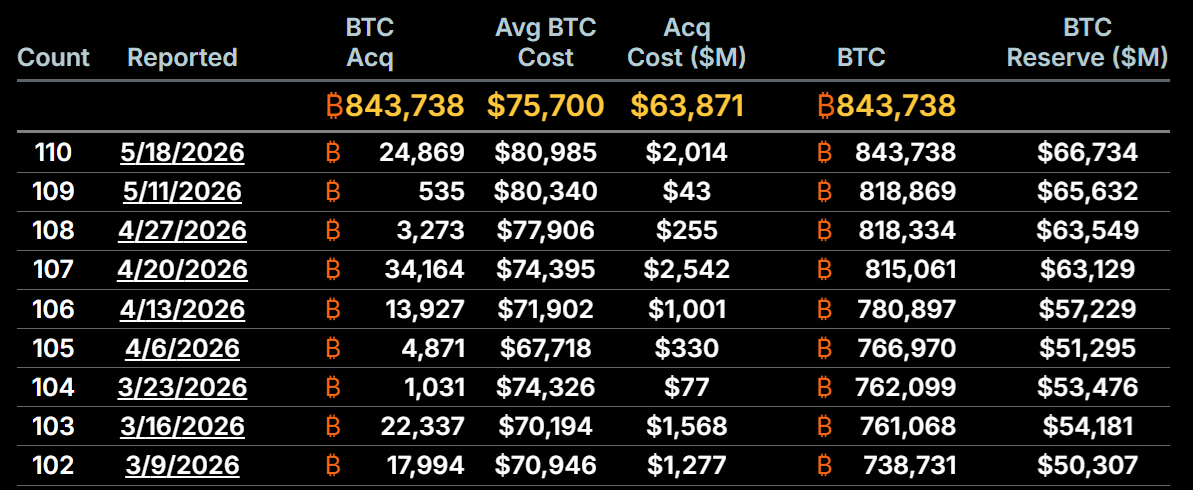
Bitcoin reserve accumulation by Strategy (MSTR US). Source: Strategy
US-listed Strategy (MSTR US) completed the acquisition of $2 billion in BTC over the past week alone. Spearheaded by Michael Saylor, the company continues to surprise investors by finding innovative ways to reduce the cost of capital and raise cash through equity issuance, whether via MSTR common stock or STRC preferred equity.
More importantly, Strategy proved the company can also capitalize on a weaker market by repurchasing $1.5 billion of its debt due in 2029. Retiring some of its senior convertible notes reduces potential future dilution for current MSTR holders. This move clears the runway for new share issuance and additional Bitcoin purchases.
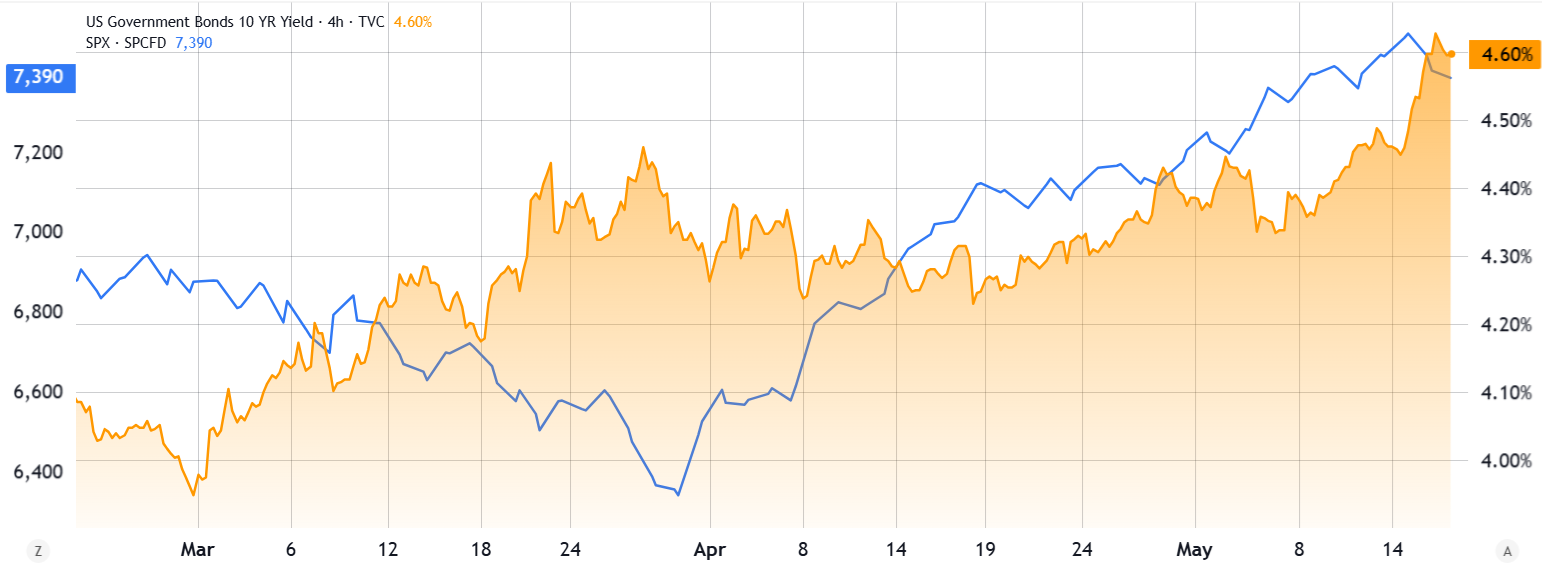
S&P 500 index (left) vs. US 10-year Treasury yield (right). Source: TradingView
From a macroeconomic perspective, the odds of a sustainable bullish momentum for Bitcoin improved as traders demanded higher returns to hold government bonds. Yields on the 10-year Treasury jumped to 4.60%, hitting their highest level in 16 months. Investors are gradually realizing the heavy burden on the US Treasury, especially with $2 trillion in long-term debt maturing in 2026.
US dollar weakness and a potential deal with Iran
The US Federal Reserve will likely need to continue accumulating bonds and Treasurys, a move that potentially weakens the US dollar. Typically, investors seek shelter in scarce assets when they lose confidence in the central bank’s ability to navigate a crisis without devaluing the currency. Even if gold acts as the primary beneficiary, the incentive to hold fixed-income assets drops significantly.
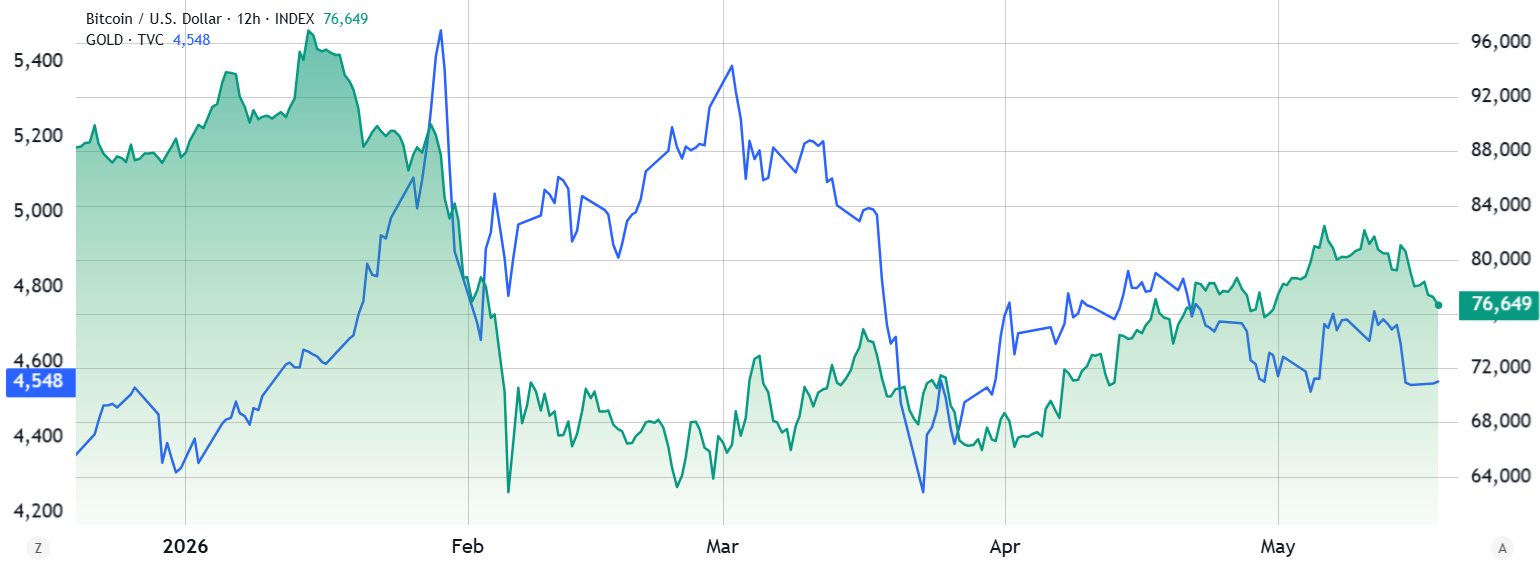
Gold/USD (left) vs. Bitcoin/USD (right). Source: TradingView
Gold prices surged in January after the US captured Venezuelan President Nicolas Maduro and President Trump’s global trade war escalated. However, gold retraced most of those gains over the next four months, while Bitcoin built strong bullish momentum, jumping to $76,500 from $65,000 in late February. These recent price moves hint at growing confidence in Bitcoin as a reliable hedge instrument.
Related: Analysts debate whether Bitcoin is in ‘sell in May’ bear market setup
Crude Brent oil prices jumped to $113 on Monday as negotiations to fully reopen the Strait of Hormuz backpedaled. Oil prices have surged more than 50% since the US and Israel attacked Iran in late February. President Trump’s administration also decided not to renew a waiver for Russian crude oil, further squeezing supply, according to Yahoo Finance.
A deal between the US and Iran, while not the baseline scenario, could trigger renewed risk appetite and catapult the Bitcoin price back above $80,000. Inflation has been pinned down by high energy prices, limiting the odds of expansionary monetary policies. Even so, the odds favor Bitcoin, as the US stock market is hovering near its all-time high while the cryptocurrency still sits 39% below its peak.