







The 2026 Cannes Film Festival starts Tuesday, May 12th, running through May 24th. The Ebert team returns this year with coverage of all of the major films in review and video form. In this video dispatch, Scott Dummler interviews correspondent Ben Kenigsberg about the latest from Ryusuke Hamaguchi and Pawel Pawlikowski, and Chaz flashes back to a prior Cannes convo with Spike Lee. Watch the video and enjoy an edited transcript below.
Scott Dummler:
Welcome back to Cannes 2026. I’m Scott Dummler here for RogerEbert.com. And today we’re joined by our old friend Ben Kenigsberg. Ben, great to see you.
Ben Kenigsberg:
Great. Thanks for having me back.
Scott:
Of course. How many years have we been doing this for RogerEbert.com now?
Ben:
I’ve been doing Cannes dispatches since 2013.
Scott:
How many years have you been coming to Cannes?
Ben:
Since 2008. Every year, it’s this strange feeling of anticipation, combined with the sense that I’m at the top of a roller coaster, about to take the plunge. And so, yeah, it’s always excitement mixed with terror. Just because it’s a lot, in a very short period of time, for sure.
Scott:
I understand the feeling, completely. Well, I know we’re going to talk about a couple of competition titles today. The first one I wanted to talk to you about is “All of a Sudden” by Hamaguchi. Can you tell us a little bit about that film, which is very highly anticipated?
Ben:
Yeah. Well, Hamaguchi has returned to competition after last competing with “Drive My Car” in 2021, which went on to receive widespread acclaim. And this film is the longest film in this year’s competition at three hours and 16 minutes.
Scott:
Thankfully, it’s the longest. That there’s nothing longer than that.
Ben:
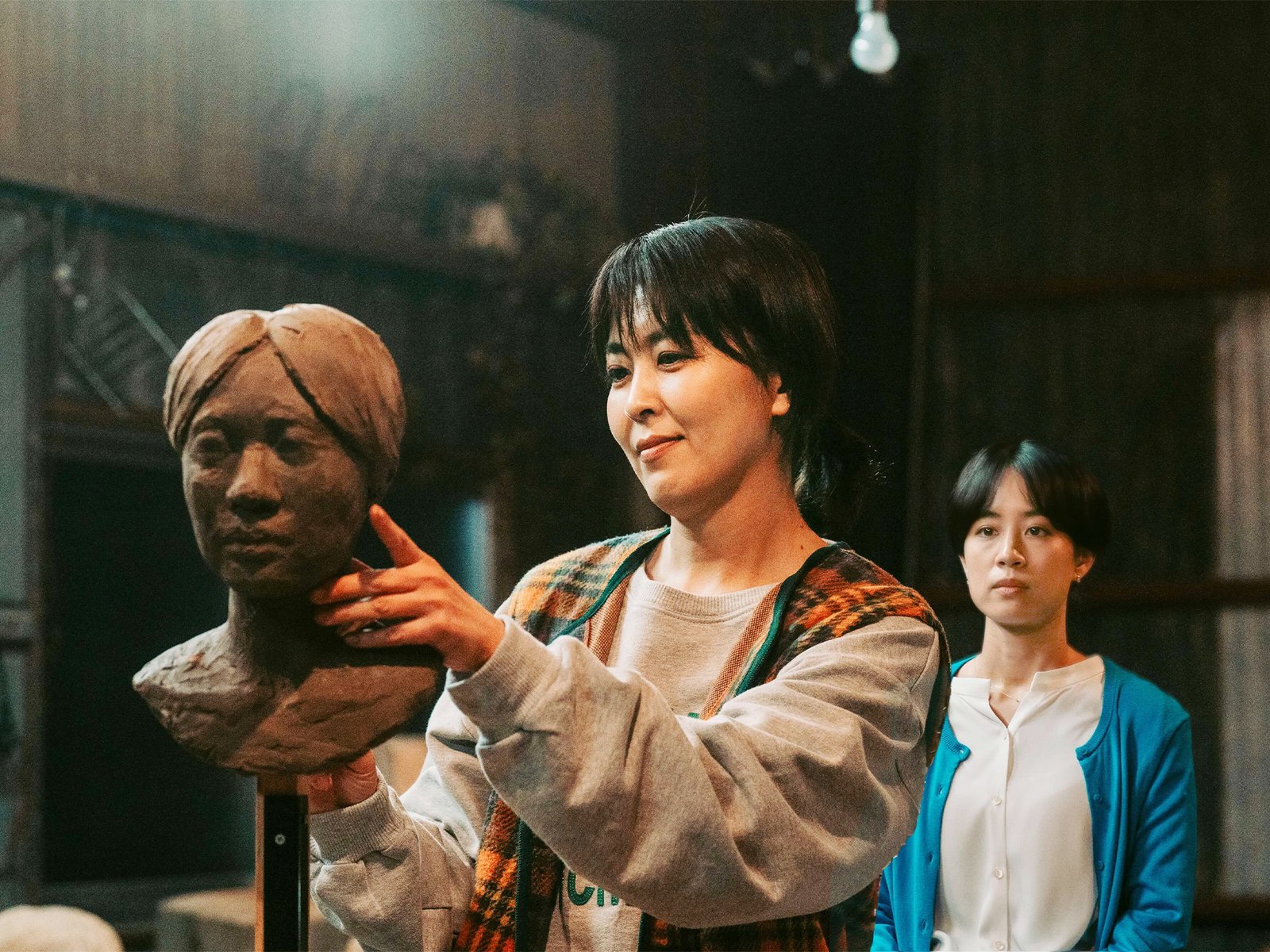
But, you know, I think the film really sort of asks you to ponder the question of whether it justifies its length in a strange way. So, I mean, the narrative is very unusual. It’s about a French woman played by Virginie Efira, who studied anthropology in Japan but now works as a nursing home director in Paris.
And she forges this sort of unlikely, chance friendship with the Japanese theater director, played by Tao Okamoto. And, the two of them, they really share a kind of world view, and they complement each other well. And a lot of the film is about how to properly address people’s pain and issues of aging.
And how, because Efira’s character directs a nursing home, how to care for patients and how to really, truly see them and understand them. And one thing that’s very interesting about this film is that the actresses, both characters, are supposed to be fluent in Japanese and French, and my understanding is that the actresses actually had to learn the other language for this film.
So I really expect them to be in contention for the best actress prize.
Scott:
Yeah, I could see that too. I thought both performances were very strong, even though the film did not land for me. Critics like you are really falling over themselves to praise this movie, which is not unexpected. I came into this festival saying this was the movie highest on my list of expectations; it was the one I really wanted to see.
And for me, it fell flat. I have some recent experience with some of the issues it delves into, so maybe I’m too close to them, but I felt like a lot of what Hamaguchi is doing here didn’t resonate with me. From the dialog to the cinematography to even the blocking, a lot of it just felt forced, a little bit artificial.
And I felt like it undercut the narrative he was trying to convey in some of his messaging.
Ben:
No, it’s fair. One of my reservations about the film is that, for the most part, the characters are unfailingly kind to one another, even in extreme circumstances. You know, one is dying, even in these, you know, nursing homes, they don’t necessarily tend to be the most serene context necessarily.
So you do wonder if on some level, he’s, you know, painting a rosy or, I think, a word used in the film at one point, is utopian, a view of what dying can be like and of what grief can be like. But, you know, I think on some level, the film asks you to just accept this worldview or at least to consider it.
Scott:
I expect this film to really have a big international following just because of the director and the reviews it’s getting from Cannes.
Ben:
“Drive My Car,” as well.
Scott:
Of course. Of course.
I think his reputation has shown that he’s an international filmmaker. It’s got a big following.
Scott:
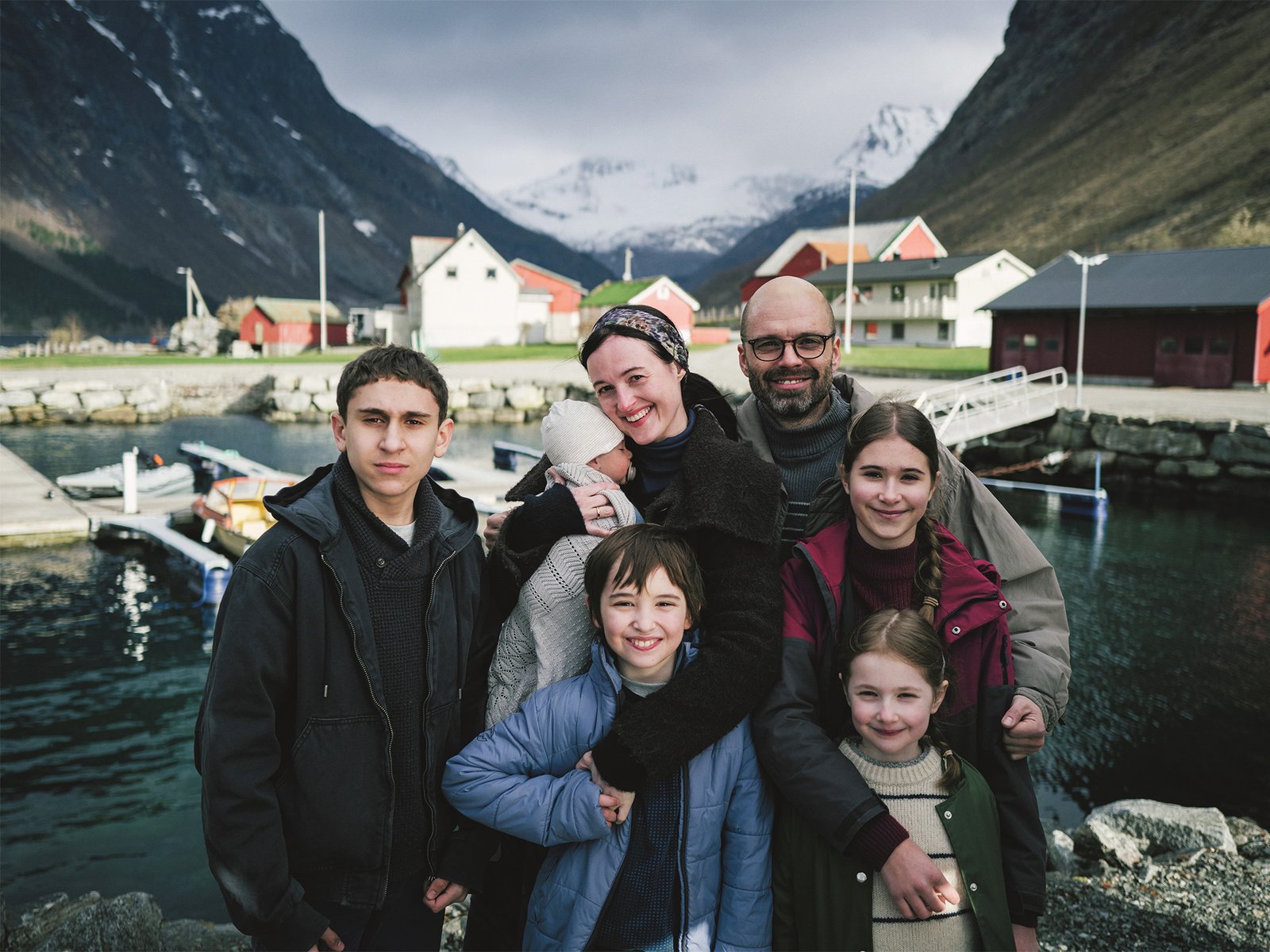
For sure. Another international filmmaker is Pawel Pawlikowski, and he’s got a film back here in Cannes as well. Can you tell us about “Fatherland”?
Ben:
Okay. So his last film at Cannes was “Cold War.” And, you know, I was surprised by how much I enjoyed Fatherland because I’ve been a bit of a Pawlikowski skeptic. In “Cold War” and “Ida” and in this film, he’s developed a style that I would almost call an artifice.
All these recent films have been black-and-white. They’ve been in a narrow aspect ratio. He does something a little less in this film, as I recall, than in the last two, where he leaves a lot of excess headroom above the characters, which bugs me, irrationally. And yet the style just suited this film beautifully.
And I think one of the reasons I liked it is, well, it’s a biopic. Biopic is a genre that I also approach with a certain amount of trepidation. But I really like it when biopics focus on just a narrow time period, and a narrow set of issues that maybe give you insight into the characters as opposed to doing a kind of womb-to-tomb thing.
And this film is about the writer Thomas Mann, played by Hans Ziegler, and his daughter, Erika Mann, played by Sandra Huller, who’s a regular presence in Cannes and is wonderful in this movie as she usually is. She was in Anatomy of a Fall. And it focuses on this very specific time period when Thomas Mann, a staunch anti-Nazi who had been living in the United States, returns to Germany for the first time since before the war to receive the Goethe Prize in 1949.
And I think ultimately, it’s just a very poignant film on the issue of statelessness. They’re somehow perceived as not German, not American, not capitalist, not communist. And it’s just this very poignant state of in-between that is expressed in different ways in almost every scene as we follow them on their journey across the country. In just this one short time period.
Sandra Huller:
That she decided to leave everything she did behind after the death of her brother in order to be with her father and to help him fulfill his, I don’t know, chosen duty in life. That was enough for me to work on her and all the other things we found together. This is a true collaboration, and I like that.
Scott:
Now Sandra Huller, of course, has become an international star. Do you think she’s got any chance at an acting prize in this year’s Cannes?
Ben:
I mean, it depends on what happens with the actresses from All of a Sudden. Right? It’s still early. We’re not even halfway through the competition yet. So, making awards predictions at this point is always a little tricky. It’s tricky even the day before the awards happen. So who knows? Certainly, I think everyone we’ve talked about so far is a contender.
Scott:
Well, thank you so much for being here. I know we’ll see you around Cannes over the next week or so. And hopefully again on camera before the end of the festival.
Ben:
All right. Always a pleasure. Thanks for having me.
Scott
Thanks, Ben. And now it’s time for today’s Cannes flashback.
Today we’re flashing back to 2025, when Chaz Ebert shared a little trash talk with Spike Lee.
Chaz Ebert:
Chaz Ebert from the home of the Chicago Bulls. Hey, hey, hey, hey, hey.
Spike Lee
First of all, I want to ask you a question, okay? What was the last time Michael Jordan played?
Chaz:
He left with 6 rings.
Spike:
But I want you to know that Michael Jordan was born in Brooklyn, New York. He was born in Four Green Cumberland Hospital. That’s right. Michael Jordan, Mike Tyson, and Bernard King were all born in Fort Greene, Brooklyn. So thank you very much.
Chaz:
But tell me, where do the six bull rings reside….in Chicago! Ooh, ooh. Okay.
Voice over:
That’s all for now. But don’t forget to check back each day at RogerEbert.com/festivals for more reviews, news, and reactions from the Cannes Film Festival. We’ll see you then.