





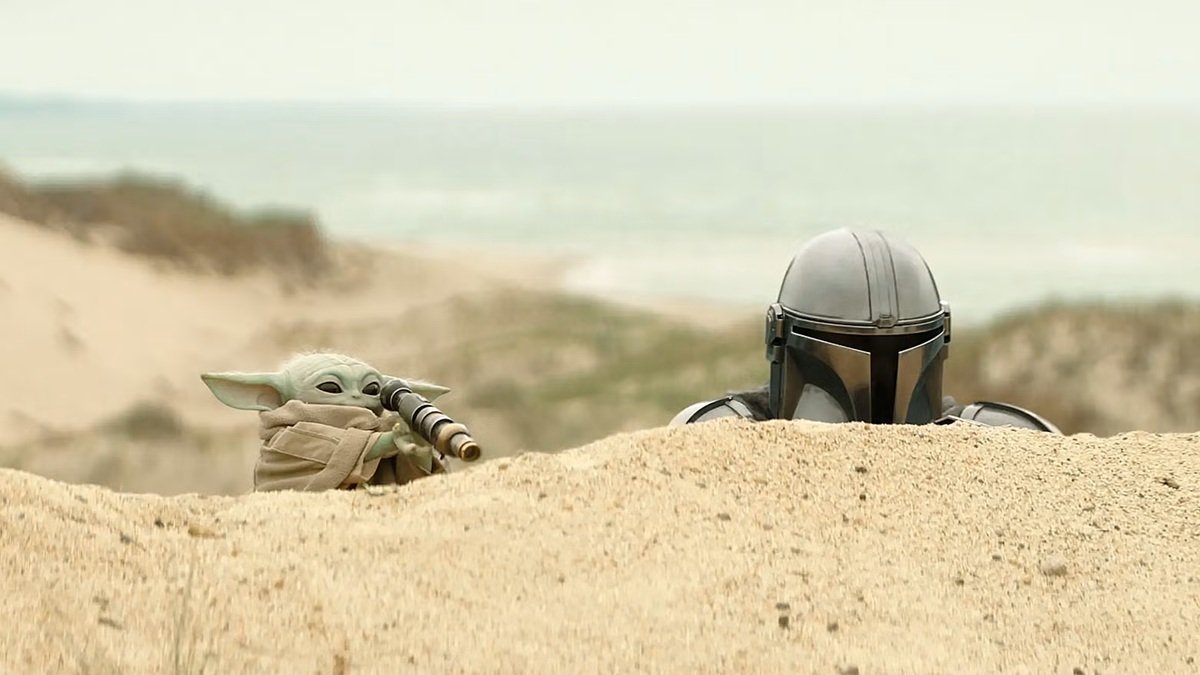
It is a strange thing to sit before a Star Wars movie and feel the galaxy getting smaller. Not visually, of course; The Mandalorian and Grogu has the planets, creatures, ships, bounty hunters, crime lords, droids, monsters, and little green merchandise magnet required of the brand. Jon Favreau knows the house style well enough by now. At this point, he should. He helped turn The Mandalorian into the franchise’s first major Disney+ success, built around the simple appeal of a masked gunslinger and the child he could not bring himself to abandon. On the surface, this is recognizably Star Wars. It looks the part, it makes the familiar noises, and it has the right grime in the corners.
But strip away the Star Wars names, and this could be almost…anything. A bounty hunter is hired to retrieve someone important from a dangerous corner of space. He gets pulled into underworld politics, gladiator fights, monster attacks, double-crosses, and a lot of running, sneaking, shooting, and escaping. Change the costumes and proper nouns, and a first-timer might assume this was a stray Star Trek adventure, or something from the far end of a Men in Black installment. It is space pulp, basically. Not a bad thing in itself. Star Wars was built on pulp.
But pulp still needs spark. And this film doesn’t quite deliver.
A Galaxy That Feels Smaller
The film arrives as the first theatrical Star Wars feature in years, which gives it a burden it does not seem eager to carry. It doesn’t need to save the franchise, and frankly, I am tired of movies being treated as corporate referendums. But a theatrical return should feel like more than a season premiere with a larger sound system. This movie often plays like a Disney+ arc inflated for IMAX, with act breaks where episodes might have ended and action sequences that keep the body busy while the imagination waits for something to happen.
That is not automatically an insult. After all, plotlines, no matter how generic, can work beautifully when there is texture, wit, rhythm, or feeling beneath them. But here, the machinery is often so exposed that you can almost hear the mission objectives clicking into place: go here, retrieve this person, fight that monster, escape this planet, repeat as needed.
That may be the most dispiriting thing about The Mandalorian and Grogu. It is not terrible. In some ways, a terrible Star Wars film would be easier to write about. Disaster has shape. This one, however, is passable, serviceable, occasionally cute, sometimes even charming in isolated stretches. But it rarely produces the jolt that made Star Wars feel like Star Wars in the first place. The force is present, sure, but it feels faint, more like a brand pulse being monitored in a studio lab than a living myth moving through a movie.
A Passable Mission, Not Much of a Movie
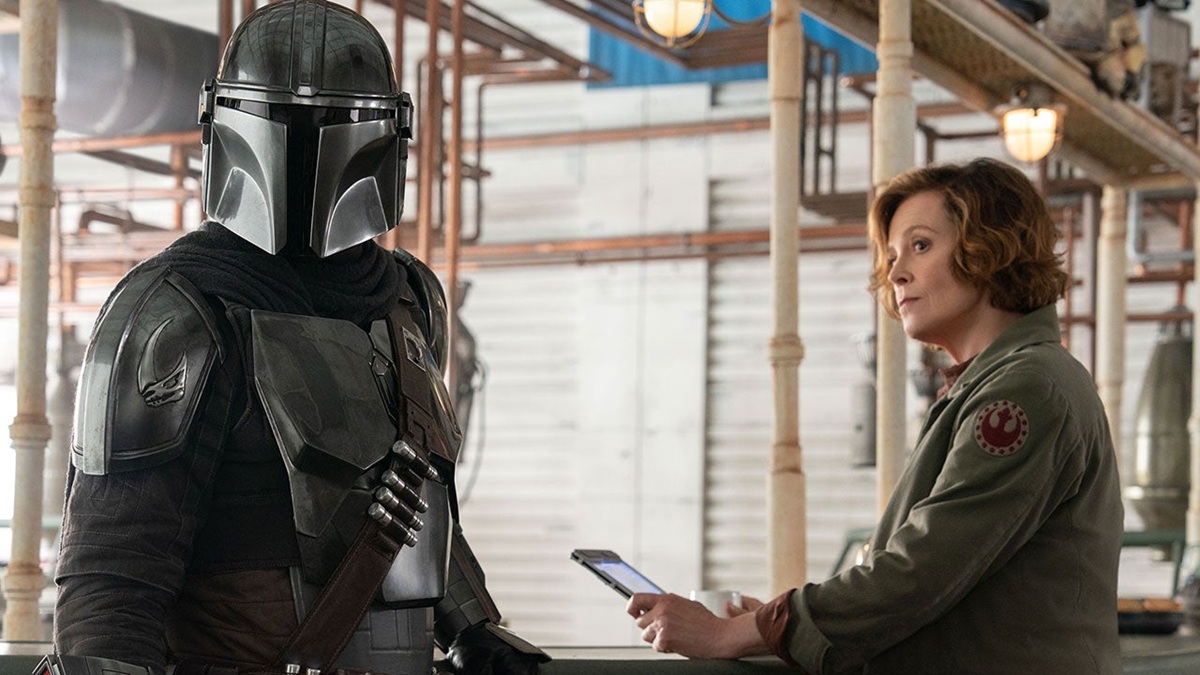
The setup is simple enough. Din Djarin, still voiced with stoic warmth by Pedro Pascal, now works with Grogu under the orbit of the New Republic. Sigourney Weaver enters as Colonel Ward, an authority figure who can explain a mission with enough gravitas to make exposition sound like procedure.
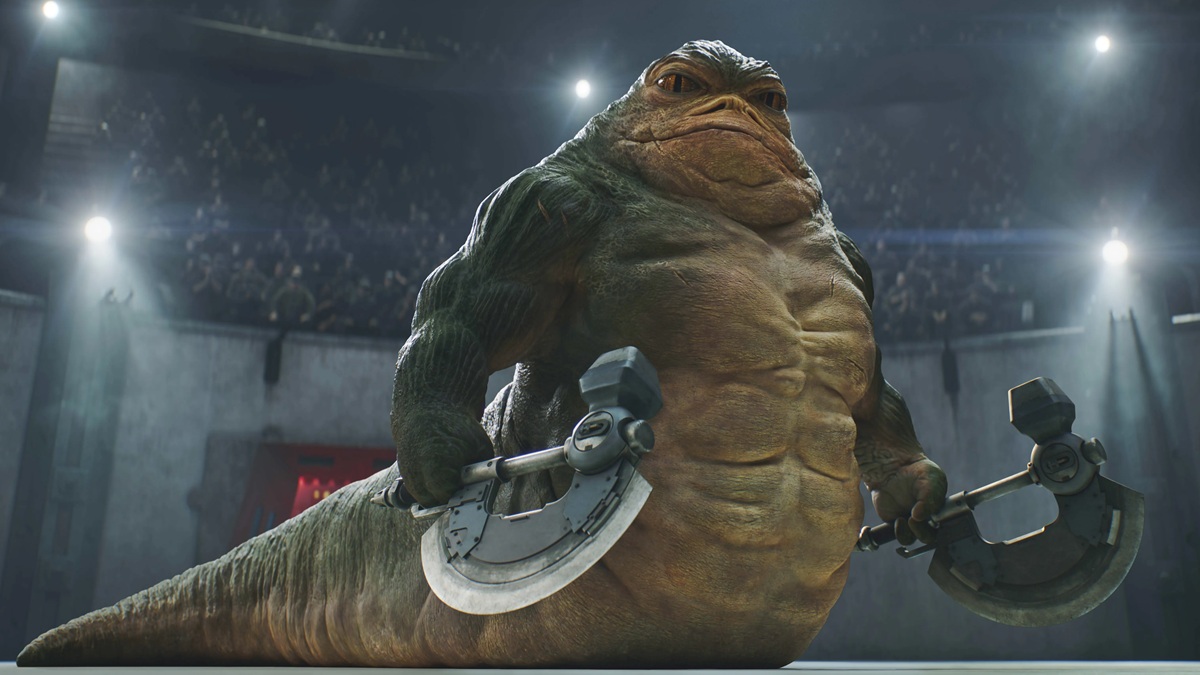
Djarin’s next mission involves rescuing Rotta the Hutt, son of Jabba, who has become less a helpless heir than a gladiator type trying to crawl out from under his father’s enormous shadow. Jeremy Allen White voices Rotta, and he is fine. That may sound dismissive, but it is about as much as the role gives him. The idea is amusing: a Hutt trying to step out of Jabba’s shadow, shaped less like a crime slug and more like a bruiser with daddy issues. There is probably a funnier, stranger, more pathetic version of that character somewhere. This film gives us the outline and keeps moving.
That becomes the movie’s pattern. It introduces a situation, pushes through it, and moves to the next. The story is not confusing, which some may count as a virtue after years of franchise storytelling that often feels like homework. But it is also easy to follow because there is very little to chew on. The movie proceeds like a checklist. Go here. Rescue him. Fight that thing. Escape this trap. Discover a betrayal. Fly elsewhere. Repeat. I kept waiting for the plot to deepen into something. Unfortunately, it never really does.
That is where the disappointment lands hardest. The Mandalorian and Grogu is not some unwatchable disaster. It is too competent for that. There are bits of charm, bits of craft, bits of affection. But as the first theatrical Star Wars film in years, it feels oddly minor. Not small in the way Andor was small, where the limited scale made the politics and character work sharper. Small in the way a side mission can feel small when no one has figured out why it needed to be a movie.
The Problem With Modern Star Wars
I do not need every Star Wars story to shake the galaxy. I would actually prefer fewer galaxy-shaking events. One of the best things Andor understood was that the rebellion could feel more powerful when seen through labor, fear, compromise, bureaucracy, and ordinary people trying not to be crushed by history. Rogue One worked for similar reasons. Its ending was already written, but it still found a pulse in sacrifice.
And I loved the messy, divisive swing of the audience-maligned and review-bombed The Last Jedi, which remains one of the few post-Lucas films that felt like it had ideas complicated enough to anger people. At least it had the nerve to argue with the mythology it inherited. It wrestled with legacy instead of simply embalming it. That audacity matters.
So my issue with The Mandalorian and Grogu is not that it avoids grand mythology. If anything, I wish more Star Wars projects would stop dragging every story back to the same family trees, the same symbols, the same recycled sense of destiny. My issue is that this film does not replace that mythology with anything equally compelling. It gives us a smaller adventure, but not a richer one.
The Mandalorian series was always hit-and-miss for me. I liked parts of it. Sometimes I liked whole episodes. But over time, the show began to feel stretched thin, as if a strong premise had been kept alive because the machine needed feeding. That is the danger with Disney-era franchise storytelling. A world keeps expanding, but somehow feels less mysterious. More characters appear, more connections are made, more side corridors open up, and still the galaxy shrinks.
This movie carries that same problem to the big screen. It wants to be accessible to people who may not have watched all three seasons, and in fairness, it mostly is. You can follow the story. You can understand the stakes. And you can enjoy Grogu being Grogu. But there is a difference between accessibility and plainness. Too often, The Mandalorian and Grogu lands on the wrong side of that line.
Grogu Does the Heavy Lifting
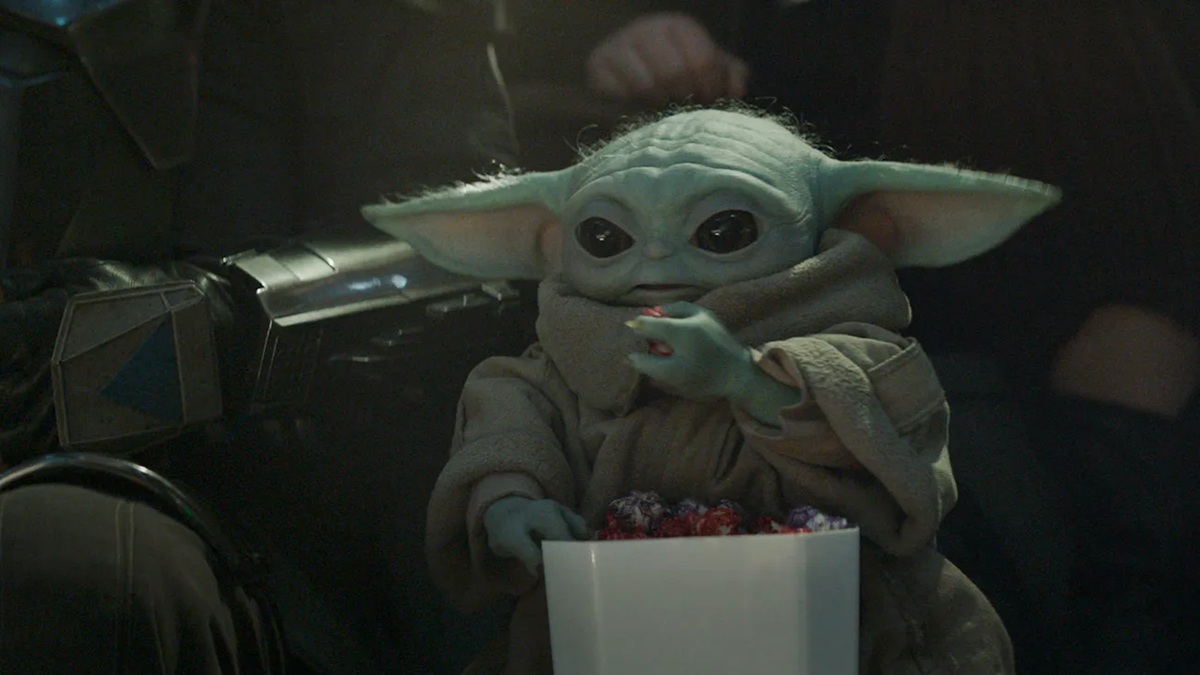
The movie’s best argument for itself is Grogu. That may sound obvious, even cynical, because of course Grogu works. He has worked since the beginning: cute in a way that feels almost unfair, a tiny puppet with huge eyes, soft coos, and enough comic timing to rescue scenes that would otherwise lie flat. He is designed to be loved. No use pretending otherwise. But what surprised me here is that he finally starts to feel more like a character than a reaction shot.
There are moments when the film lets Grogu act, choose, and figure things out. He is still adorable, still funny, still doing the little bits that will make children squeal and adults melt against their better judgment. But he is not only eye candy this time. His bond with Djarin has a little more weight because he is no longer just being protected. He is learning how to protect back. When Grogu has to make decisions, care for Djarin, or fumble his way through danger, the movie briefly finds a pulse.
That is where the film comes closest to finding an emotional center. Djarin and Grogu have always worked as a father-child pairing, partly because Pascal’s voice gives the armored figure more tenderness than the writing sometimes does. But the dynamic can only go so far if Grogu remains a baby mascot forever. Here, at least, the movie nudges him forward. Not dramatically, and not enough to transform the film. But enough to make his presence feel less like a marketing strategy and more like a small step in a relationship we have been following for years.
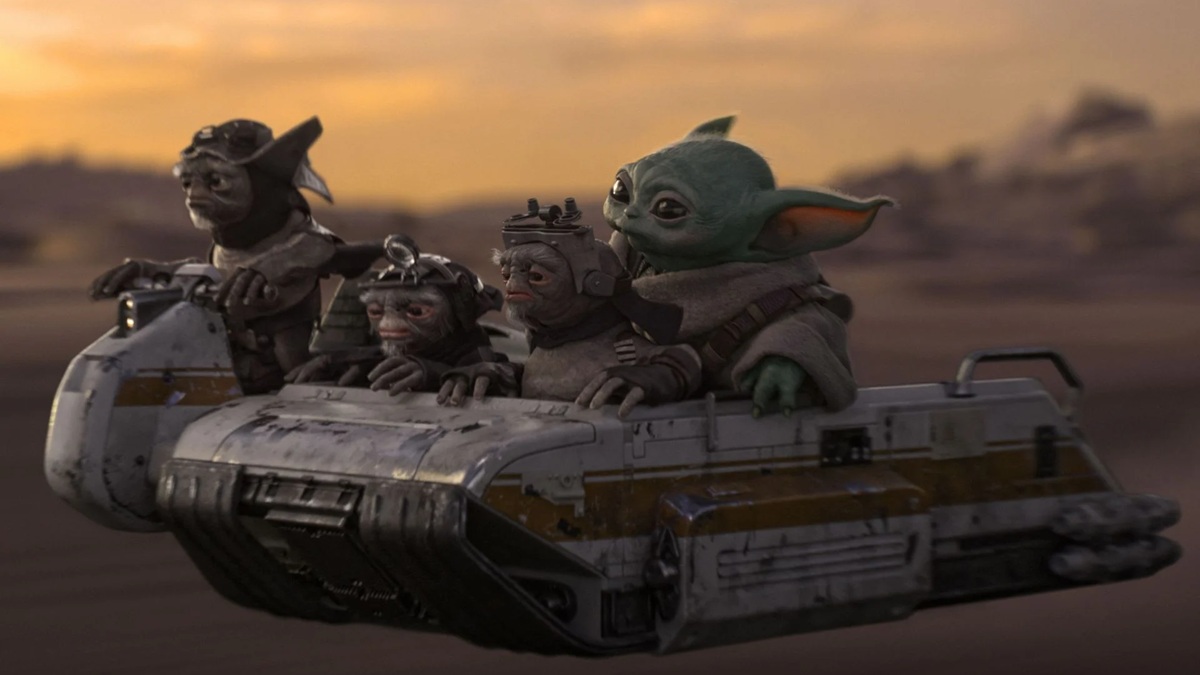
The Anzellans help too. Those tiny mechanic gremlins who look as if they crawled out of a workshop drawer and started unionizing, are also a delight. They are cute, yes, but not in the frictionless way corporate cuteness often presents itself. They are fussy, chaotic, practical, funny. And they bring with them the sense of a handmade world, the type where small beings are allowed to scurry around the edges of a frame and make the universe feel lived in. For a movie that often seems assembled out of familiar franchise parts, these little weirdos provide genuine life.
I wish there were more of that.
The Small Things Work Best
The funny thing about The Mandalorian and Grogu is that its biggest pleasures are tiny. Grogu. The Anzellans. Creature details. Puppetry. Bits of physical comedy. Little corners of production design that suggest somebody, somewhere, still remembers that Star Wars should feel touched by human hands.
Whenever the film leans into practical texture, it perks up. The creatures have weight. The puppets have personality. The stranger details give the movie a pulse that the bigger action scenes often lack. There is an old-fashioned pleasure in watching something that looks built, handled, and performed rather than merely rendered. Star Wars was never just about scale. It was about texture: dusty machinery, rubbery aliens, spiritual dread, political decay, slapstick robots, and operatic feeling all somehow sharing the same frame. The Mandalorian and Grogu occasionally remembers that. A puppet can still beat a thousand pixels when the filmmaking knows how to give it weight.
Jon Favreau’s big-screen continuation has its share of tactile charms, but Grogu and the Anzellans can only do so much for a generic space adventure that rarely feels worthy of Star Wars.
Favreau understands some of that. You can feel his affection for the old serial roots of the franchise. You can feel his fondness for creatures, gadgets, helmets, and Western standoffs. But affection is not the same as inspiration. Too much of the movie feels arranged rather than imagined.
The larger action is especially forgettable. There are chases, fights, dogfights, monsters, and droid battles, but few of them build much tension. They happen. Some are cleanly staged. Some are busy. Almost none stay in the mind. The film has movement without momentum, noise without much danger. I never felt lost, but I also rarely felt pulled in. And that is a bad trade.
A Score Looking for a Better Film
Technically, the clearest standout is Ludwig Göransson’s score. One of the smarter choices of the Mandalorian corner of the franchise has been its willingness to step away from direct John Williams imitation and arguably closer to Hans Zimmer’s world. Williams’ music is so tied to the emotional architecture of the original films that imitating him too directly can make new Star Wars stories feel like cosplay.
Meanwhile, Göransson takes a different route. His score is more percussive, lonelier, less symphonic in the classic Star Wars sense. It gives this corner of the galaxy a separate identity. You can hear the Western in it. You can hear the isolation. Sometimes, in this film, you can hear the grandeur the movie itself cannot quite reach.
That is both praise and a problem. The music often suggests a more exciting adventure than the one we are watching. It gives scenes lift, and it gives Djarin and Grogu’s journey a sense of mythic shape, even when the actual storytelling remains stubbornly ordinary. It is the rare element here that feels like it is trying to push the film beyond being merely functional.
Pedro Pascal remains a steady presence as Djarin, though the role continues to be an odd acting challenge. So much of the character is voice, posture, and accumulated audience affection. The helmet turns him into an icon before he can become a man, which has always been both the appeal and limitation of the character. Pascal gives the movie a steadiness it needs, but even he cannot make Din’s arc feel newly revealing.
This Could Have Been More ‘Star Wars’-y—and Memorable
Then there is Martin Scorsese’s vocal cameo as Hugo, a strange and funny footnote that becomes more interesting the longer you think about it. Here is Scorsese, the filmmaker whose comments about Marvel and amusement-park cinema became a culture-war shorthand, now lending his voice to a Disney-owned franchise behemoth. It would be lazy to treat that as hypocrisy.
Whatever the case, it is amusingly loaded. To hear him pop up inside one of the biggest franchise machines in the world gives the moment a little meta charge. It hints at the film Favreau might have made if he had pushed harder into oddball digressions and less into plot delivery. For a few minutes, the galaxy feels eccentric again.
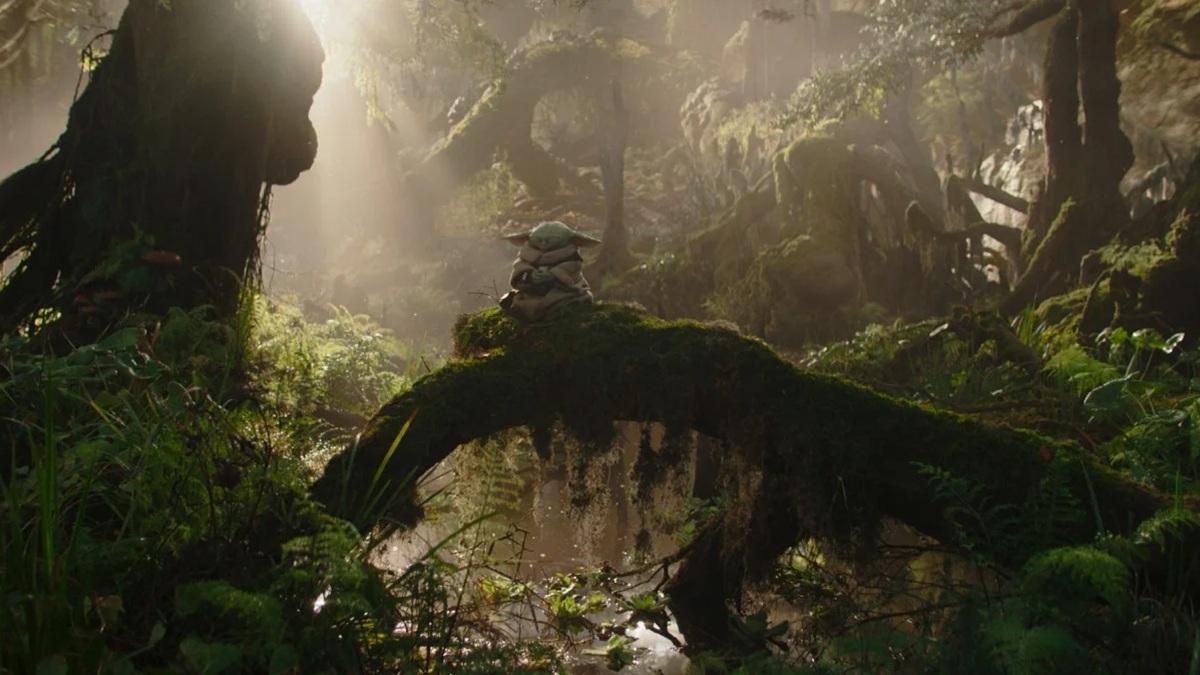
And that is the frustrating part: you can see the better movie trapped inside this serviceable one. A looser, stranger, more tactile adventure about Djarin and Grogu navigating some bizarre criminal underworld could have worked. I mean, for crying out loud, the cyberpunk-inspired scenes in nighttime Shakari felt like visual nods to Ridley Scott’s Blade Runner, so there’s validity in thinking that this could have been a better film. A film that leaned harder into Grogu’s agency might have also given the character a real coming-of-age moment, or at least something beyond weaponized cuteness. A leaner story that trusted atmosphere over plot clutter might have made the smaller scale feel refreshing instead of underpowered.
Instead, The Mandalorian and Grogu often mistakes familiarity for comfort. It gives us the icons, but not enough awe. It gives us the grime, but not enough danger. And it gives us creatures, ships, helmets, syndicates, and Force-assisted rescues, but not enough reason to care about the adventure once it is over. I remember Grogu. I remember the Anzellans. And I remember Göransson’s music doing its best to inject personality into the bloodstream. But ask me to recount the actual story with any enthusiasm, and the film begins to dissolve almost immediately.
‘The Mandalorian and Grogu’: When Cute Is Not Enough
By the end, I kept thinking about how much I remembered in pieces and how little I cared about the whole. Grogu, yes. The Anzellans, definitely. Göransson’s music. A few bits of creature business. The idea of Rotta the Hutt as a gladiator. Scorsese popping up in the margins. These things register.
The story itself? Less so.
That is a problem for a movie that wants to relaunch Star Wars on the big screen. Or, at the very least, remind audiences why seeing this universe in theaters should still matter. The Mandalorian and Grogu does not make a strong case. It is friendly, competent, and intermittently charming. It is also generic to the bone. The film has the packaging of Star Wars but very little of its old magic, that feeling of being pulled into a world larger, stranger, and more emotionally charged than the one you entered.
Maybe younger viewers will have a better time with it. I hope they do. There is value in a clean, kid-friendly adventure with monsters, spaceships, and a lovable little creature learning how to be brave. Not every film needs to be a grand artistic statement. Not every Star Wars story needs to bend the mythology into a new shape. Even George Lucas knew the value of matinee pleasures better than anyone.
But the original films, for all their pulp origins, had romance, danger, yearning, and a sense of discovery. They made junk mythology feel newly minted. This one feels more like a product line taking a victory lap through familiar territory.
All these, nonetheless, don’t make The Mandalorian and Grogu a disaster. It is too competent, too intermittently charming, and too fond of its little creatures for that. But this frankly does not feel like the theatrical rebirth Star Wars needed. It is a side quest with premium-format pricing, a decent episode wearing a movie’s armor. For all its familiar faces and franchise credentials, the film never fully convinces us that this galaxy has opened up again.
The Mandalorian and Grogu is not empty. That would be too harsh. But it is thin. And for a galaxy that once made even a farm boy staring at two suns feel like the beginning of everything, thinness feels like its own kind of defeat.


A self-described cinephile who can’t stop talking—and writing—about films. Paul also moonlights as ghostwriter and editor for a few memoirs. He currently resides in the Philippines.