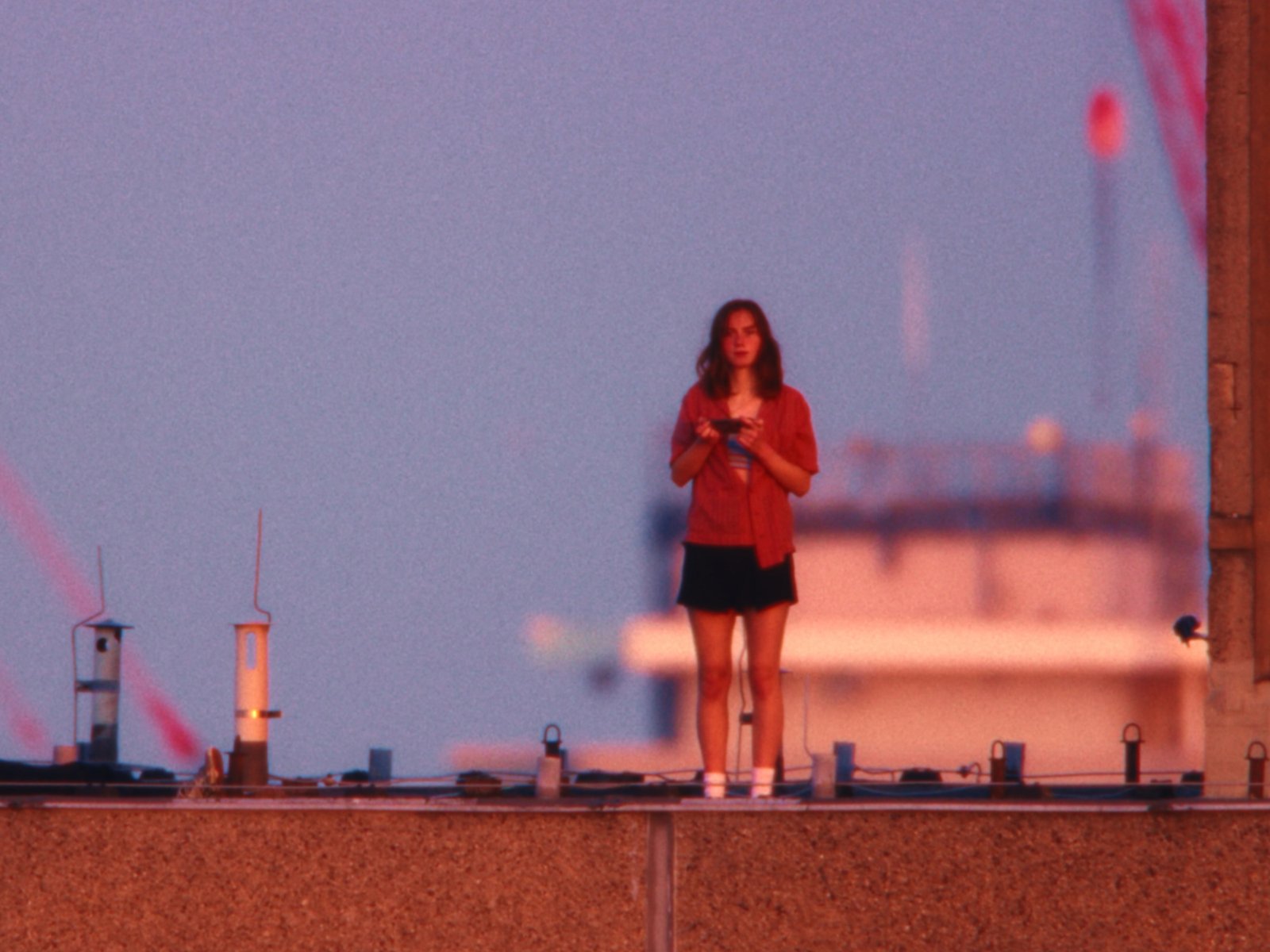









“The Birthday Party,” the penultimate film in this year’s Competition Program (followed only by “The Dreamed Adventure”) premiered Friday night to a press screening that drowned out an initial wave of tepid applause with louder boos. It’s that time of the fest. People have lost decorum to fatigue, and films that might have been greeted with a polite shoulder shrug a week ago are going to get a more uncouth response.
Léa Mysius adapts the novel Histoires de la Nuit by Laurent Mauvignier into this dull home invasion thriller about a woman who has kept a deadly secret from her family, one that has surface in violent fashion. It’s funny that this film echoes a bit of “Funny Games” given how much that Michael Haneke provocation caused a stir on the Croisette way back in 1997. This one won’t make nearly the same headlines. It’s not daring enough to do so.
A family made up of mother Nora (Hafsia Herzi), father Thomas (Bastien Bouillon, also here in “La Frappe”), and child Ida (Tawba El Gharchi) live in a house that seems distinctly removed from society, the only neighbor a painter named Cristina (Monica Bellucci). Thomas is planning a small birthday party for Nora when trouble arrives in the form of a smooth talker named Flo (Paul Hamy) and his muscle/brother Begue (Alane Delhaye). How much trouble? They’re introduced after Begue has killed the family dog.
What do Flo and Begue want? For far too long, we have no idea. They’re threatening, of course, but talking in circles around Cristina, Ida, and Thomas, who are waiting for Nora to come home after she’s been struck with an unfortuitous flat tire. It turns out the bad guys are also waiting for their boss, who arrives in the form of the clearly dangerous but charismatic Franck (Benoit Magimel, easily the best thing about the movie), who reveals he has a history with Nora that has brought him and his tough guys there that night.
He reveals it after more than an hour of talking around a vaguely threatening situation from which Mysius can’t wring tension. There’s a different between a “slow burn” and a “no burn,” and this one distinctly falls into the latter category, in part because Herzi delivers a shockingly flat performance, likely directed to play withholding over the secret past she never told Thomas about, but that results in something that feels irrationally inert at the center of what should be a thriller. As Magimel spins tales of Nora’s past in a way that threatens to turn Thomas against her, Herzi looks almost bored by the action. I sure was.

Boredom crept into my experience Daniel Auteuil’s “When the Night Falls” as well, despite its best intentions. War movies were an unexpected theme at this year’s Cannes, perhaps reflecting a 2026 that sees more international conflicts than anyone could have predicted a few years ago. “Coward,” “Moulin,” and “The Black Ball” all feature wartime arcs, and that’s just in Competition alone.
Auteuil’s drama took up residence in Cannes Premiere, and it’s unlike the emotionally resonant other films in this year’s war-heavy slate for most of its runtime despite a growing dread that history tells us the characters shouldn’t ignore.
It’s a quick shorthand to say that “When the Night Falls” is a WWII movie about paperwork, but it’s true for about an hour. In August 1942, the Vichy government in France ordered a round-up of Jews, following orders of the German occupation of the region even as key Frenchmen attempted to stop the eventual horrors. Gilbert Lesage (Antoine Reinartz) led a committee that included a Catholic priest named Alexandre Glasberg (Auteuil, who also co-wrote with Camille Lugan). It was formed, almost against the will of powerful men who worried they would be put before a firing squad for not participating in the Final Solution, to adjudicate cases of the Jews in an internment camp in Lyon. A list of exceptions was produced that included things like unaccompanied minors and pregnant women, and Lesage and company fought every attempt to save lives by arguing around a table why specific people shouldn’t be handed to the Nazis. Eventually, they were forced to enact a heartbreaking policy, encouraging families to give their children over to the church, making them unaccompanied, thereby saving their lives. It stopped over 100 children from being sent to concentration camps but could do nothing for their parents.
Auteuil’s film is what could be called “handsomely mounted,” a well-made drama that tells a story from World War II that hasn’t been widely heard internationally. Despite that, it often plays too much like a history lesson, at least until the emotional tension of the final act. There’s nothing particularly wrong with “When the Night Falls,” and it will likely mean more to French viewers, but in a Cannes dominated by war stories, it lacks the creativity to rise above.