






Apyx Finance’s apxUSD stablecoin slipped to $0.94 after Bitcoin fell to $63K, the first concrete peg break in the chain linking Strategy’s BTC treasury to on-chain dollar instruments.
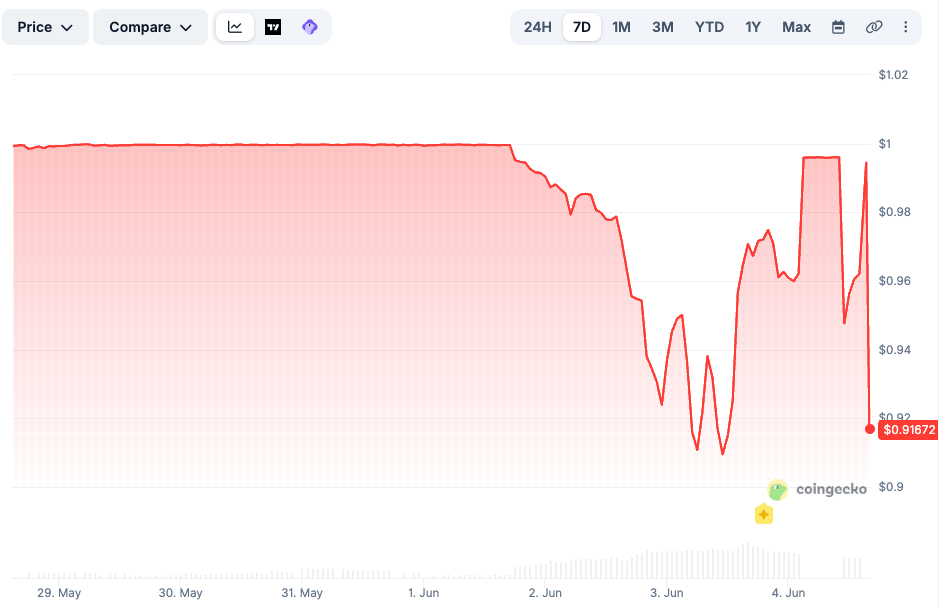
Apyx’s apxUSD, a dividend-backed stablecoin collateralized largely by the preferred shares of bitcoin-treasury companies, broke its $1 peg this week, falling to about 92 cents as Strategy’s STRC preferred stock dropped below par and bitcoin extended a steep selloff.
The stablecoin slipped to roughly 90 cents at its low on June 4 and was trading at 92 cents on Friday, according to CoinGecko, with roughly $476 million in circulating supply, DefiLlama.
apxUSD is among the first stablecoins to channel the preferred equity of digital-asset treasury companies into an onchain dollar. A stablecoin backed by the preferred stock of a company whose treasury consists mainly of a volatile asset, such as bitcoin, inherits that volatility.
What Apyx Says Happened
Much of the depeg came after the U.S. market close on June 3, said Parker White of Apyx Finance over a Telegram message with The Defiant.
“Given the preferred stock collateral, there is a liquidity mismatch between crypto that trades 24/7 and STRC, which only trades on the Nasdaq,” he told The Defiant.
That mismatch matters because the Foundation aims to hold an equivalent mix of assets, White said. Filling overnight redemptions with stablecoins on hand “creates a potential issue if the preferred stocks fall significantly at the open” — a particular risk given how STRC moved on June 3.
“STRC fell pretty violently on June 3rd (-2.13%),” White said, calling it one of the stock’s largest single-day moves since Feb. 5. “This created a lot of panic that caused other market participants to step away and market sellers to be price agnostic.” Dislocations in apxUSD’s Pendle and Morpho markets compounded the stress, he added.
apxUSD has “historically had 60-90% in the prefs,” with the remainder “held in stables like USDC,” White said. Under normal conditions, that buffer dampens apxUSD’s volatility relative to STRC itself. apxUSD is Apyx’s non-yield base token; its yield-bearing counterpart, apyUSD, accrues STRC dividends.
There is no fixed threshold or automatic trigger tied to the peg, White said. During periods of severe stress, “the Foundation wants to avoid creating issues by fire selling prefs into a dropping, reduced liquidity market and creating extra slippage,” he said, so it may buy back or redeem apxUSD below net asset value to limit slippage and support the collateralization ratio. Those buybacks and redemptions typically occur during U.S. market hours, he said.
The Strategy Connection
Apyx’s primary collateral is STRC, a variable-rate perpetual preferred stock issued by Strategy, the largest corporate holder of bitcoin. STRC carries a $100 par value and an 11.5% annual dividend, and Strategy has described it as the largest preferred stock by market capitalization in the world, at about $8.5 billion. More than $270 million of STRC is held across DeFi protocols including Apyx and Saturn, the company said in a May filing.
The link to bitcoin runs through Strategy’s balance sheet. The company holds 843,706 BTC as of June 1, worth about $52 billion at Friday’s prices and acquired for roughly $63.8 billion, leaving an unrealized loss of about $11 billion. When STRC trades below $95, Strategy is contractually required to raise its dividend by 0.5%; the stock fell to an intraday low near $94.60 on June 3.
Bitcoin traded around $60,000 on Friday, down about 17% over the week and roughly 50% below its October 2025 high near $128,000, CoinGecko data show. Strategy sold 32 BTC for about $2.5 million in May to fund STRC dividend payments, its first bitcoin sale since 2022.
White said the Foundation will release “a comprehensive review on what happened, how the protocol weathered the storm, and some changes they plan to make,” both immediately and over time, to reduce volatility after hours.