






Galaxy is bringing block-size, principal-counterparty execution to Kalshi and Polymarket event contracts, anchored by a $10 million swap that lets crypto hedge fund Arca hedge regulatory exposure to the Digital Asset Market Clarity Act.
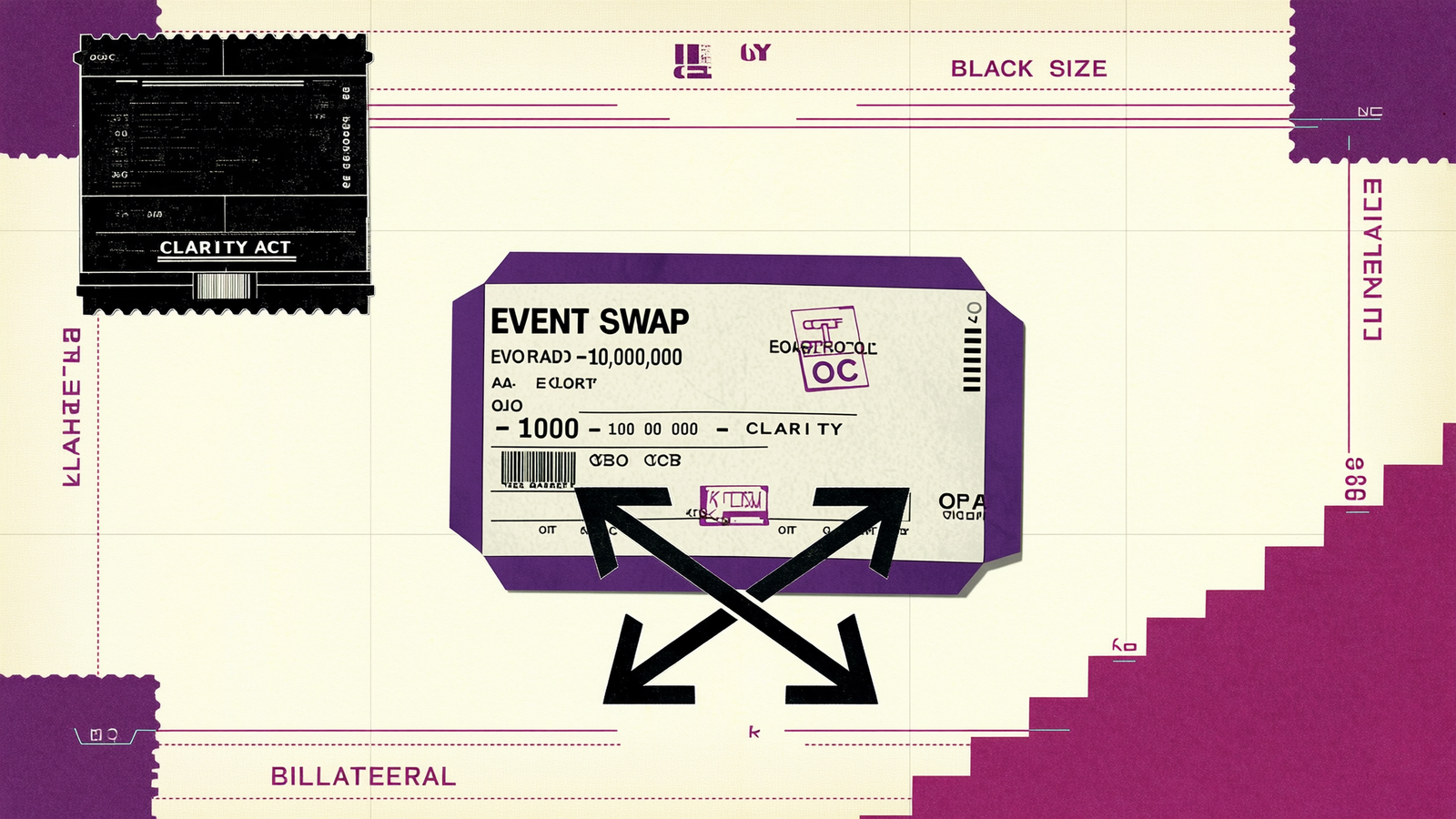
Galaxy, the Nasdaq-listed digital assets firm with a $12 billion market cap, launched an institutional over-the-counter prediction-markets desk on Tuesday, kicking it off with a $10 million event swap on Kalshi that lets crypto hedge fund Arca position itself on the passage of the Digital Asset Market Clarity Act.
The desk sits inside Galaxy’s Global Markets unit and offers principal-counterparty execution against non-sports event contracts on Kalshi and Polymarket at sizes the on-exchange order books cannot absorb. Galaxy can pair positions with hedges in equities and commodities, the firm said.
Prediction markets have cleared more than $60 billion in volume in 2026, but order books are still thin enough that a $10 million ticket would move the price. Galaxy is now the warehouse — taking the other side, holding the risk, and quoting institutional sizes bilaterally.
The $10 Million Arca-Kalshi CLARITY Trade
The inaugural trade references the Digital Asset Market Clarity Act, the crypto market-structure bill the Senate Banking Committee advanced 15-9 on May 14 toward a Senate floor vote.
Arca pays Galaxy if the bill passes before 2027; Galaxy pays Arca if it does not. The contract is keyed to Kalshi’s binary-outcome market on the bill — “yes” shares are priced between zero and one dollar to reflect the implied probability of passage.
“Hedging via prediction markets on CLARITY is one of the most appropriate vehicles currently, but prediction markets are currently not a sophisticated institutional market with enough liquidity for a fund of our size,” Jeff Dorman, Arca’s chief investment officer, said in the release.
Galaxy’s own research desk currently puts the probability of CLARITY passage at 75%, with a signing date estimated for the week of August 3. Kalshi and Polymarket traders have priced the same outcome in a 50% to 73% range over the past month. A fund expressing a view at scale on the order book would walk the price up before the position was filled.
Galaxy’s OTC Mechanics
Galaxy is acting as principal, not agent — it warehouses the risk rather than routing orders to the underlying venue. That lets it quote tighter, bigger, and in customized structures: an event swap instead of a basket of “yes” shares, paired with cross-asset hedges.
“Event-driven markets are becoming core to how sophisticated investors express macro views, and they deserve institutional infrastructure to match,” Jason Urban, Galaxy’s global co-head of digital assets, said in the release. “We’re giving clients a principal counterparty that can warehouse risk and execute at sizes and scale that actually matter.”
Galaxy is the third top-tier trading firm to take a formal seat at the prediction-markets table this year, after Jump Trading and Wintermute, which began streaming two-sided quotes last month. Where Wintermute tightens spreads as a market maker, Galaxy absorbs block trades that the on-exchange books cannot.
Where Institutional Volumes Sit Now
Combined monthly turnover on Kalshi and Polymarket climbed from under $5 billion in September 2025 to about $24 billion in April. Kalshi’s annualized institutional volume rose 800% in six months to $178 billion, the exchange said when it raised $1 billion at a $22 billion valuation last month. NYSE parent Intercontinental Exchange is backing Polymarket with $2 billion.
Galaxy’s desk is the missing pipe between that retail-and-prop-driven order book and the hedge funds, family offices, and asset managers that have been priced out by liquidity, not interest.
What’s Not Built Out Yet
Galaxy is launching with one named trade, so volume, spreads, and risk limits are not yet disclosed. The firm is offering the desk only to institutional counterparties and evaluating jurisdictions individually — a hedge against the regulatory backdrop that has seen Spain and other countries order ISP-level blocks on Polymarket and Kalshi this year over unlicensed-gambling concerns. The CLARITY Act itself still has to clear the Senate floor and a House reconciliation before it can be signed.