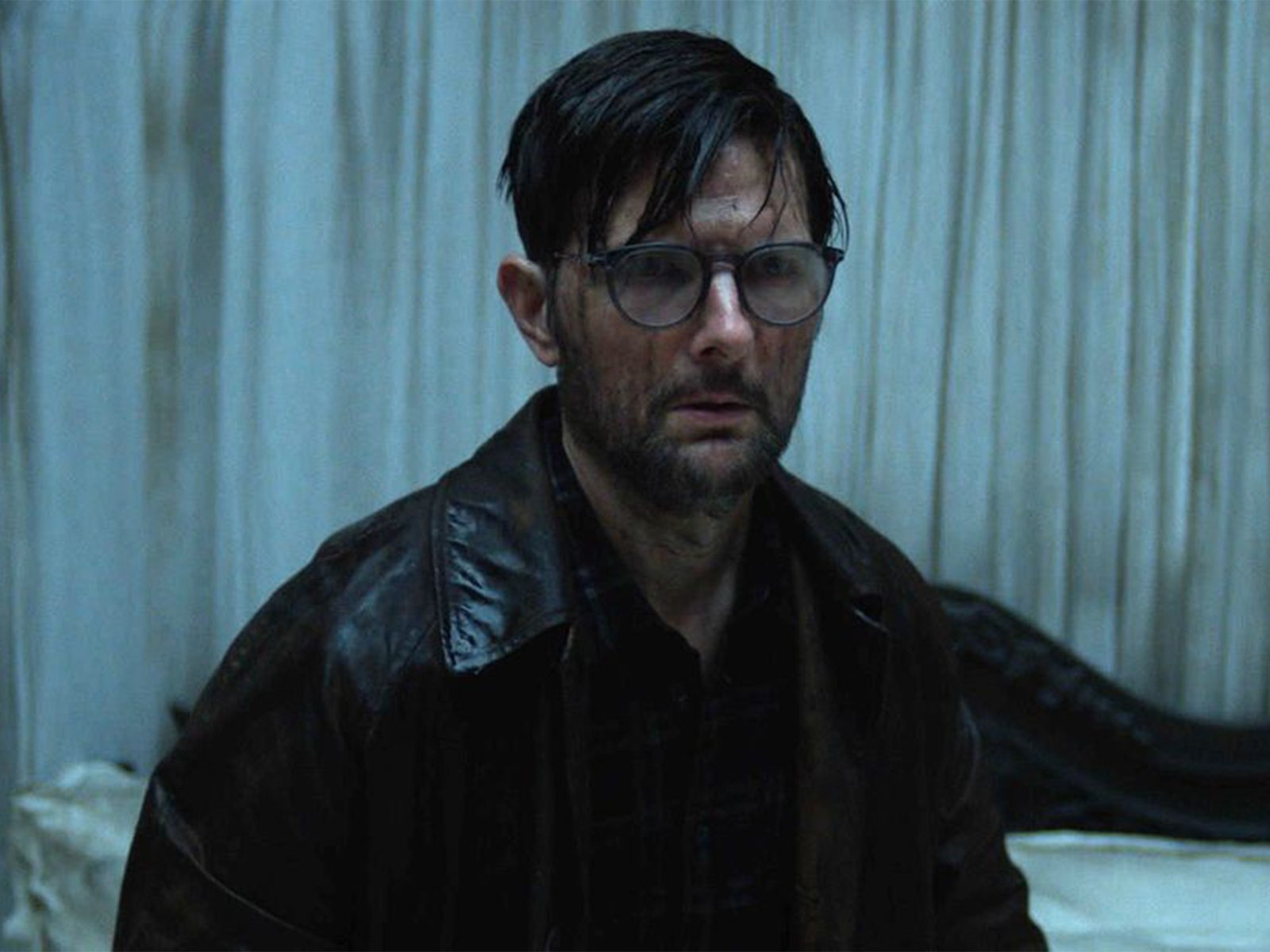









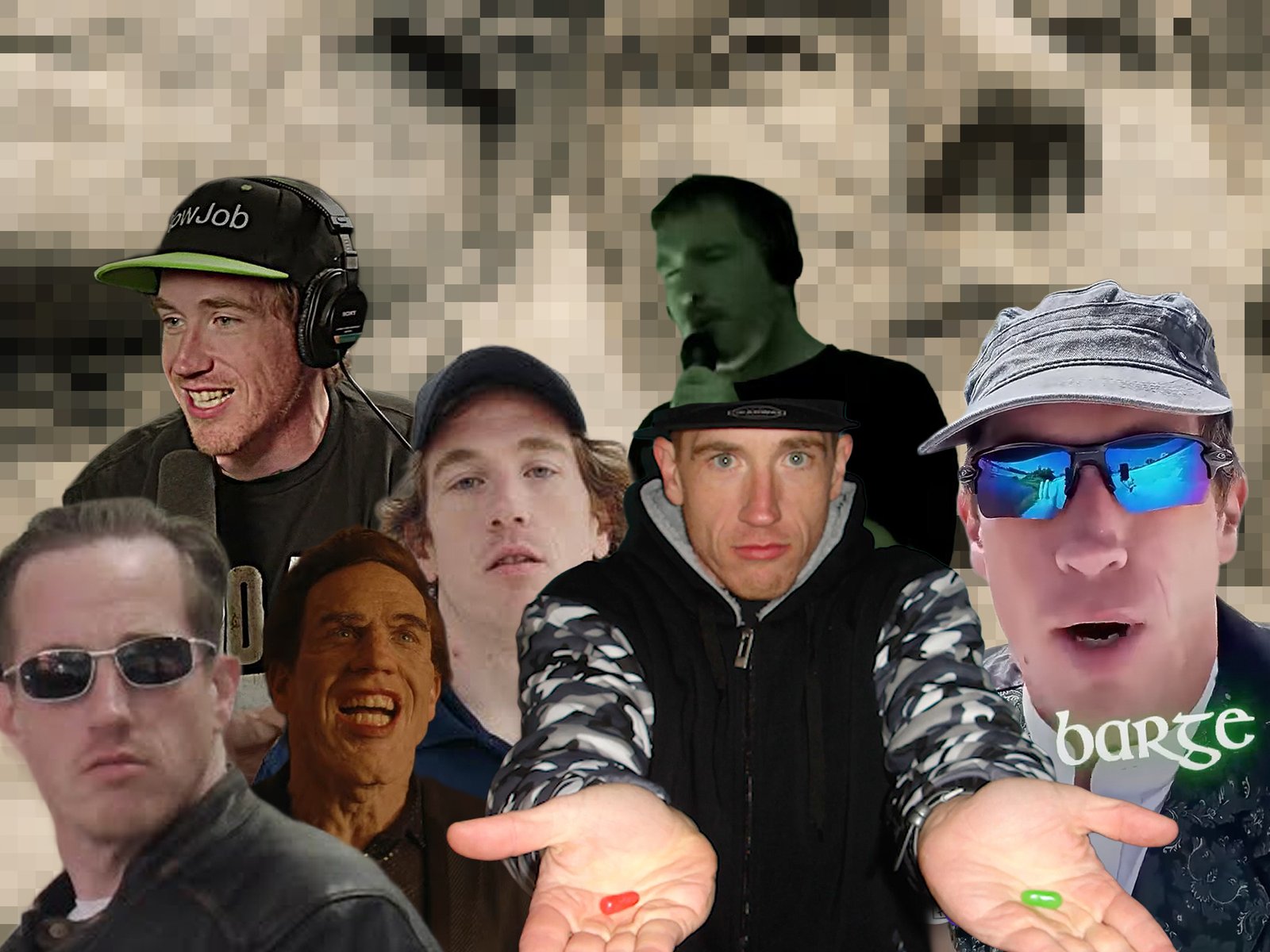
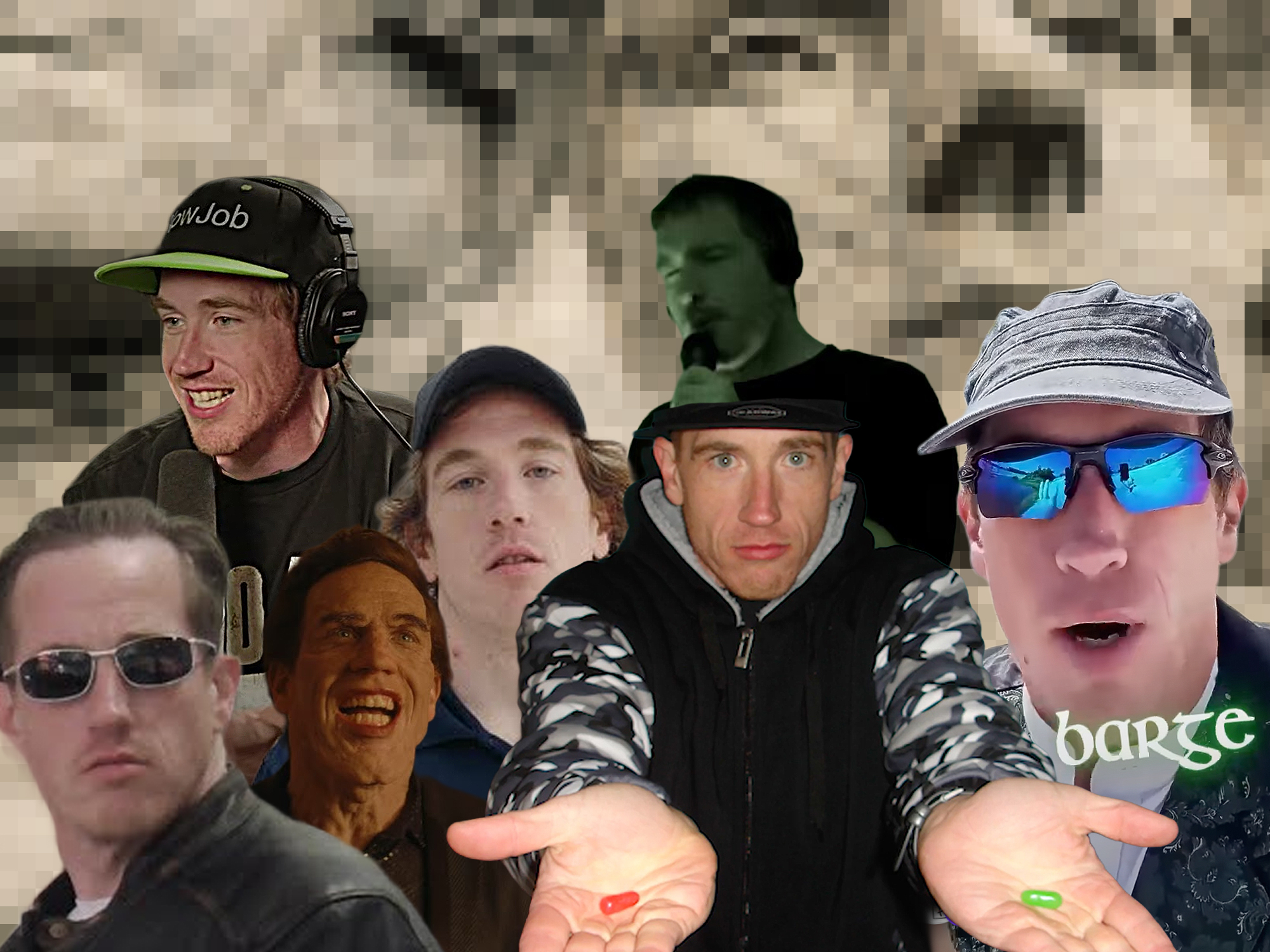
O’Malley’s videos feature the wild plot twists and whiplash juxtapositions of a short-attention-span culture; watching them can be as abrasive as sitting next to a person on the bus flicking through Reels without earbuds in. What I’ve described above is only the pre-credit sequence of Coreys (which is, incredibly, only 12 minutes long). It soon descends into a frankly Lynchian odyssey of split and merged identity and nightmarish visuals, as the two Coreys merge into one (the “Ultimate Corey” sports tumorously looksmaxxed facial prosthetics), after a psychedelic interlude. The garish folding-tesseract effect was executed with generative AI, a tool most beloved by Elon Musk’s fawning reply guys, which is apt for a short in which an average loser is absorbed into a vicarious obsession with cutthroat futurism, like the superrich’s race to escape the Earth or evolve a specicidal superintelligence. (“We’re in tech,” two strangers tell Ultimate Corey. “Oh, that’s all going away,” he replies.)
In new videos like Pipe Rock Theory and Irish Zionism (his latest) O’Malley returns to the vertical aspect ratio of his early Vines, now with the extra washed-out color grading and graininess of the spam TikTok accounts that post badly cropped AI-narrated movie clips. “Clip farming” is the practice in which a livestreamer will do something intentionally outrageous with the intention of going viral as an out-of-context snippet; O’Malley, who was doing outrageous out-of-context things while these freaks were still getting their parents into debt on Roblox, understands this ecosystem almost too well. Pipe Rock Theory and Irish Zionism videos are full of GoFundMe scammers, slouching manosphere podcasters espousing do-your-own-research credulousness about obvious conspiracy theories, advertisements for sketchy side hustles (Hollywood blanket tours?) and red-faced men airing out their post-COVID brainworms (O’Malley, a fair-skinned ginger who flushes readily, is a great shouter, never more so than when monologuing into a front-facing camera). The clips are interrupted with AI-generated fake news and accompanied onscreen text – O’Malley, who hilariously uses a Gaelic font for the transcribed speech in Irish Zionism, understands that this particular media convention – like karaōke for people who aren’t even paying attention – makes us all look like we move our lips when we watch clips on our phone (to paraphrase the classic Tom Shales burn).
There are Conner O’Malley videos everywhere for those with eyes to see. Here, for instance, is drunk Fox News morning-show host Pete Hegseth nearly killing a drummer in full martial regalia during a 2010 axe-throwing segment gone horribly wrong. This O’Malley-esque bit of macho theater turned litigation hazard has become all the more absurd and oppressive now that Hegseth is the self-declared Secretary of War overseeing a campaign of terror against Iranian schoolgirls. It was in 2018 that O’Malley tweeted “I’m 62 years old, I live in Tampa, I eat corn and beef everyday, I always have a titleist hat on, and Iran is the biggest threat to my freedom,” all of which, Florida, golf, protein, bombing the Middle East, is now simply American reality. As an elder millennial whose political sensibility was formed in the Bush years, O’Malley understands the ambient militarism of everyday American life – the free-floating grievance and boundless aggression of a guy just dreaming of being cut off in traffic – and is well-positioned to understand its inevitable embrace of shameless grift. The story starts in the Great Recession of the late 2000s, as O’Malley makes clear in Rap World, the best American film of 2024.
55-minutes long, set in 2009 and shot on vintage equipment, Rap World is a mock home movie about a group of friends working dead-end jobs in Tobyhanna, Pennsylvania, who spend one wild night attempting to record a rap album in one of their mothers’ living rooms (with frequent digressions to prank the McDonald’s drive-thru, crash a house party, and ingest substances).
O’Malley has said that the 2009 setting was originally chosen so that the dialogue could riff on the era’s definitive “dumb guy” classic, The Dark Knight – also claimed by conservative commentators as an allegory for Bush’s War on Terror – but the vintage digital cameras also give it the look of a piece of vaporware. The film is a return to a more innocent time, and a less camera-conscious style of imitative masculinity compared to the high resolution and practiced direct-address of Coreys. Mostly it’s shaky, bleary, extremely choppy party freestyles. (“Tobyhanna” is rhymed with “eatin’ Benihana” and “see you mañana.”) O’Malley made the film with a number of his friends and regular contributors, including co-director Danny Scharar and co-writers and costars Jack Bensinger and Eric Rahill. The collective spirit, both behind and in front of the camera, gives a sweetness to the characters’ aspiration and delusion.
But at the same time, the recession-era historical context, doubled with the Rust Belt location, gives Rap World a sense of premonition – it’s the birth of a class of suckers. The film is set at the start of a spiral of white male downward social mobility, evident in the characters’ lack of economic prospects, their abandonment of domestic responsibilities, and even the narrative’s eventual (and horribly hilarious) acknowledgement of the male mortality crisis.
In Rap World, the characters’ doomed energy has not yet been fully absorbed into the K‑shaped recovery and spat out into today’s economy, where it can feel equally as if the Great Recession never ended and that everyone on your phone is wealthy. This is where the pathos of Rap World, or Coreys or even of the ‘Power of God’ Vine comes in. It’s a terribly sad and lonely thought, that nothing matters, that the social contract is so thoroughly dissolved that there’s nothing left to say but “whatever the fuck you want.”