








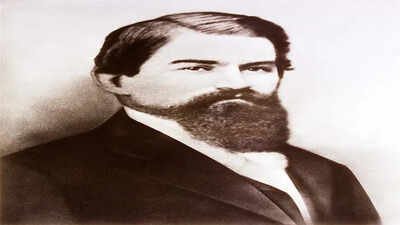
Should you somehow travel back in time to an active pharmacy in Atlanta from the mid-1880s, one would hardly expect to find out that this popular soda had appeared not in vending machines nor on store shelves. Instead, one would see that the iconic soft drink had originated from a thick glass bottle standing on a mahogany shelf along with other liquids which were supposed to cure headaches, tiredness, and “broken nerves.” The man who had invented the product was not a beverage entrepreneur looking for a groundbreaking success but rather a veteran and a pharmacist exploring the peculiar world of patent medications.The tale of Coca-Cola is an amazing story of how a medicinal remedy can become a popular cultural artefact quite unintentionally. Pemberton decided to create a syrup made out of coca leaves and kola nuts based on the idea of famous European “wine cocas.” He intended to develop a non-alcoholic drink that would provide customers with some additional energy and would be able to replace all alcoholic beverages. However, the success of Coca-Cola happened due to the fact that Pemberton decided to combine his syrup with carbonated water at a neighbourhood soda fountain.Pharmacy as a place of socialisationUnderstanding why this beverage found its place among other drinks requires taking into account one peculiar feature of the American drugstores in the last quarter of the nineteenth century. According to a historical review in Pharmacy, a soda fountain was a typical element of any neighbourhood drug store. In addition, one had to keep in mind that people visited such stores not only to get rid of their medical problems but also to buy something pleasant to drink and socialise with their neighbours.This formulation came at a point when people were looking for a more intellectual way of spending their evenings rather than going to taverns. It was the background of the pharmacy where it was developed that helped make it more likely to be taken as a healthy drink than one that is for consumption only. This shift from a sickroom solution to an energy-boosting cocktail allowed it to change its purpose, moving from being consumed while sick to being consumed when thirsty. But the change was much bigger than just changing the flavour.
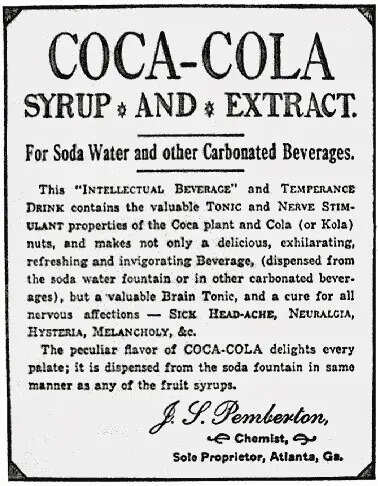
This transformed it from a remedy to a popular drink. Businessmen then developed it into a worldwide brand. The drink’s ingredients changed significantly over time. Image Credits: via Wikimedia Commons
From ancient leaves to a global brandIt is interesting to learn what prompted Pemberton to use particular ingredients in his drink and how they influenced its development over time. Travel medicine, coca and cocaine: demystifying and rehabilitating Erythroxylum study gives a perspective on the ancient history of the ingredients that inspired the Coca-Cola name. He capitalised on the Andean tradition of using such plants and was sure that they would contribute to the popularity of his invention as a nerve tonic. At first, it was advertised as a brain tonic to cope with everyday stresses.With the beverage leaving the confines of the laboratory and venturing into the outside world, adjustments had to be made to suit the times. The tastes of the consumers and the regulations concerning ingredients would slowly start changing, and so the formula needed to change with the times. Though it was Dr Pemberton who had created the first basic formula for the drink, elevating it to become an icon meant a different approach had to be taken when the doctor’s health began deteriorating. Control of the formula then fell into the hands of business magnates such as Asa Griggs Candler.The story itself provides a perfect example of such an evolution – from a dark, medicinal syrup to a sparkling drink. Obviously, it proves that sometimes a product can exceed its primary goal. In spite of the fact that it was invented as the result of a pharmacist’s private project to create an ideal tonic, it became one of the symbols of branding on an international level. We keep calling the drink after the herbs which were used as the basis for its invention, while the contemporary version of the product has nothing left in common with medicines anymore.