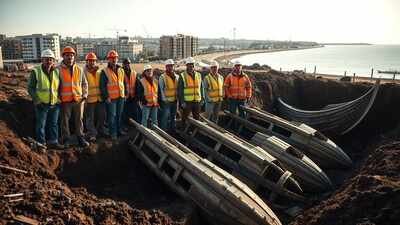









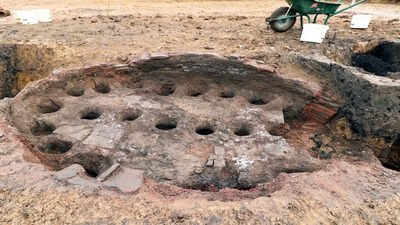
The history always lies silently below the surface, and the Sutton Lower School is no exception. As only several months remained until the end of 2024, the crew responsible for constructing the new artificial grass field discovered some interesting artefacts buried below the ground level. Instead of the traditional layer of gravel or clay, they found red soil with old stones.Finally, a discovery made during the latter part of the Middle Ages managed to bridge Ancient Times and the dawn of Industrialisation. It didn’t take much time before people recognised the discovery for what it was, and they immediately called upon experts to investigate. As the year 2025 approached, a group of Albion Archaeology archaeologists began their excavation project, and it soon turned out that the mass of baked clay they had uncovered was not your typical earth formation. It was a kiln, one in excellent condition, and not a primitive one, but an impressive brick and tile kiln that burned hot.Uncovering a medieval production plantImmediately, outstanding preservation became the most striking thing about an industrial building of this age. According to the report by Albion Archaeology titled Exploring Bedfordshire’s Kilns: An Industry Revealed, this was due to the crucial role played by kilns in that era. Made up of layers of strong clay reinforced with the heat produced by the kiln itself, the Sutton kiln featured a flue created by medieval brickmakers more than half a millennium ago.The discovery provides a fascinating look at the local economy during the 1400s. As noted in the report published by Central Bedfordshire Council, the site was likely chosen because of its proximity to natural clay deposits and water. The kiln was not a lonely outpost; it was part of a larger network of production that helped modernise the local architecture of the time. Finding such a complete structure in a modern playground gave researchers a unique chance to see exactly how these ancient craftsmen managed their heat and materials.
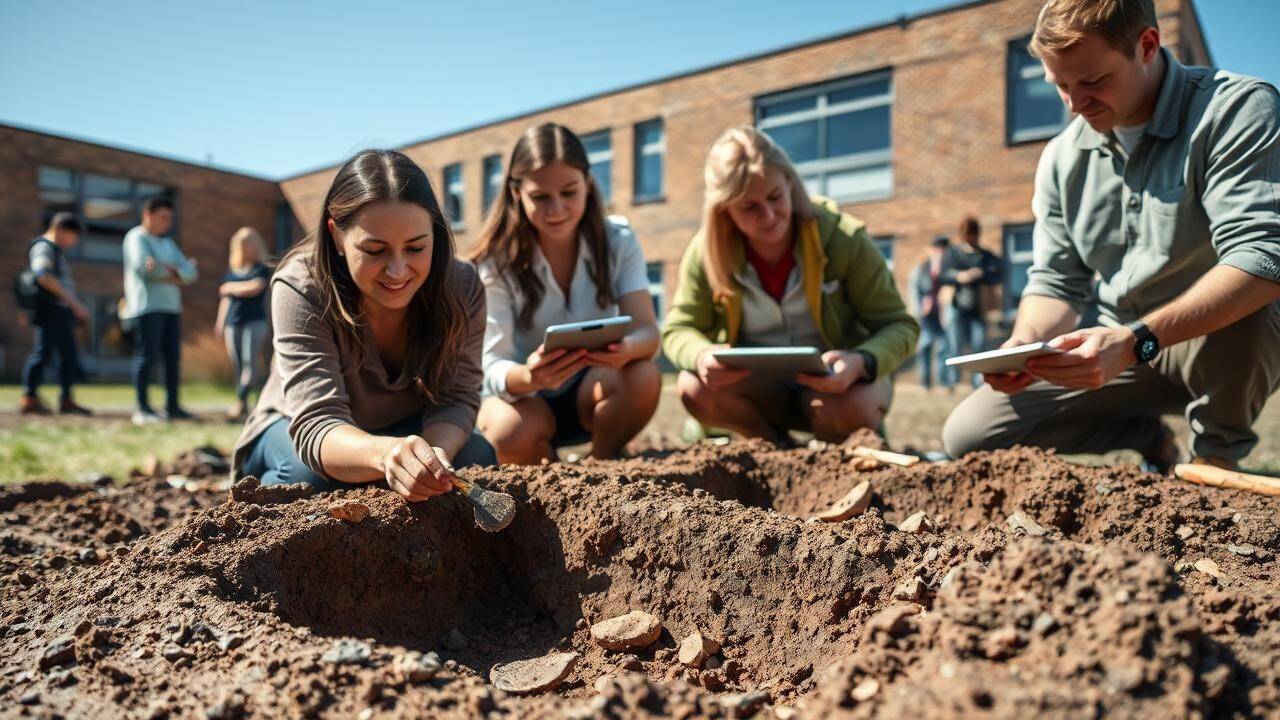
Further excavations revealed evidence of Roman and Iron Age activity, showcasing the site’s long history of human use and manufacturing.
Below the oven, the team finds a collection of discarded items, which are nothing but pieces and relics telling their story. There are broken ceramics from the Middle Ages next to the burned bricks. They serve as guideposts for the excavator, showing that what looks like waste actually reveals the production process at this site. Therefore, through the discovery, it becomes clear that the site was not an empty field where the foundations of England were laid day and night.The heritage lying just beneath the surfaceOne of the striking features of the excavation is that it goes very deep into the surface layer. For years, children had been playing hide and seek just below the surface of a building constructed in the era of the Tudors. Similar to most of the UK soil, the area’s wet conditions preserve ashes and charcoal from the final medieval burning since the elements cannot be exposed to oxygen. Thus, the team was able to obtain samples of the fuel used in the final burning five hundred years ago.By early 2025, the site had become the object of a huge amount of interest from locals. According to the report of Central Bedfordshire Council, the discovery of the kiln led to further investigation, which unearthed layers dating back further than anyone had anticipated. Beneath the medieval layers, evidence of the Roman and Iron Age periods came to light, indicating that this small piece of land had been inhabited by humans and utilised for manufacturing purposes for almost two thousand years.What started as a mere assignment in school turned into a life-changing experience for us. It allowed us to see the signs left behind by our forebears lying dormant underneath our feet. When we unearthed the kiln and the artefacts buried in the playground of Sutton in 2024, we were reminded of the many historical events waiting to be discovered.