



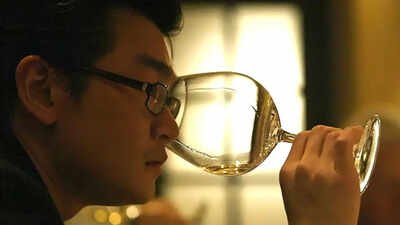
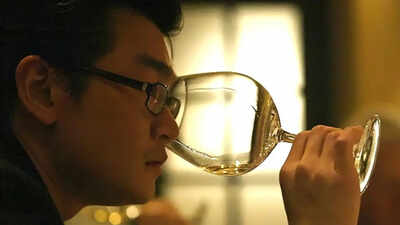
For nearly a decade, the most trusted wine dealer in America wasn’t a connoisseur, he was an actor. One who made everyone believe that the concoctions he was mixing up in his kitchen sink were specialised tastes created for the rich.Rudy Kurniawan emerged in the established and evolving fine wine scene in the early 2000s. A young Indonesian man donning a Hermes, he spent $1 million at auctions every month, selling his brand of wine to the biggest billionaires in the world.However, the taste of his expensive and acquired wines did not come from a brewery, it came from his kitchen sink where he would counterfeit bottles to make up his own combinations. Interestingly, Kurniawan was smart enough to play on the thirst of exclusivity among the biggies. He fooled some of the most elite palates on the planet, and when they got to know, they were too embarrassed to have been duped, to say anything at all.
The legend of Rudy Kurniawan
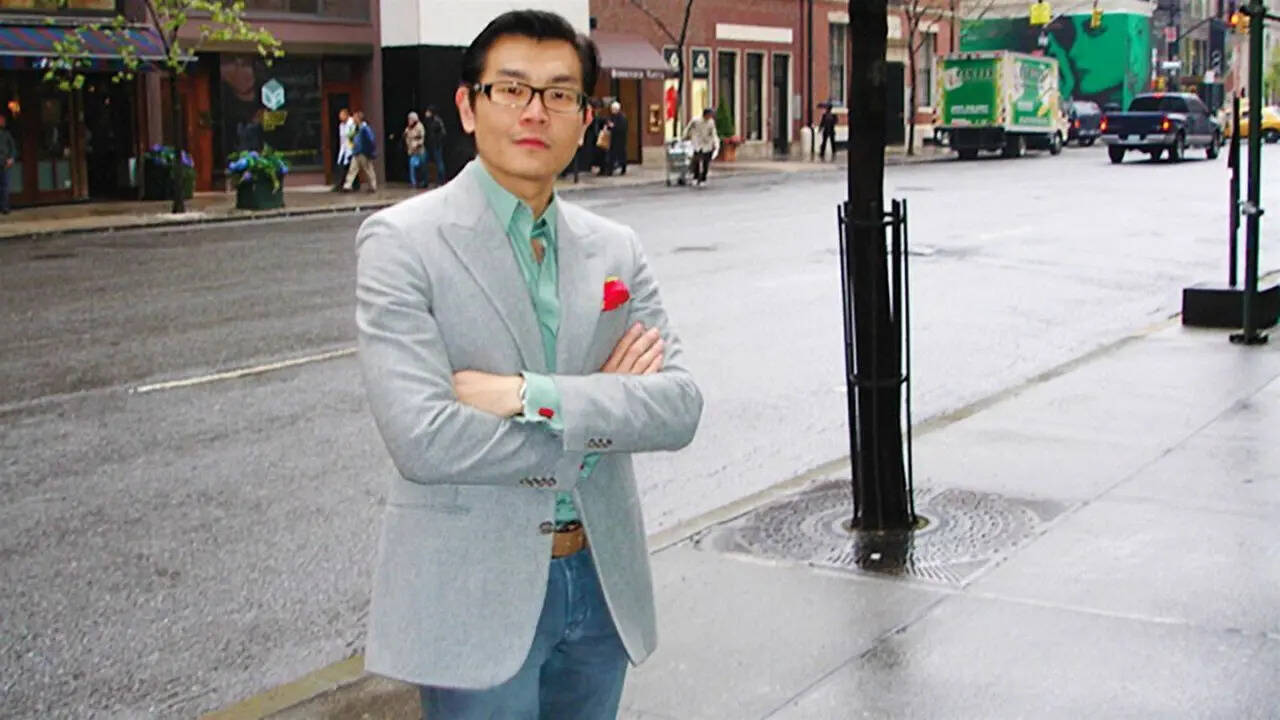
He was born as Zhen Wang Huang in Jakarta, Indonesia in 1976.He was born as Zhen Wang Huang in Jakarta, Indonesia in 1976.
Kurniawan was the new entrant in the wine scene. A gregarious 20-something man who was quickly climbing up the social ladder by throwing lavish tasting parties attended by Hollywood producers, wealthy bankers and tech titans.People would flock to his parties because the secretive young lad seemed to have boundless cash and a knack for finding extremely rare vintage bottles that some oenophiles had only dreamed of: 1920 Petrus, 1945 Romanée-Conti, 1947 Château Lafleur.Little is known about Kurniawan’s early life. He was born as Zhen Wang Huang in Jakarta, Indonesia in 1976. He came to the US on a student visa in the mid-90s to study accounting at Cal State Northridge and by 2001, he had settled in Los Angeles while developing an obsession with California wines.
The wine counterfeiter
Using money from his seemingly wealthy family, he soon ventured into French wines, particularly those from the region of Burgundy. “His average bottle price was probably $400 to $500 per bottle,” Kyle Smith, a Los Angeles shop owner who sold Kurniawan wine, later told documentary producers. “He probably bought $500k [of wine] in the first year.”In the early 200s, Burgundies weren’t as popular in the US, but Kurniawan created a market from reading up all he could, talking up shop owners and keeping detailed tasting notes. He gained entry into Los Angeles’ prestigious tasting groups, which called themselves the “BurgWhores.”Soon Kurniawan began spending as much as $1 million per month on wine in auctions across the country. Then at his tasting parties, his guests would drink through $100K-$200K of wine in a single night.However, after each party, the enigmatic collector would ask to keep the empty wine bottles. While the behaviour was a bit odd for his companions, as long as the wine was flowing, they were glowing.
A seller’s market
By 2006, Kurniawan, then just 30, had amassed a personal cellar so robust that the Calgary Herald declared him the “King of rare wines.” To others, he became known as “Dr. Conti,” a homage to his favourite wine, Domaine de la Romanée-Conti.When the market turned right with Burgundies rising in demand and a bottle being sold for as high as $13K, Kurniawan decided it was time to strike. Through his circle, he befriended John Kapon, a former hip hop producer who ran Acker Merrall & Condit, a boutique wine auction house in NYC.Together in January 2006, they put up a selection of Kurniawan’s wines on the auction block. Over a 2-day span, the auction’s 1,742 lots cashed in $10.6M in sales. The auction was so successful that the duo decided to run another one 9 months later. This time, sales topped $24.7m, setting a record for the highest-grossing wine auction in history.With the sales so good, the seller upgraded, Kurniawan now drove a Lamborghini Murciélago, purchased $535k worth of Patek Philippe watches, and bought an $8m mansion in Bel-Air.
Crack in the glass
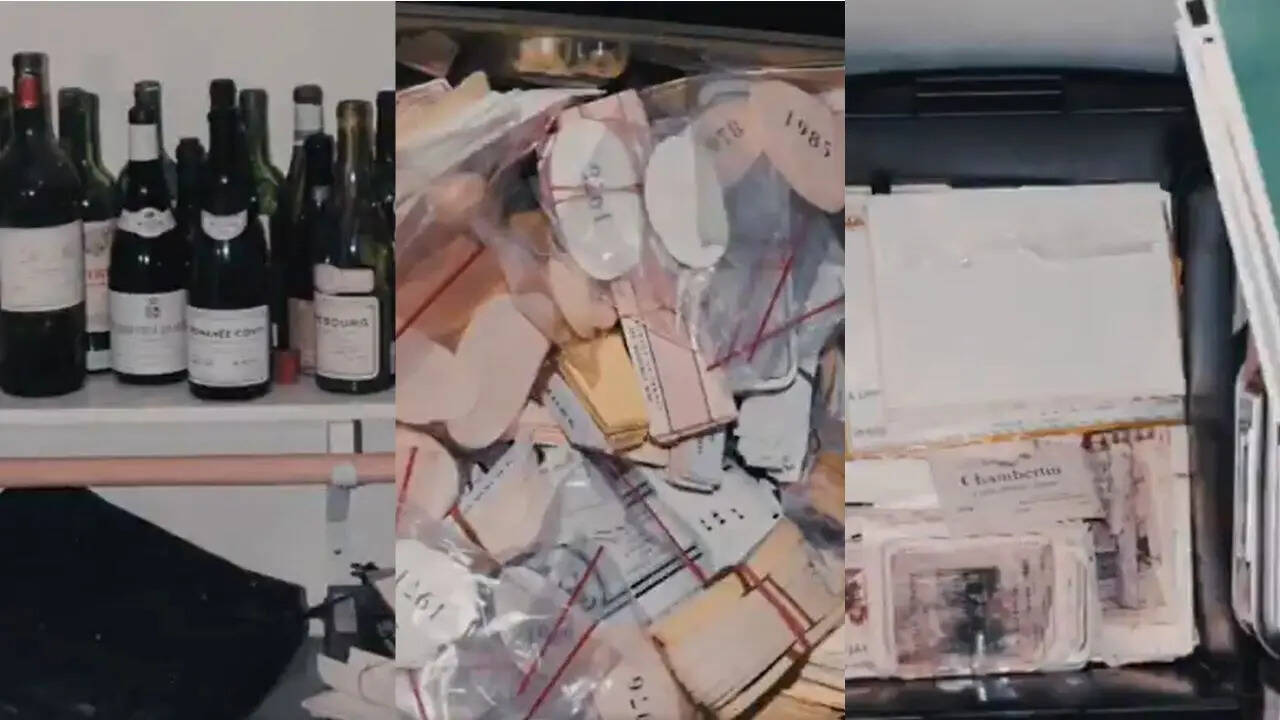
Old wine bottles, corks and fake labels found in Kurniawan’s LA home
However, when you are at the top, many are trying to get a look. Astute observers soon noticed that Kurniawan had sold 10 bottles of 1945 Château Pétrus, a vintage of which only 600 bottles were produced, and only a few dozen were known to still exist. Moreover, Kurniawan’s uncles Hendra Rahardja and Eddy Tansil, had embezzled $600m+ from Indonesian banks and fled the country in the ‘90s.And so began the downfall. In 2007, Christie’s auction pulled a lot of Kurniawan’s 1982 Château Le Pin, after they were deemed fake. In 2008, Kapon’s auction house withdrew $600K+ worth of Domaine Ponsot wine when the vineyard’s owner personally called them counterfeits.Kurniawan’s expose was a mix of three things: a vengeful billionaire, his own superiority and the FBI. In Palm Beach, Florida, energy billionaire Bill Koch was seething as the 5 bottles he’s purchased from Kurniawan at the 2006 New York auction for $75K turned out to be fakes upon inspection by hired authenticators. In 2008, he filed a $3m lawsuit against Kurniawan and commissioned a private investigator to dig into the man’s past.At the same time, Ponsot began to go around Kurniawan’s life too. Kurniawan had attempted to sell bottles of 1945 and 1971 Clos St Denis from Ponsot’s vineyard, a wine his family didn’t even start producing until 1982.By 2010, Koch and Ponsot’s efforts converged when the FBI stepped in to covertly investigate Kurniawan’s role in the flood of counterfeit Burgundies that had infiltrated the market.However, Kurniawan continued his sales to private buyers including:
- A $15.1m sale to David Doyle, the co-founder of QuestSoftware
- A $5.3m sale to Brian Devine, the former CEO of Petco
- A $3.1m sale to Andrew Hobson, an executive at Univision
- A $2.2m sale to Andy Gordon, a Goldman Sachs partner
On March 8, 2012, FBI agents raided Kurniawan’s abode in Arcadia and found:
- 200+ old wine bottles in states of forgery
- 19K+ fake, artificially aged printed labels from the world’s 27 rarest wines
- Buckets full of corks, sealing wax, glue and stencils
- Rubber stamps with names of famous chateaus
Kurniawan was arrested on charges of forgery and fraudulently obtaining millions of dollars in loans. On December 9, 2013, his case went to trial and prosecutors laid out the case that Kurniawan was the “biggest and most successful wine counterfeiter in the world.”During the trial, one expert testified that up to 75% of the fakes that had surfaced on the market in 2006 originated from Kurniawan. 9 days later, he was found guilty on all counts and sentenced to 10 years in prison. In total, he duped collectors out of $35M to $150M through private sales and auctions.In November 2020, after serving 9 years in correctional facilities in California and Texas, Kurniawan was released. A free man, he is looking to get back in the game with offers coming in as a wine tasting consultant. “The world will hear from Rudy again,” said Kurniawan’s lawyer, Jerome Mooney.