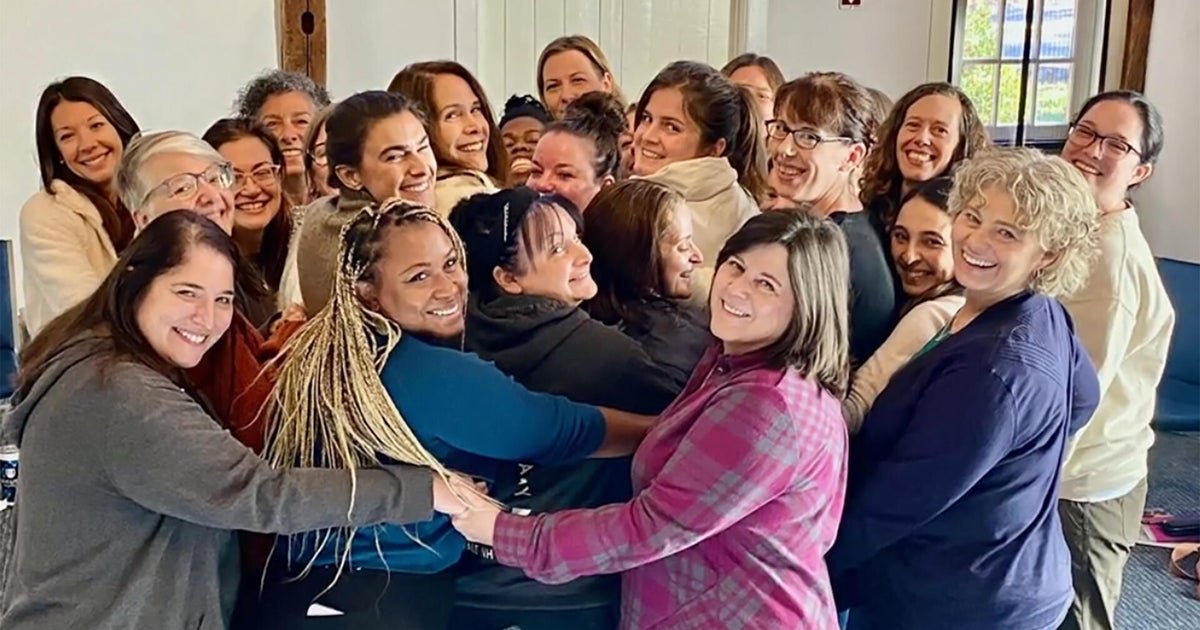









On a mountaintop in Northern California, a group of women met for the first time. They call themselves “motherless daughters.” These women were all age 21 or younger when their moms died – many from illnesses like cancer, some more suddenly – and might find their life stories divided into a “before” and an “after.”
Hope Edelman is the mother of Motherless Daughters. Since the first retreat in 2016, more than 500 women have attended at locations across the country.
“We say at every retreat, there may be 20 women who came to the retreat, but there’s 40 women in the room,” Edelman said. “And it’s a way to reaffirm that these aren’t just women who died; they’re also women who lived, and many of them lived joyously.”
CBS News 
The gatherings, like this one at Mount Madonna, include deep conversation, yoga, the sharing of meals, and the sharing of tears. One woman said, “I don’t remember her voice.”
And even though some participants call this “sad camp,” there is lots of laughter. One woman said her mother loved to play pranks: “She would steal people’s stuff at work and, like, leave them ransom notes to find it!”
Edelman says the women who come here feel seen. “Our mother was usually the person who saw us,” she said. “So, many of us have not felt seen for a long time.”
CBS News 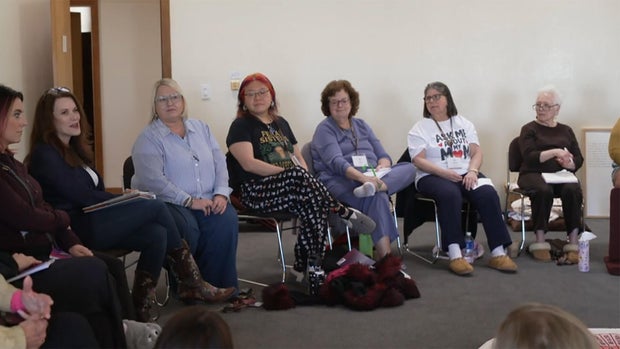
I know this pain. I, too, am a motherless daughter. I’m now years older than my mom ever lived to be. The older I get, the more I’m just grateful I had my mom – that I had her for the time I had her.
Edelman’s mother died in 1981, at age 42. “My Mom had been the person, the emotional center of the family,” she said. Hope was just 17.
In the years that followed, she tried to find stories that could help her understand her grief, which led to an idea: “When I started doing interviews and research and found other women and saw how similar our stories were, I knew there was going to be a book there,” Edelman said.
Balance 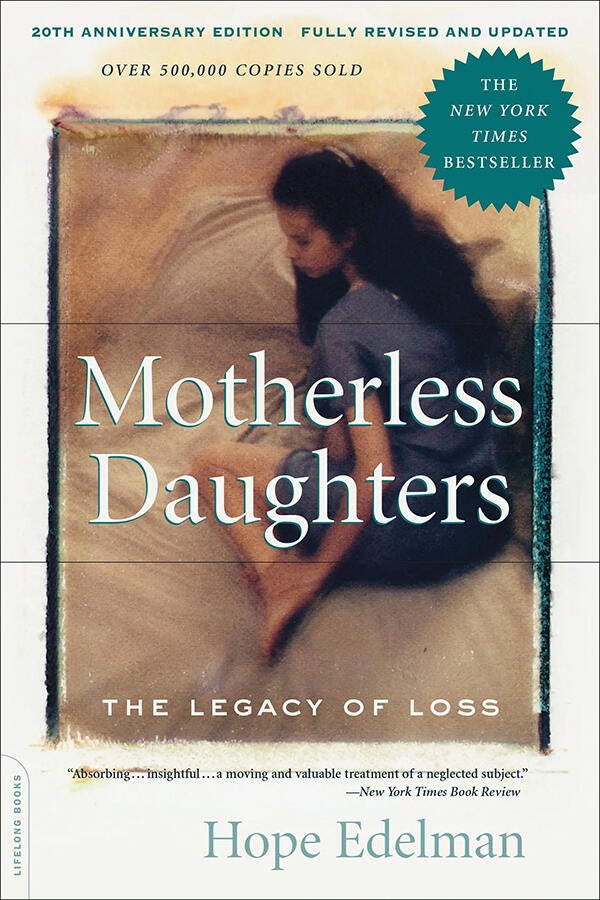
Her book, “Motherless Daughters: The Legacy of Loss,” published in 1994, was an instant bestseller. Now, “Motherless Daughters” is far more than a book; it’s a global support network and community founded by Edelman, who has received thousands of letters over the decades.
She said that when motherless daughters find each other, “There’s an immediate sense of connection. One woman said years ago she felt like the alien finding the mothership.”
Jennie Zhao, who says she has heard ever since she was little how much she looked like her mother, never met another person who’d lost their mom to suicide as a child, until she found this community. She is attending her third retreat.
“The women in the Motherless Daughters community, they mirror back my own heart, my own goodness, my own compassion,” Zhao said.
People often seek this sisterhood at turning points in their lives – a health crisis, motherhood, marriage, or when they hit the age their mother was when she died.
Shaina was 14 when her mother died at age 47. This year she’s turning 47 herself. Now a mom with kids in their teens and twenties, she found herself in what she calls “uncharted” territory. “Deep down inside, that little girl is just there saying I just want to hug my mom. I just want my mom to tell me it’s going to be okay,” she said.
If your mother dies when she’s old, you likely miss what you had; if your mom dies when she’s young, you miss what you never had. Shaina says what she feels is a deep longing: “To be able to call your mom, to be able to ask her, How do I do this? What is happening to my body? What is happening in my heart, in my mind?“
Shaina says that motherhood brought her a heartbreaking realization: “I realized what she lost when she died. I do not want to miss anything with my kids. They have hard times, they have good times. I want to be there for all of them.”
CBS News 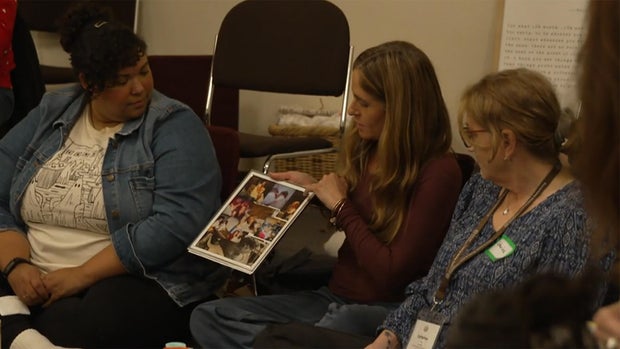
Angela Schellenberg, a fellow motherless daughter, is a therapist and retreat co-facilitator. She says it is traumatic for a young person to lose their mother: “It’s an attachment trauma. It’s a break in attachment, and that’s traumatic, because your brain is constantly looking for your mother, and she’s not there.”
Schellenberg says these gatherings are so healing because they cause an actual shift in our bodies: “There’s something called co-regulation, where our nervous systems feel each other. I know that sounds a little woo. It does! But there’s something just about sitting in community, and that settles the nervous system.”
What might surprise some is the age range at these retreats — women in their 20s all the way up to daughters in their 80s. One woman said, “I didn’t talk about my mom for at least 40 years.”
Marcia Nowak, who is 81, said, “It’s beautiful, to have me and you as elders, and the young that can share their life experiences and be able to talk about it.”
CBS News 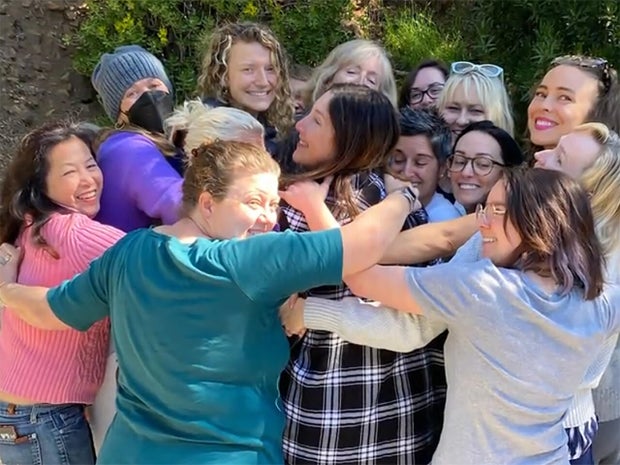
Shaina went 30 years without seeing other women with similar stories – little girls living a parallel world. She found that those grown girls who share her sorrow also embody the best of what their moms left behind: “Being able to see all of those moms together, and then I would look at their living daughters and what they’ve all accomplished and who they are, and I connected them, and it was powerful.”
Hope Edelman reminds us that we can carry our mothers with the joy they would wish for us: “There will always be a tinge of sadness that pops up from time to time, because we wish our mom were there to witness our achievements, to help us through hard times,” she said. “But we can celebrate her life in addition to grieving her absence. Both of those things can be true.”
For more info:
Story produced by Aria Shavelson. Editor: Carol Ross.
If you or someone you know is in emotional distress or a suicidal crisis, you can reach the 988 Suicide & Crisis Lifeline by calling or texting 988. You can also chat with the 988 Suicide & Crisis Lifeline here.
For more information about mental health care resources and support, The National Alliance on Mental Illness HelpLine can be reached Monday through Friday, 10 a.m.–10 p.m. ET, at 1-800-950-NAMI (6264) or email info@nami.org.
See more: