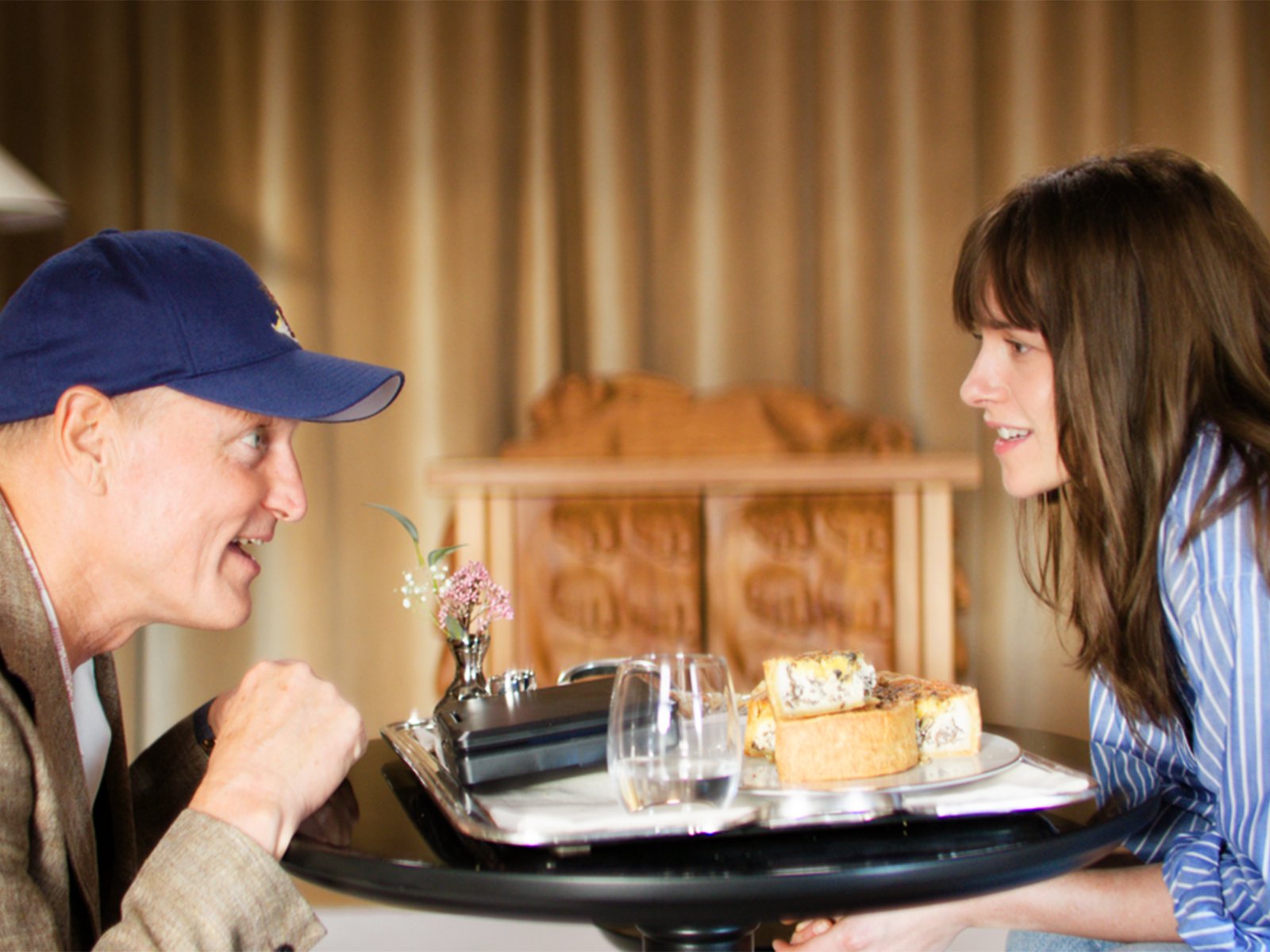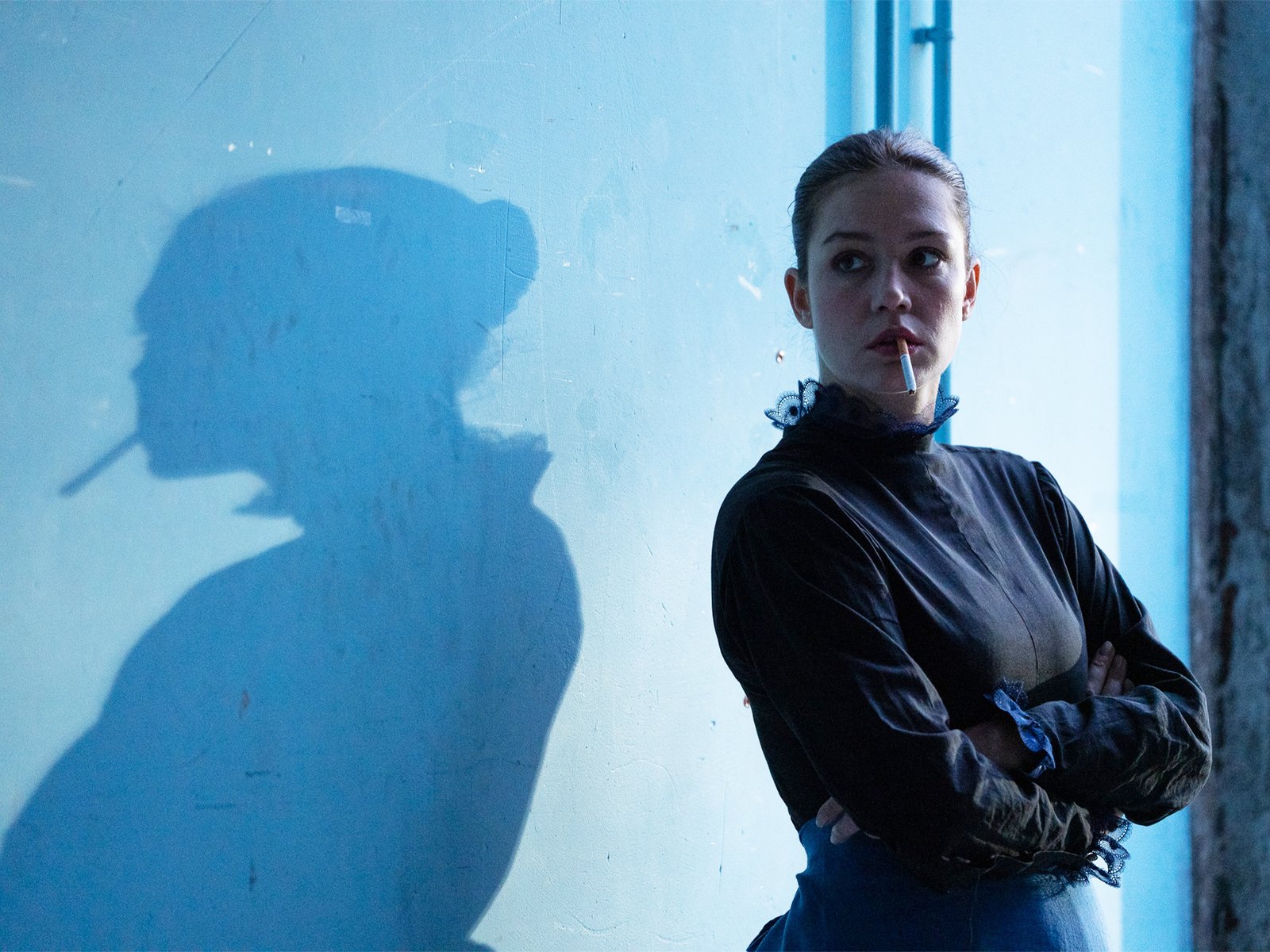











Featuring an ensemble cast of French heavyweights, Parallel Tales is Iranian auteur Asghar Farhadi’s fifth time selected in competition and the first since his Grand Prix-winning social drama A Hero, which premiered at the festival in 2021. Unfortunately there’s little in the way of compelling revelations or narrative payoff in this 140-minute long slog about suburban intrigue.
Inspired by the sixth episode of the 10-part Polish psychodrama Dekalog, the film sees Isabelle Huppert play a novelist named Sylvie who lives as a recluse in a beautifully cluttered apartment and occasionally spies on her neighbours for creative inspiration. Seeing a young foley artist named Nita (Virginie Efira) working in the converted sound studio across the way, Sylvie concocts a fiction that’s far racier than reality, imagining an adulterous affair between Nita and her boss Nicolas (Vincent Cassel) unbeknownst to his brother Theo (Pierre Niney) – who is Nita’s boyfriend in this version of events – until he finds out and commits a vengeful murder in a fit of jealousy.
Get more Little White Lies
When Sylvie’s pregnant niece Celine (India Hair) is robbed on the Metro, she takes a shine to a young houseless man called Adam (Adam Bessa) who retrieves her stolen wallet from the thief. Believing that this action speaks to Adam’s high moral character, Celine recruits him to help clear out her aunt’s book-filled flat, which she plans to sell in order to raise money in anticipation of the baby’s arrival. If this all sounds a little convoluted, that’s because it is: Farhadi’s film ping-pongs between perspectives as Adam develops a fixation with Sylvie’s novel that compels him to follow Nita to her usual haunts, slip the book into her bag, and later pretend to her that he wrote it.
When Nita tells Theo about their fictional dynamic in the book, he is driven to an inexplicable degree of horny by this prospect and attempts to rape her even as she struggles and cries out against his advances. The experience traumatises Nita, who tries to quit her job, and in turn angers Nicolas. He’s upset because he apparently really needs the manpower for the big project they’re currently working on, which diegetically consists of the trio fondling props to add audio to miscellaneous clips of nature footage. Between this and the mice that are gradually infesting Sylvie’s apartment, it’s all a bit grim. The scenes I noticed the audience respond to were its smaller moments: giggles when Huppert lights her cigarette by putting it in a toaster; sharp, empathetic intakes of breath when she steps barefoot onto a shard of glass. But these brevities aren’t enough to elevate the film into something worth its runtime.
Farhadi’s cinematic formula often involves a butterfly effect that eventually instigates a crisis, but the weakness of this adaptation suggests it’s perhaps time to try something else. There’s also a revealing irony that acts of theft are the crux of his story. Though much Western coverage only mentions it to note his acquittal in one 2024 case, Farhadi has been accused of plagiarism several times for ripping concepts from their work or personal lives. The New Yorker’s Rachel Aviv reported on these allegations in 2022, framing the feature around his mistreatment of Azadeh Masihzadeh (the filmmaker’s former student) and establishing the incident as part of a wider pattern of chronic behaviour.
In addition to Masihzadeh’s experience – in which she was intimidated by Farhadi into surrendering the copyright to the idea behind her documentary All Winners, All Losers – the screenwriter Mani Haghighi said his work on treatments for The Past and Everybody Knows went uncredited, while the actress Taraneh Alidoosti referred to Farhadi as a “premium gaslighter,” and Golshifteh Farahani characterised him as a vasat baz (someone “who plays the middle”) for essentially abandoning her when Iranian authorities accused her of treason for acting in Ridley Scott’s Body of Lies without wearing a hijab. “He is clearly not part of the dictatorship,” said Farahani, “but he is making deals with that dictatorship.”
Between stealing ideas from his students, exploiting his collaborators, and abusing his cachet as a celebrated cultural figure, Farhadi has a lot to answer for. Parallel Tales – a starry but ultimately mediocre morality play – is simply the latest charge in a growing laundry list.