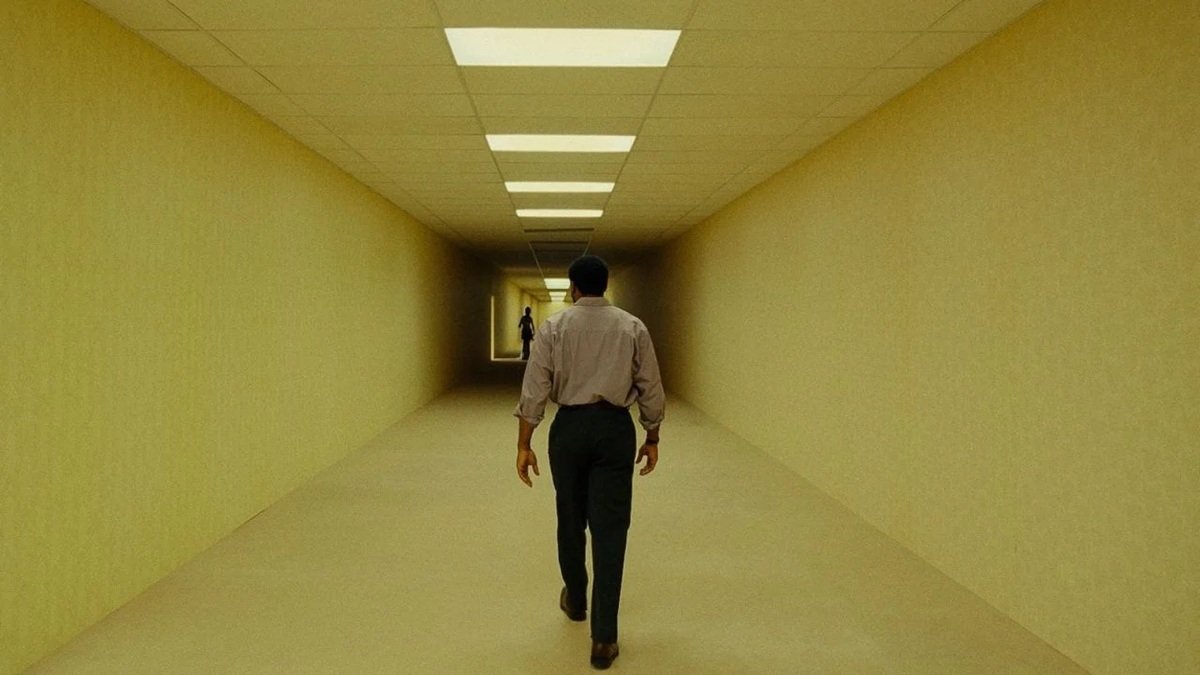







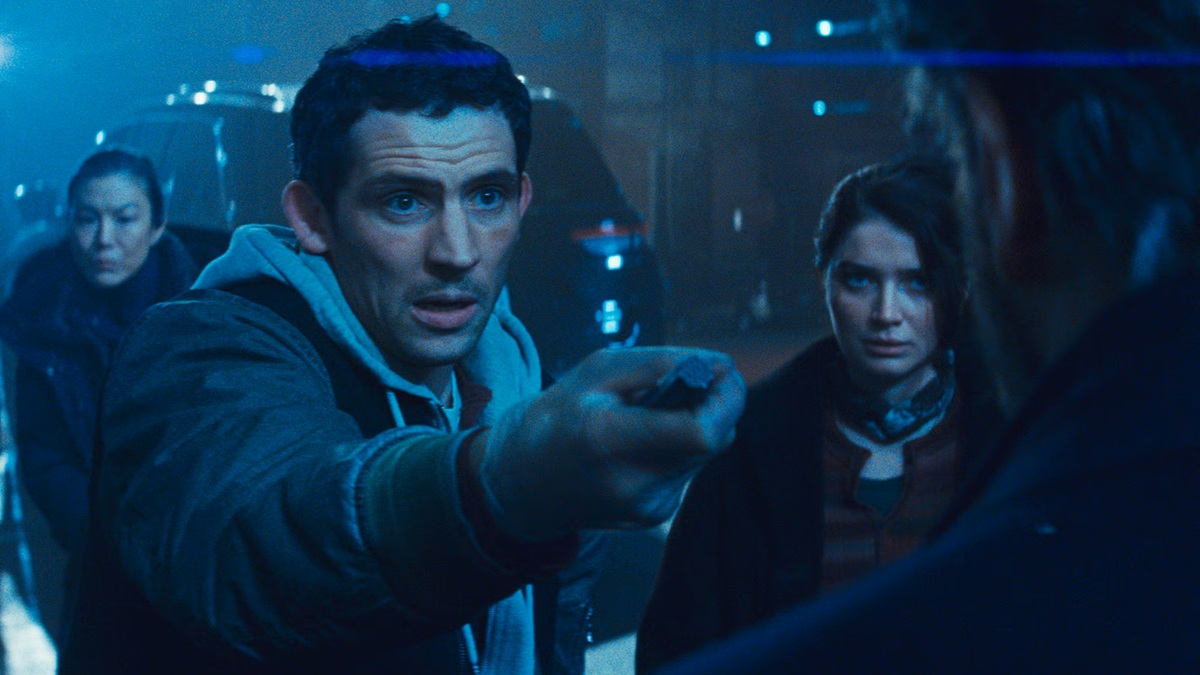
“History has no reset keys,” Noah Scanlon (Colin Firth) warns at one point in Disclosure Day. He says it to Daniel Kellner (Josh O’Connor), who has stolen extraterrestrial technology and classified files from Wardex, a secret corporation that’s spent decades hiding the truth about alien contact. It’s meant as a warning. It also sounds like a confession.
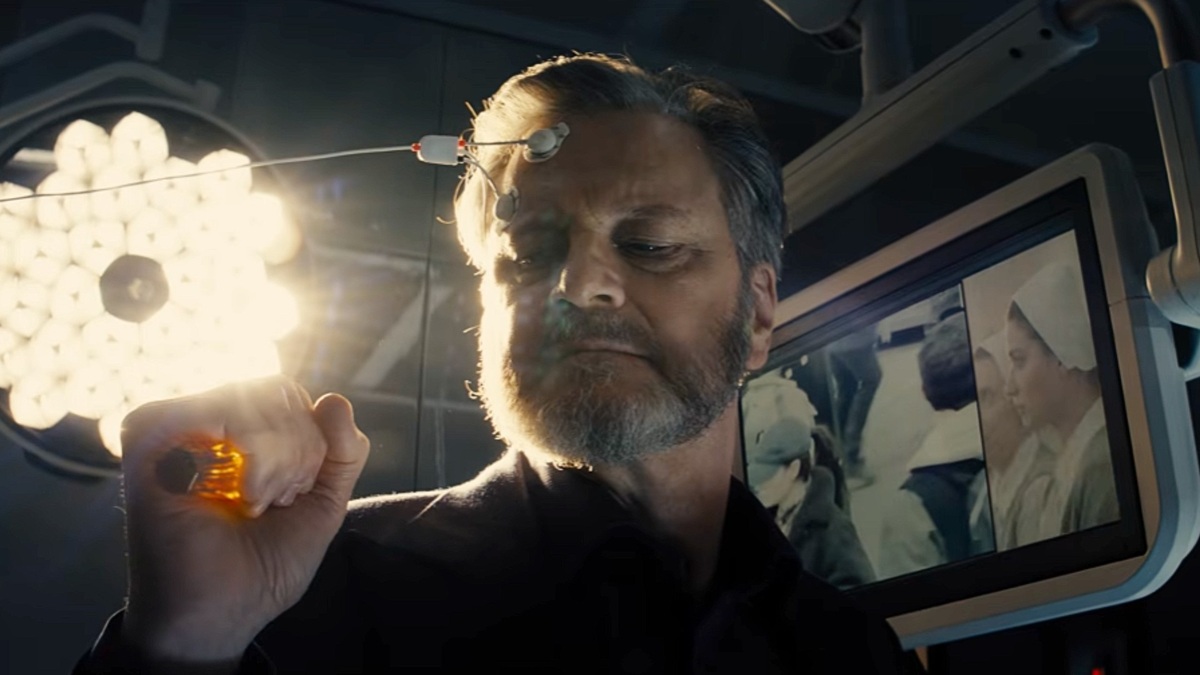
The first time we see Firth, he carries the gravitas of a much slimmer Orson Welles, with a weary tone that recalls late-stage Connery. It’s a terrific entrance: severe, tired, and quietly rotten. You understand almost immediately that Scanlon has spent too much of his life confusing control for responsibility. Men like that are always dangerous. They’ve already forgiven themselves.
But “History has no reset keys” also sounds like Steven Spielberg talking to himself. He can return to aliens, awe, frightened families, government secrets, and ordinary people staring at something they can’t explain. He can return to the grammar of wonder. What he can’t do is pretend that 1977 is still waiting for him, untouched, on the other side of the screen. The world has changed too much. So has he.
That tension gives Disclosure Day its strange charge. This isn’t Spielberg at his cleanest or most disciplined. David Koepp’s screenplay crams in disclosure, government cover-ups, alien captivity, childhood trauma, global war, faith, science, empathy, and late-stage institutional paranoia. At times, it resembles a congressional hearing with feelings. Some of it works beautifully. Some of it nearly topples from sheer overpopulation. For the record, I adore the film. But I also adore it partly because of the mess, not in spite of it.
The Old Wonder Meets a More Paranoid World
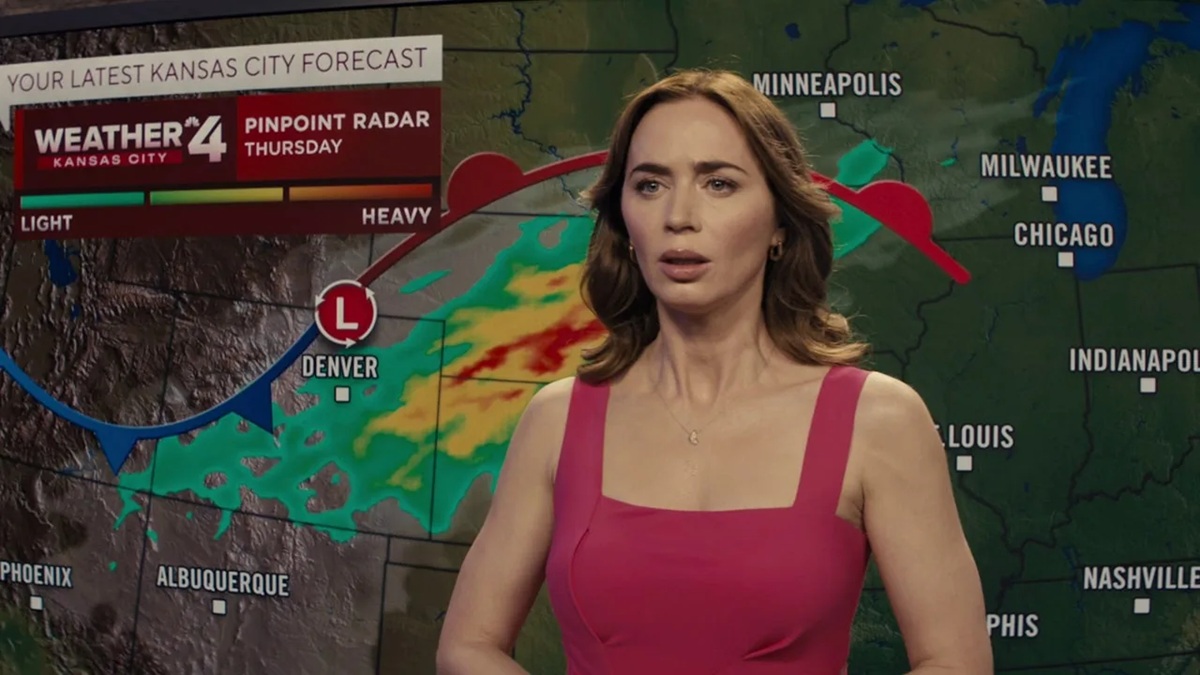
The setup has the sturdy, almost pulp-like clarity of an old-school chase thriller. Daniel Kellner is a cybersecurity expert who exposes Wardex’s secrets. Margaret Fairchild (Emily Blunt), a Kansas City television meteorologist and former journalist, experiences an encounter that unlocks strange abilities tied to language, emotion, and perception. Soon, Wardex is after both of them, because of course it is. No shadowy organization in a Spielberg film has ever heard the word “restraint” and thought, “Interesting. Let’s try that.”
That’s the plot in its cleanest form. The movie itself is less tidy. Disclosure Day keeps opening doors. One leads to a conspiracy thriller. Another leads to an alien-contact fable. Then Spielberg adds a family drama, a media-age panic piece, a religious undercurrent, an ecological anxiety, a whistleblower fantasy, and the old American fear that people can’t handle the truth without immediately setting fire to the furniture.
For a stretch, the film even taps into familiar Spielberg-inspired coming-of-age tropes: small town, hidden knowledge, formative terror, adults withholding the truth, the sense that childhood is where the universe first wounds you and then leaves clues for later. In another director’s hands, this might feel like Super 8 for adults, which is both a compliment and a warning label. Spielberg, though, is too old and too emotionally exposed to treat the material like an exercise in homage. He isn’t imitating the movies that imitated him. He’s going back to the source, and finding that the source has become more unstable with age.
What makes Disclosure Day fascinating isn’t simply that Spielberg is back in alien territory. That’s the easiest sentence to write about this movie, and probably the least useful. The better question is what happens when Spielberg’s old belief in wonder enters a world that no longer knows what to do with truth. In Close Encounters of the Third Kind, contact could still feel like a calling. Here, disclosure arrives in a culture trained to convert revelation into panic, faction, denial, content, counter-content, and probably a merch drop by lunch.
The movie understands that. It doesn’t always dramatize the idea gracefully, but it understands it.
Math, Language, and the Family Ghost
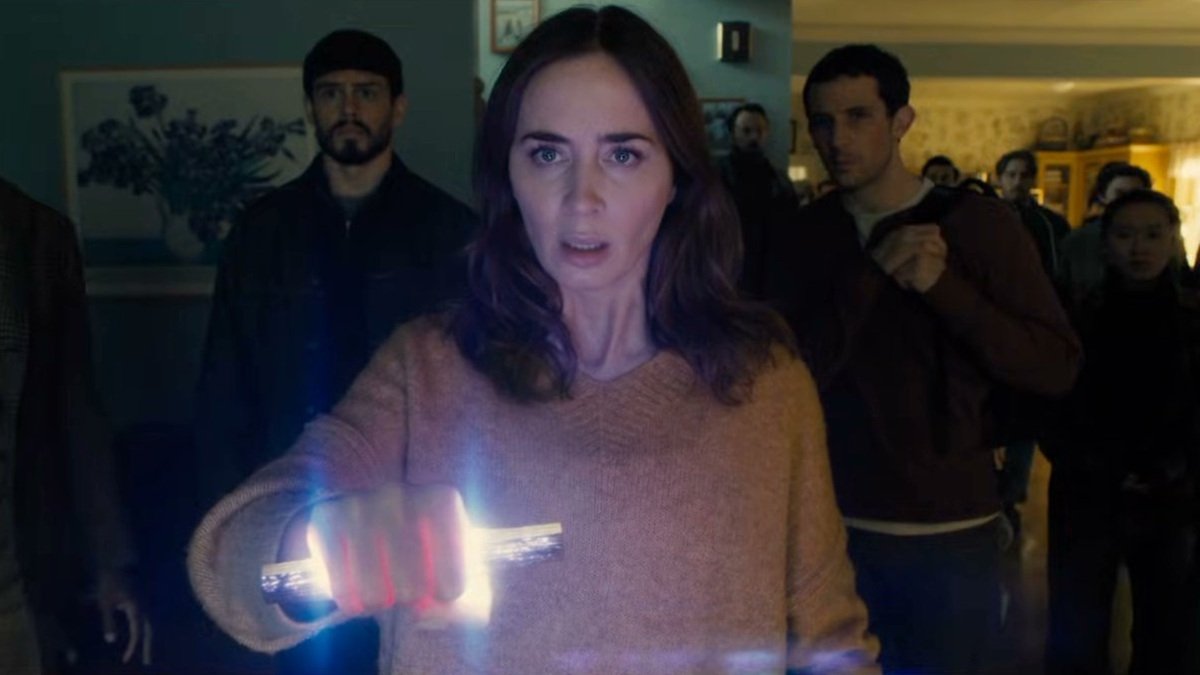
The best thread in Disclosure Day is the contrast between Daniel and Margaret. Daniel receives the extraterrestrial mystery through systems: code, mathematics, stolen files, proof. Margaret receives it through language, feeling, and an almost unbearable sensitivity to other people’s emotions. He decodes architecture. She absorbs damage.
That split feels deeply Spielbergian. In Close Encounters, music and science became the bridge between humanity and the unknown. In The Fabelmans, Spielberg finally stripped away the veil and confronted the family dynamic that had been haunting his films for decades: the practical father, the artistic mother, the child caught between engineering and feeling. Disclosure Day returns to that old fracture from another angle. Daniel is numbers. Margaret is language. He knows how to expose the truth. She has to learn how to carry it.
This is where the film becomes more moving than its plot mechanics sometimes deserve. Spielberg, now deep into his eighties, hasn’t hardened into the strict, airless classicism that can happen to late-career masters. He feels looser here. More vulnerable. A little chaotic. Maybe even willing to embarrass himself. Pauline Kael, who already had limited patience for Spielberg’s emotional openness, would probably have needed a chair, a cigarette, and divine intervention to get through parts of this.
But that’s also why the film feels alive. Spielberg isn’t protecting himself from sincerity. He walks straight into it.
And yes, sincerity can be clumsy. The film sometimes treats empathy as if it can unlock trauma, violence, state secrecy, and global catastrophe if only someone holds the right feeling long enough. Lovely idea. Also a lot to ask of empathy, which already has a busy schedule. Still, Disclosure Day works because Spielberg believes in the idea so completely that the naïveté becomes part of the gamble. He’s asking whether intelligence without compassion is only another technology waiting to be weaponized.
Emily Blunt Receives the Signal
This may be Emily Blunt’s “most” acting, and I mean that as praise. She’s asked to do an exhausting amount here: panic, confusion, grief, linguistic dislocation, physical terror, spiritual awakening, and several forms of vocal and emotional transmission that could have turned Margaret into a walking prestige gimmick. Blunt doesn’t merely hold the film together. She becomes its weather system.
I was tired on her behalf.
Margaret could’ve easily become a concept with good cheekbones: the chosen receiver, the human bridge, the woman through whom the movie expresses its grand thesis about communication. Blunt gives her a nervous, human texture. She looks frightened not only by what’s happening to her, but by the possibility that she may be the only person capable of making sense of it. When she speaks in languages she hasn’t learned, or produces sounds that seem to arrive from somewhere beyond ordinary speech, the effect isn’t stunt-work. It feels like rupture.
That matters because Disclosure Day is, in many ways, a film about translation. Not only between species, but between fact and feeling, memory and history, fear and action. Blunt understands that Margaret’s gift is also an invasion. Her body becomes the place where truth breaks through, and the film is never better than when Spielberg lets that feel terrifying instead of simply miraculous.
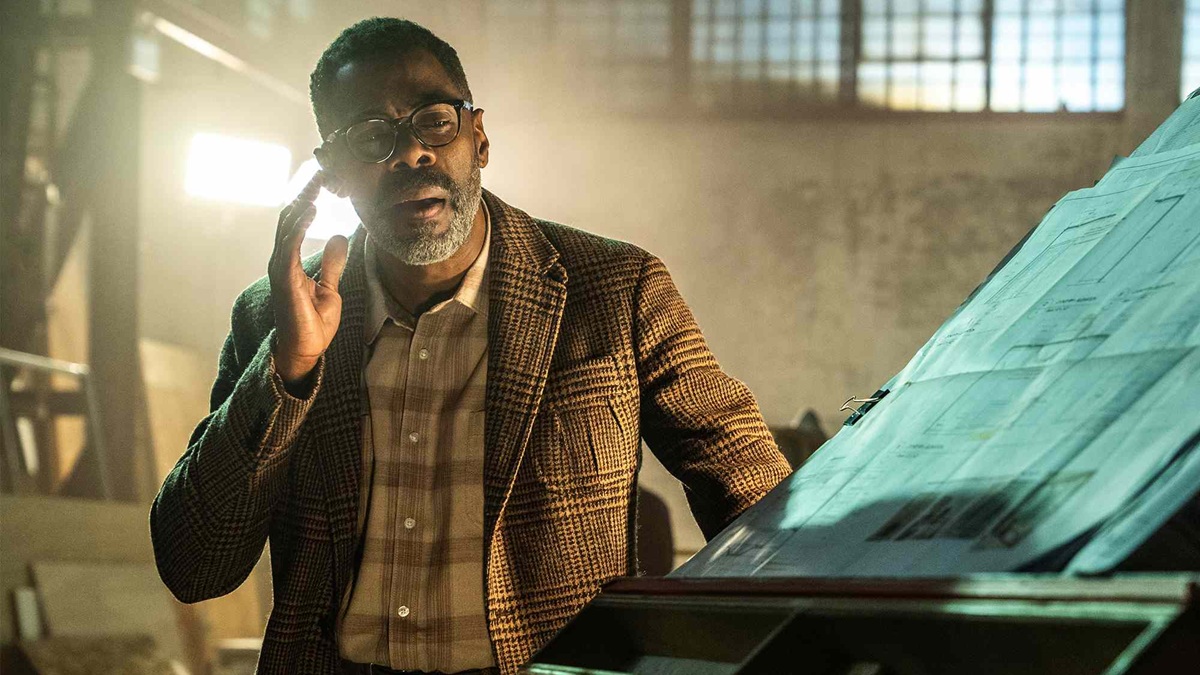
O’Connor has the more tightly wound role, and he plays Daniel with the wary intelligence of someone who knows too much and trusts too little. Eve Hewson gives Jane Blankenship a grounded alertness, while Colman Domingo brings Hugo Wakefield the warmth of a man who sees disclosure as a moral act, not only a political one. Firth, meanwhile, gives Scanlon the exhausted menace of a man who’s spent too long defending an indefensible lie.
John Williams Knows When to Look Up
John Williams’ score is one of the film’s great pleasures. It’s playful, mysterious, dissonant, and, when it wants to be, shamelessly itself. There are moments when the music wanders toward the old Spielberg-Williams glow, the sound of the ceiling quietly opening. Sometimes it presses the nostalgia button a little too comfortably. Then again, if John Williams can’t sound like John Williams in a Spielberg alien movie, what are we even doing here? Filing a noise complaint against the cosmos?
What surprised me more is how well the score leans into the film’s conspiracy-thriller mode. Williams has always had a gift for wonder, but Disclosure Day also shows how good he can be at danger, suspicion, unease, and institutional menace. The music doesn’t simply invite us to look up. It also keeps glancing over its shoulder.
Janusz Kamiński’s cinematography works in a similar tension. The film has the polish one expects from a Spielberg production, but its best images aren’t merely beautiful. They’re alert. A television studio becomes a site of revelation. A childhood home becomes an emotional trap. A chase sequence can suddenly turn from movement into memory. Spielberg still knows how to stage action with a clarity that many younger filmmakers, raised on digital clutter and spatial nonsense, keep treating as optional. The film’s legs know how to run, even when its brain is carrying too many bags.
The Messiness of the Plea
The weaknesses aren’t small, and ignoring them would make the praise cheaper. Disclosure Day overexplains. It sermonizes. It occasionally mistakes emotional volume for dramatic precision. Some scenes announce their themes when they should’ve trusted the actors to carry them. And the final movement, while powerful, may frustrate viewers who want the film to resolve its implications rather than stop at the threshold of them.
There’s also a tug-of-war between the paranoid thriller and the Spielbergian hymn. The first mode understands that institutions lie, people panic, and truth doesn’t automatically liberate anyone. The second mode wants to believe that revelation can still become a communal act of grace. The movie never fully reconciles those impulses. It tries to hold both, and there are times when the strain shows.
But maybe that strain is part of the point. Disclosure Day isn’t naïve because it doesn’t know how ugly people can be. It’s naïve because it still chooses to believe ugliness isn’t the last word. That’s a different kind of naïveté. Riskier. Easier to mock. Harder to fake.
Watching the film, I kept thinking of my essay on Bugonia, which dealt with a world where conspiracy theories feel eerily plausible because they give chaos a structure. People don’t always run to conspiracy because they hate truth. Sometimes they run to it because the official version of truth has failed to explain their grief. Disclosure Day flips that anxiety around. What if the conspiracy is real? What if the cover-up happened? And what if the people who sounded unhinged were only wrong about the details? And even then, what if the truth still doesn’t save us unless we can receive it without turning monstrous?

‘Disclosure Day’: The Anti-‘Men in Black’
That question also recalls the old Men in Black lesson: one person may be smart, but people in groups can be panicky, stupid, and dangerous. Disclosure Day knows that fear. Jane gives voice to it when she warns Daniel about what disclosure could do to the world order. Panic isn’t theoretical. It’s what happens when people discover that history, religion, science, government, and reality itself may have been edited for their comfort.
Spielberg hears that argument. He refuses to let it win.
That refusal moved me most, not because the film proves that humanity deserves disclosure. If anything, the movie gives us enough reasons to worry that we don’t. But Spielberg keeps pushing toward the possibility that truth without empathy is only another weapon, while empathy without truth becomes sentimentality dressed as virtue. The film is trying to marry the two. It doesn’t always succeed. But it keeps trying anyway, with a late-career tenderness that I found hard to resist.
“History has no reset keys.” The line stays with the movie because Spielberg seems to know it’s true. He can’t go back to Close Encounters. He can’t return to an earlier cinematic innocence, or to a world where revelation could be imagined without livestreams, propaganda, geopolitical dread, and a thousand people online explaining why the aliens are actually crisis actors. And most certainly, he can’t reset his own history either: the broken families, the absent fathers, the luminous mothers, the children staring at impossible light.
And so he doesn’t reset it. Instead, he discloses it.
Disclosure Day is too crowded, too earnest, and sometimes too convinced that feeling can do the work of structure. But it’s also thrilling, generous, beautifully acted, and open-hearted in a way that feels almost defiant now. Spielberg has made a film about the terror of truth arriving too late, and the greater terror that we might still refuse to listen when it does.


A self-described cinephile who can’t stop talking—and writing—about films. Paul also moonlights as ghostwriter and editor for a few memoirs. He currently resides in the Philippines.