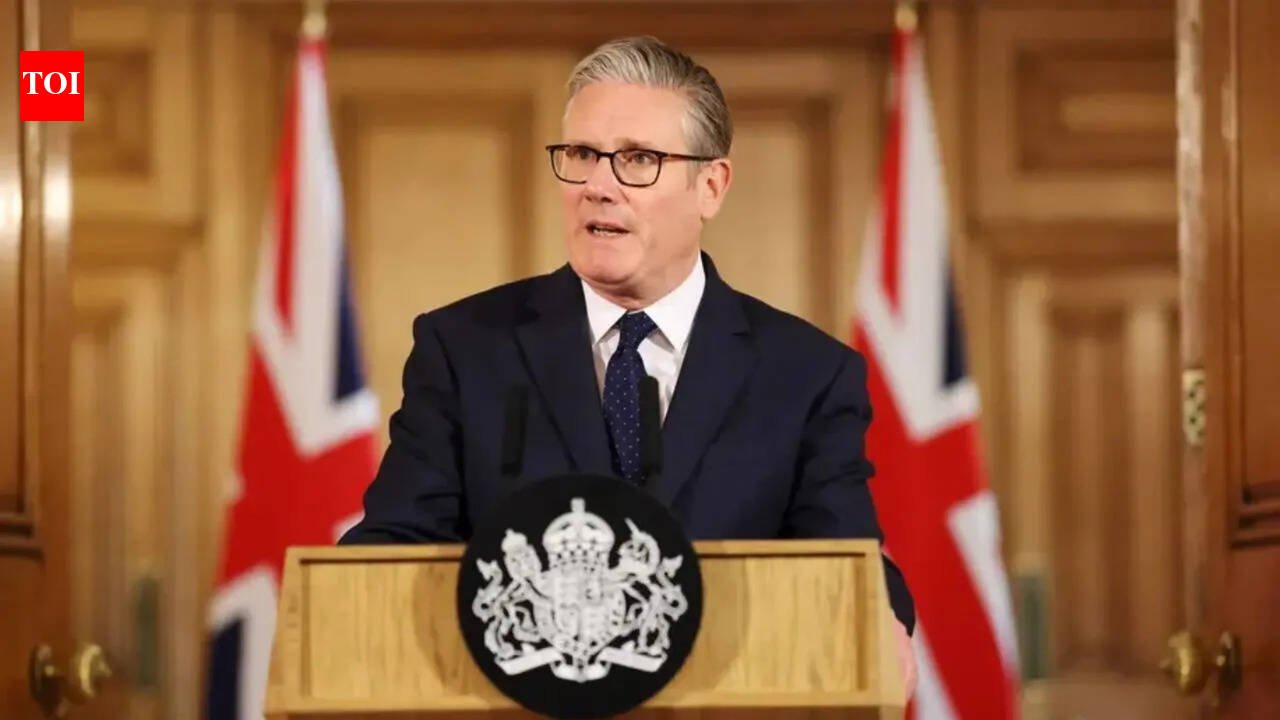








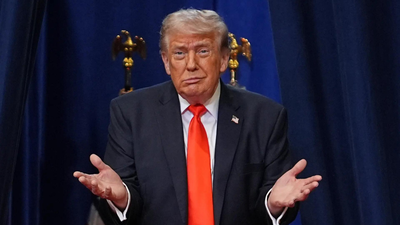
TOI correspondent from Washington: In a move steeped in geopolitical tension and personal irony, US President Donald Trump, whose grandfather emigrated from Germany, giving him one of the closest generational ties to the country of any modern American leader, has ordered the withdrawal of roughly 5,000 American troops from Germany after a public clash with Chancellor Friedrich Merz over Washington’s conduct of the war in Iran.The Pentagon said the drawdown would be completed over six to twelve months following what it described as a “thorough review” of US force posture in Europe. But officials on both sides of the Atlantic acknowledge the timing is anything but routine. It follows Merz’s unusually blunt criticism of the US campaign, in which he said Washington had entered the conflict “without any strategy whatsoever” and suggested Iran was outmanoeuvring and humiliating the US diplomatically.US officials called the remarks “inappropriate and unhelpful,” suggesting the drawdown was a punitive measure to send a message to Nato partners who are not measuring up to Trump’s expectations. Trump himself lashed out at Merz, saying in one social media post, “The Chancellor of Germany should spend more time on ending the war with Russia/Ukraine (Where he has been totally ineffective!), and fixing his broken Country, especially Immigration and Energy, and less time on interfering with those that are getting rid of the Iran Nuclear threat, thereby making the World, including Germany, a safer place!” German officials, for their part, signalled the decision did not come as a complete surprise given the growing rift in the trans-Atlantic alliance, with Spain, France, Italy, and UK increasingly ticked off with the Trump tempests. The move will affect an army brigade combat team and other units, reversing part of the post-2022 surge of US forces to Europe following Russia’s invasion of Ukraine. But also casts a shadow over US commitment to Nato, an alliance Trump has repeatedly criticized as imbalanced and overly dependent on American power.Germany is not just another host nation. With roughly 35,000 US troops and between 20 and 40 military installations, it is the central hub of American military operations in Europe, and hosts the largest concentration of US troops abroad after Japan (50,000). Facilities such as Ramstein Air Base and the headquarters of US European Command and US Africa Command underpin operations extending far beyond the continent, including missions in the Middle East and Africa. Across Europe, the US maintains about 65,000 to 70,000 troops, meaning Germany alone hosts more than half of the American military footprint on the continent.There is an unmistakable irony in Trump’s latest confrontation with Berlin. Of all modern American presidents, he has among the closest generational ties to Germany. His grandfather, Friedrich Trump, emigrated from the German village of Kallstadt in the late 19th century, making Trump, whose original family name is said to be Drumpf, a relatively recent descendant compared to predecessors like Eisenhower and Nixon, whose German ancestry is more distant.The decision also reflects broader questions about the scale and cost of America’s global military posture. The US maintains more than 700 bases across over 80 countries, with between 170,000 and 220,000 personnel stationed abroad—an expeditionary network unmatched in modern history, its fallout captured in movies such as Buffalo Soldiers and Sayonara. Sustaining that system costs an estimated $50 billion to $70 billion annually, covering operations, infrastructure, logistics, and personnel. Within Trump’s MAGA coalition, the withdrawal aligns with a growing sentiment that the US should scale back its overseas commitments and focus resources nearer home or on more pressing theaters such as the Indo-Pacific. That view has long shaped Trump’s approach to Europe, where he has accused allies of failing to meet defense spending commitments and relying excessively on US protection. The decision has already drawn criticism from US lawmakers concerned about the strategic signal it sends. But for all its immediate political overtones, the withdrawal reflects a deeper shift in the transatlantic relationship. Since World War II, US forces in Germany have symbolized not just military power but a strategic and cultural bond between America and Europe. That makes the current moment all the more striking: A president with direct familial roots in Germany is presiding over a partial unravelling of the very security architecture that emerged from that shared history.