









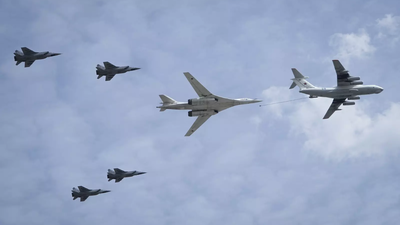
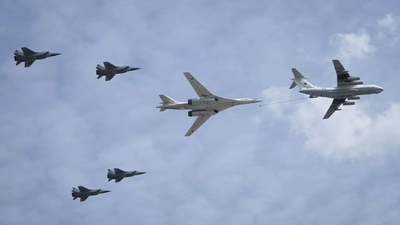
Two Russian warplanes “repeatedly and dangerously” intercepted an unarmed RAF spy plane over the Black Sea last month, in what the Ministry of Defence described as the most dangerous encounter involving an RAF aircraft since 2022.According to the MoD, a Russian Su-35 fighter approached the Rivet Joint surveillance aircraft closely enough to trigger its emergency systems and disable its autopilot. A Su-27 jet also carried out six passes in front of the RAF plane, coming within six metres (19ft) of its nose.The MoD, cited by BBC, said the Rivet Joint had been conducting a routine international flight to support the security of Nato’s eastern flank.Defence Secretary John Healey condemned the interceptions and praised the “outstanding professionalism” of the RAF crew during the incident.He said: “This incident is another example of dangerous and unacceptable behaviour by Russian pilots, towards an unarmed aircraft operating in international airspace.“These actions create a serious risk of accidents and potential escalation.”He added: “This incident will not deter the UK’s commitment to defend Nato, our allies and our interests from Russian aggression.”The MoD and the Foreign Office have called on the Russian embassy to condemn the incident.The latest interceptions come amid what the MoD described as increased Russian aggression in the region, including recent submarine activity near critical underwater British infrastructure in the North Sea.The incident follows a similar episode in September 2022 involving another RAF Rivet Joint aircraft over the Black Sea. During that encounter, a “rogue” Russian pilot fired two missiles, with the first missing the aircraft rather than malfunctioning as initially claimed.Russia said the 2022 incident was caused by a “technical malfunction”. However, three senior Western defence sources later told the BBC that the missile was fired after an ambiguous command from a Russian ground station.The RAF’s RC-135W Rivet Joint aircraft is operated by No 51 Squadron and usually flies from a base in Lincolnshire. According to the RAF, the aircraft uses advanced sensors to “intercept and analyse signals across the electromagnetic spectrum, providing real-time strategic and tactical intelligence.”