









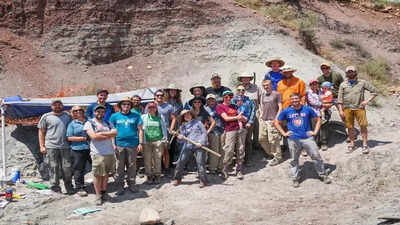
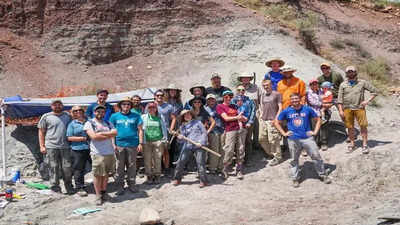
Long before large flesh-eating dinosaurs came to dominate the planet, a specialised imposter had been strutting its stuff in North America’s Southwest region on two feet. To anyone examining this quick, bipedal animal with a birdlike beak and no teeth, it would appear that they were dealing with an early theropod dinosaur. But nature likes to recycle its best work, and this particular creature was masterfully mimicking the dinosaurs.A group of palaeontologists working in the hot desert badlands of New Mexico has unearthed the fossilised remains of an animal that evolved a body plan that closely resembled that of early dinosaurs. The fossilised animal existed about 212 million years ago, during a period when dinosaurs were not yet the dominant animals on Earth and existed as minor components of the ecosystem. The find is turning traditional textbooks on their heads, proving that some of the most iconic features of dinosaurs actually evolved separately from the dinosaur family tree.The crocodile-like creature The amazing fossil was uncovered while continuing work in the renowned Hayden Quarry at Ghost Ranch, New Mexico. Although many fossils have been found at this historical location through the years, this particular specimen presented scientists with a new evolutionary mystery altogether.The detailed anatomical architecture of this animal was described in a study published in the Journal of Vertebrate Paleontology titled A new shuvosaurid from the Late Triassic Hayden Quarry of New Mexico. The international research team analysed the newly discovered species to understand how its bones were configured.The most startling finding about the skeleton is the fact that, in spite of its small and ostrich-like build, as well as a two-legged running method of locomotion, it turns out that this creature is not actually a dinosaur at all. Instead, it is a highly adapted and very old relative of modern crocodiles. While modern crocodiles are renowned for their thick protective scutes, low-slung sprawling stance, and mouth full of sharp teeth, this Triassic ancestor gave up on this appearance altogether. Rather, it walked on two legs with an upright posture, developing a sleek, toothless beak in the process.
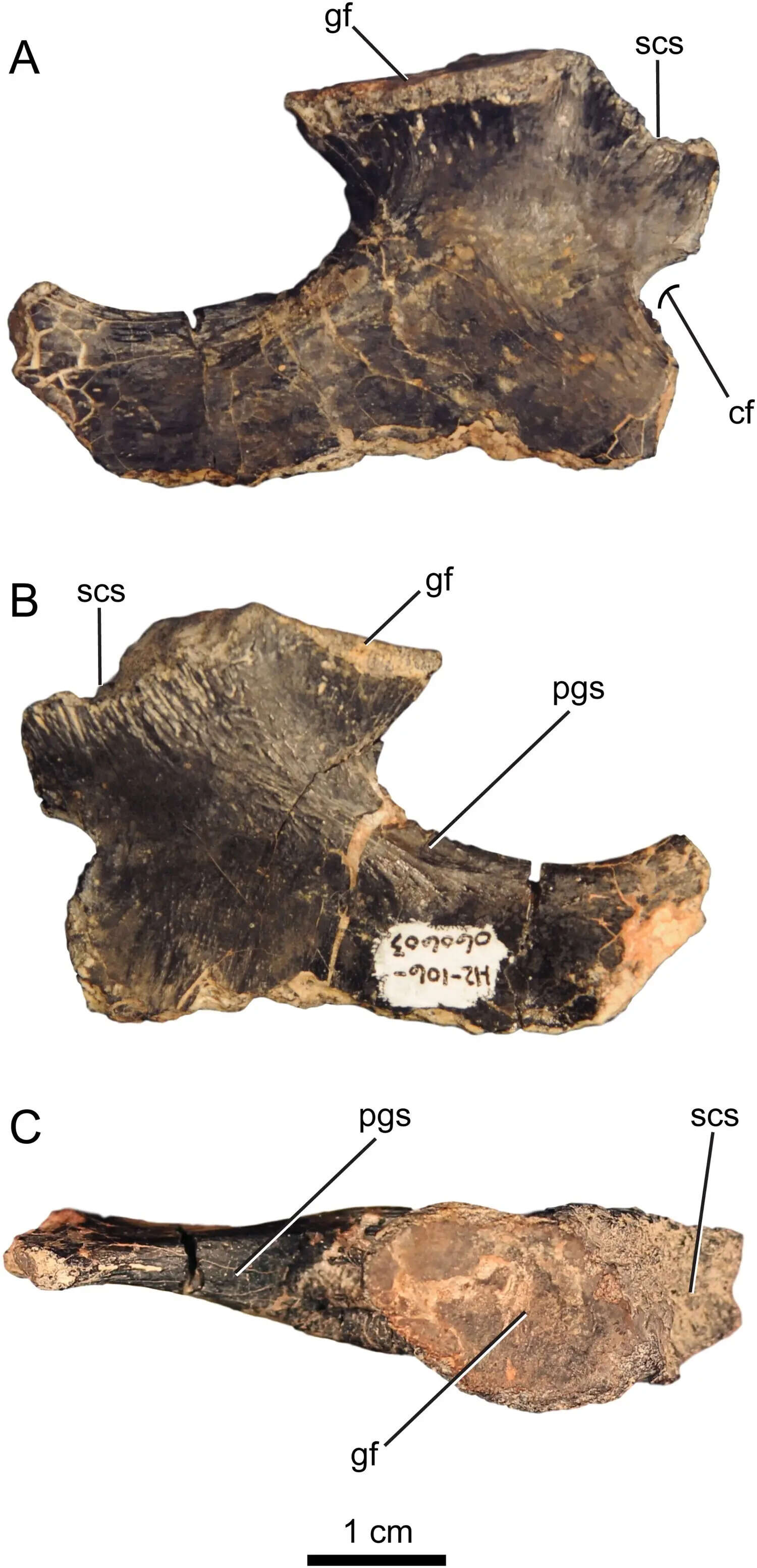
This creature lived around 212 million years ago, predating dominant dinosaurs. It developed dinosaur-like features independently, showcasing convergent evolution. Image Credits: A new shuvosaurid (Archosauria, Poposauroidea) from the Late Triassic (Norian) Hayden Quarry of New Mexico, U.S.A. study Fig 4
How nature makes matching species without any prior connectionThe discovery of this two-legged crocodile relative offers a stunning example of what convergent evolution is all about. Convergent evolution is when different animal lineages, which do not share a recent common ancestor, are faced with similar environmental conditions and independently develop similar adaptations for survival.The broader ecological impact of this newly found species was featured in an analysis by the Natural History Museum of Los Angeles County. The research notes that during the Late Triassic epoch, the early ancestors of crocodiles and dinosaurs were locked in a fierce, millions-of-years-long struggle for survival.In order to escape larger animals and be able to catch their prey, these animals evolved lightweight bones, a balanced tail, and high-speed running ability. By diverging from being slow, heavy creatures, this group managed to fulfil the ecological niches that would later be adapted by ostrich-type dinosaurs millions of years in the future.The excavation of this “fake dinosaur” is definitely an eye-opener to the extent of complexity involved in the story of evolution. The findings reveal that the past was much more innovative than one could ever have thought possible. This discovery has opened up a whole new vista into the past by revealing how crocodile ancestors managed to look like dinosaurs.