




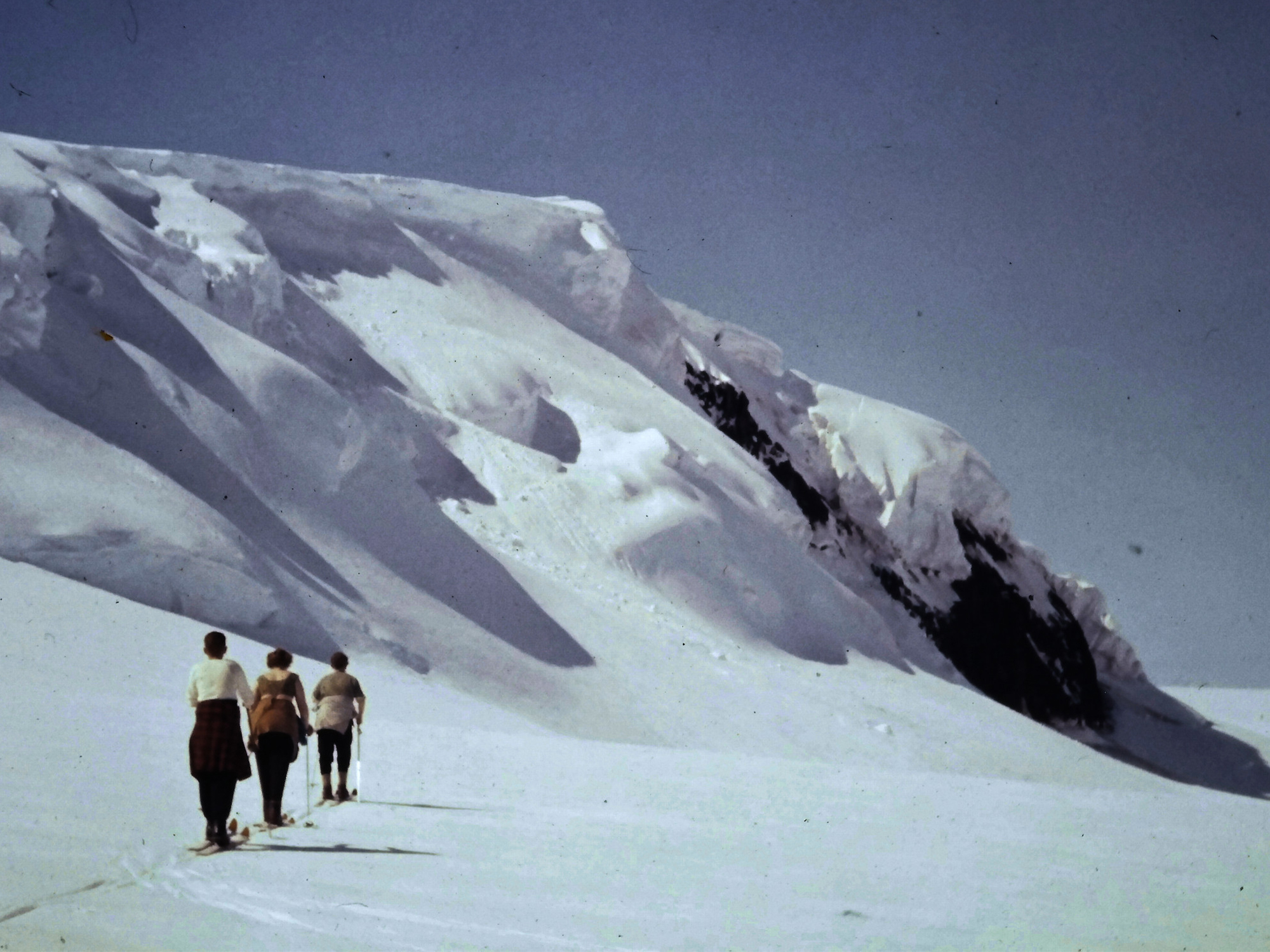
“I cannot send you a glacier, but at least I can send you this.” Time and Water sets out its purpose early on. Directed by Sara Dosa, whose Oscar-nominated Fire of Love (2022) similarly transformed the natural world into something deeply human, this documentary arrives as a message in a bottle for future generations. Guided by the writings of Icelandic poet Andri Snær Magnason, the film blends family photographs, archival footage and contemporary images of Iceland’s disappearing glaciers, preserving not only the landscape itself but the memories bound to it. Dosa approaches an overwhelming subject through profoundly personal storytelling, avoiding any brash polemics along the way.
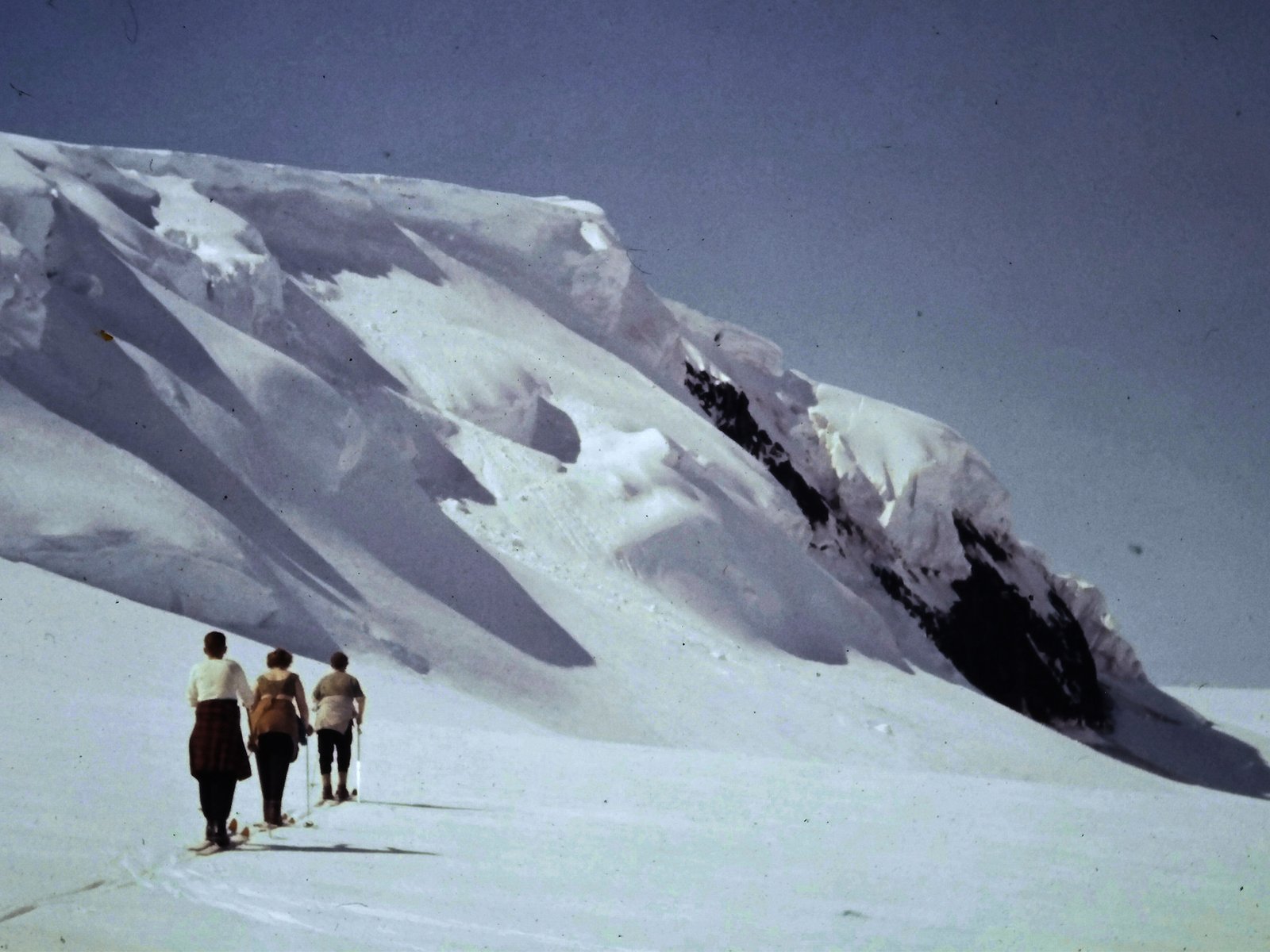
Magnason’s narration is anchored in the lives of his grandparents, pioneering glaciologists Hulda and Árni, whose decades of research produced much of the archival material featured throughout. Interwoven with digital and 16mm footage of Iceland’s melting terrain, their photographs become both scientific record and family heirloom. Just as Árni’s memories fade with time, the glaciers shed the histories stored within them. Time and Water suggests that climate change is as much a crisis of remembrance as it is one of ecology.
Get more Little White Lies
The film adopts the fluid structure of memory itself, moving by association rather than chronology. While the meditative pacing demands patience, its digressions rarely feel indulgent. Dosa lingers on vast blue caverns and ancient formations that resemble science fiction more than straight documentary, amplified by Dan Deacon’s celestial, synth-heavy score. As the soundtrack fills with the creaks and groans of shifting ice, Magnason reminds us that glaciers are considered living entities. It becomes an act of preservation in itself, a time capsule into a land before it slips beyond living memory.
Despite its underlying grief, Time and Water never succumbs to despair. This is not a eulogy for a lost world so much as an argument for our responsibility to remember it. Magnason recalls the funeral of Okjökull in 2014, the first glacier to be declared dead due to climate change, where he was asked to write a memorial plaque: “We know what is happening and what needs to be done. Only you know if we did it.” By reframing climate change as a crisis of memory, Dosa achieves what many climate documentaries struggle to accomplish. It reminds us not only of what is being lost, but why it is worth remembering.


