









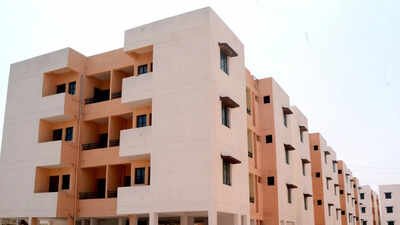
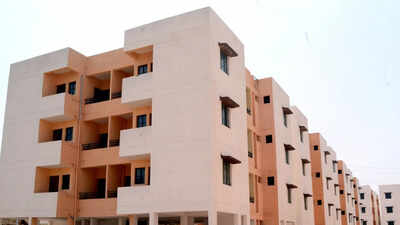
Under the Pradhan Mantri Awas Yojana-Urban (PMAY-U 2.0), the centre has revised operational guidelines and introduced new rules for interestsubsidies on urban housing loans. According to the Operational Guidelines of PMAY-U 2.0, released by the Ministry of Housing and Urban Affairs (MoHUA), this updated scheme aims to support one crore urban poor and middle-class families in buying or constructing houses till 2029. The scheme aims to improve urban living standards and expand affordable housing access.The new guidelines will mainly focus on the Interest Subsidy Scheme (ISS), which seeks to reduce the total repayment burden for first-timehomebuyers in cities.
What is the new Interest Subsidy Scheme?
As stated in the Operational Guidelines of PMAY-U 2.0, beneficiaries eligible for ISS can avail a 4% interest subsidy on housing loans up to Rs 8 lakh, and the loan tenure is up to 12 years for subsidy calculation. The maximum amount for a home loan is Rs 25 lakh, while the maximum cost of the house should not exceed Rs 35 lakh. The government has fixed the subsidy benefit to Rs 1.80 lakh, which will be transferred directly into the beneficiary’s loan account.The scheme is expected to mainly benefit the lower and middle-income families who are struggling with the rising prices of properties and the expensive home loans in urban areas.
Who can apply?
The scheme classifies beneficiaries into three major income groups: Economically Weaker Sections (EWS): Annual income up to Rs 3 lakh, Low Income Group (LIG): Annual income between Rs 3 lakh and Rs 6 lakh, and Middle Income Group (MIG): Annual income between Rs 6 lakh and Rs 9 lakh. Additionally, as per the guidelines, applicants should not own a pucca house anywhere in India, and even if any member of the family owns one, the application will become invalid.
Women-led ownership
The PMAY-U 2.0 emphasises women’s empowerment and strengthens their property rights. The guidelines state that the houses should preferably be registered under the female head’s name or should be jointly owned with the husband. It is a step to improve female ownership and financial security in the urban households of India.
The four verticals
Apart from the Interest Subsidy Scheme, PMAY-U 2.0 will operate through three additional verticals: Beneficiary Led Construction (BLC) – Under this, the government will give Rs 2.5 lakh per house so that the beneficiary can build a house or expand the existing kutcha/semi-pucca house.Affordable Housing in Partnership (AHP) – This is for large housing projects (government agencies, housing boards, development authorities,and private builders). The eligible buyers will be provided with subsidy support by the government. Also, if the builder uses eco-friendly construction, innovative housing technology or disaster-resistant designs, then they will be provided with extra money.Affordable Rental Housing (ARH) – One of the biggest additions in PMAY-U 2.0 is ARH. It works on two models. Under model 1, unused government houses will be converted into rental housing and under model 2, private/public companies will be building housing projects. ARH mainly targets migrants, workers and the urban poor who require affordable rental accommodations.
Digital tracking and direct transfers
The updated guidelines show strong emphasis on transparency and monitoring. Geo-tagging (officials uploading GPS location, house photos,etc) of houses, online tracking systems, and Direct Benefit Transfer (government sending money directly into the beneficiary’s bank account) have been made mandatory.