







The nearly 39-day Iran war has triggered fresh concerns inside Washington over the state of America’s high-end weapons stockpiles, with a new analysis warning that several critical missile systems heavily used during the conflict may take years to rebuild.A report released by the Center for Strategic and International Studies (CSIS) found that while the United States still retains enough weapons for any plausible scenario involving Iran, the conflict significantly depleted inventories of key precision-strike and missile-defence systems that would also be vital in a future war with China in the Western Pacific.
The think tank warned that the prolonged rebuilding timelines have created a ‘window of vulnerability’ for the United States at a time when tensions with Beijing remain elevated over Taiwan and the broader Indo-Pacific region.The report comes amid growing debate in Washington over whether the United States can simultaneously sustain military commitments in the Middle East, Europe and Asia without exhausting its industrial base and weapons production capacity.US Defense Secretary Pete Hegseth recently acknowledged the scale of the challenge, saying that it could take ‘months and years depending on the weapon system’ to replenish US inventories.According to CSIS, the core problem is no longer funding but time.The Trump administration’s proposed $1.5 trillion defence budget for FY2027 includes massive spending increases for advanced munitions, while the Pentagon is also expected to seek additional emergency war funding to replace weapons expended during Operation Epic Fury, the US campaign against Iran.However, modern missile systems are highly complex and depend on long production cycles, specialised components and fragile supply chains that cannot be expanded overnight.Why the Iran war depleted US inventoriesThe United States used enormous quantities of precision-guided missiles and interceptor systems during the Iran conflict.US Central Command reportedly struck more than 12,000 targets during Operation Epic Fury, while American forces and regional allies simultaneously defended against waves of Iranian missiles and drones.The campaign heavily relied on Tomahawk cruise missiles for long-range strikes and systems such as Patriot and THAAD for missile defence.At the same time, the United States continues supplying weapons to Ukraine while also fulfilling contracts for allies including Japan, Saudi Arabia, Australia, the UAE and Nato partners.The overlapping demands have intensified pressure on America’s defence industrial base.CSIS said many current production lines were designed during the post-Cold War era, when US military planners assumed future conflicts would be short and regional rather than prolonged wars requiring deep missile inventories.
Tomahawk missiles: Rebuilding may take until 2030
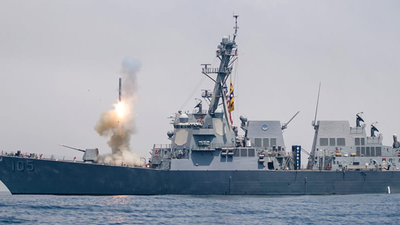
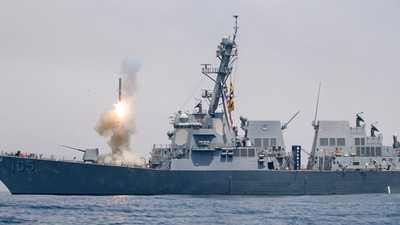
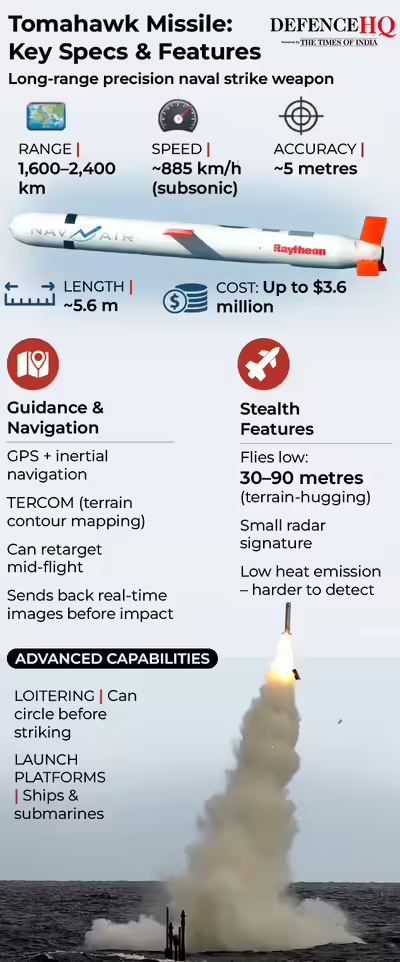
One of the biggest concerns centres around the Tomahawk Land Attack Missile (TLAM), the long-range cruise missile widely used by US naval forces to strike targets deep inside enemy territory.According to the report, the United States fired more than 1,000 Tomahawks during the Iran war alone.Despite the scale of usage, the US military had procured only modest quantities over the past decade, averaging roughly 86 missiles annually between FY2015 and FY2026.
.
Because of those historically small orders, actual production remained below 200 missiles per year even though manufacturer Raytheon has stated it aims to eventually scale production capacity above 1,000 annually.CSIS estimates that under current Pentagon delivery schedules, US inventories may not return to prewar levels until late 2030.The Pentagon has now dramatically increased procurement plans, requesting 785 Tomahawks in the FY2027 defence budget.But those missiles are projected to begin arriving only around March 2030 because of lengthy production lead times of nearly three years.The situation is further complicated by allied demand.Japan ordered around 400 Tomahawks as part of its military modernisation programme, while Australia purchased more than 200 and the Netherlands ordered 175.The report highlighted that some allied deliveries could now face delays as Washington prioritises rebuilding domestic stockpiles.
THAAD system: Critical missile shield under pressure
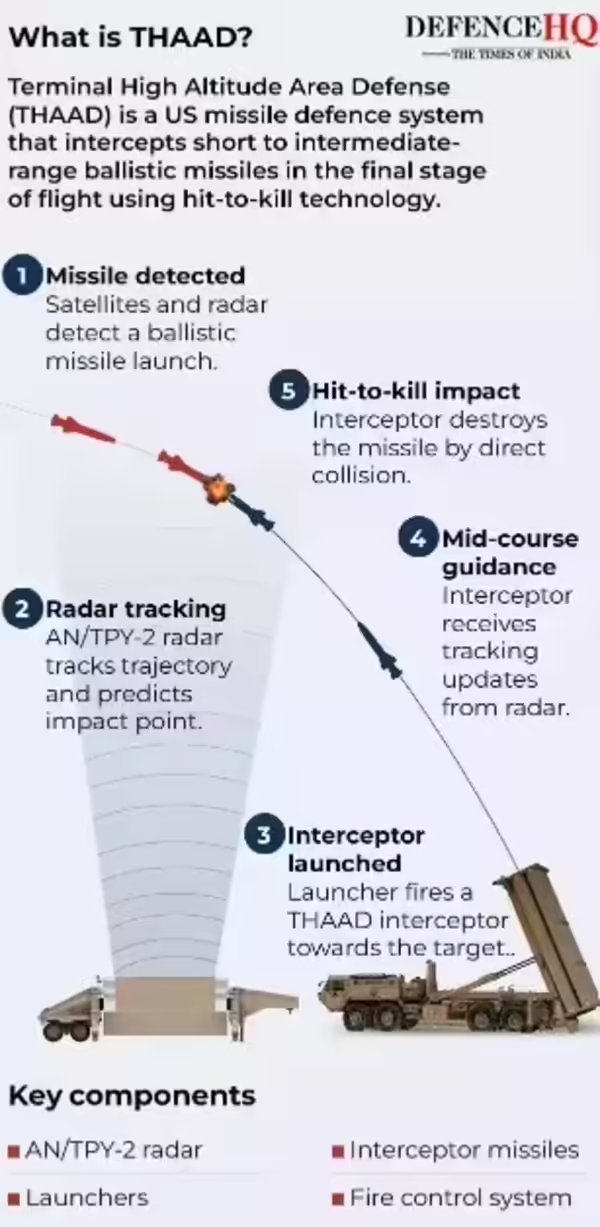
The Terminal High Altitude Area Defense (THAAD) system emerged as another major pressure point during the Iran conflict.THAAD interceptors are designed to destroy incoming ballistic missiles during the final phase of flight and became crucial in defending US assets and allies from Iranian missile attacks.CSIS estimates that replacing the THAAD interceptors used during the war could take until the end of 2029.
.
The Army has requested 857 THAAD interceptors in the FY2027 budget. Lockheed Martin currently produces THAAD interceptors at a surge rate of roughly 96 missiles annually.The company plans to expand capacity significantly, potentially reaching 400 interceptors per year but new facilities, tooling and supply-chain expansion will still take years to fully operationalise.The United States is also competing with allied demand.Saudi Arabia ordered 360 THAAD interceptors in 2017, while the UAE purchased another 96 in 2022.Both countries are expected to seek additional supplies after expending large numbers of interceptors during Iranian missile barrages.
Patriot interceptors: Ukraine war adds to pressure
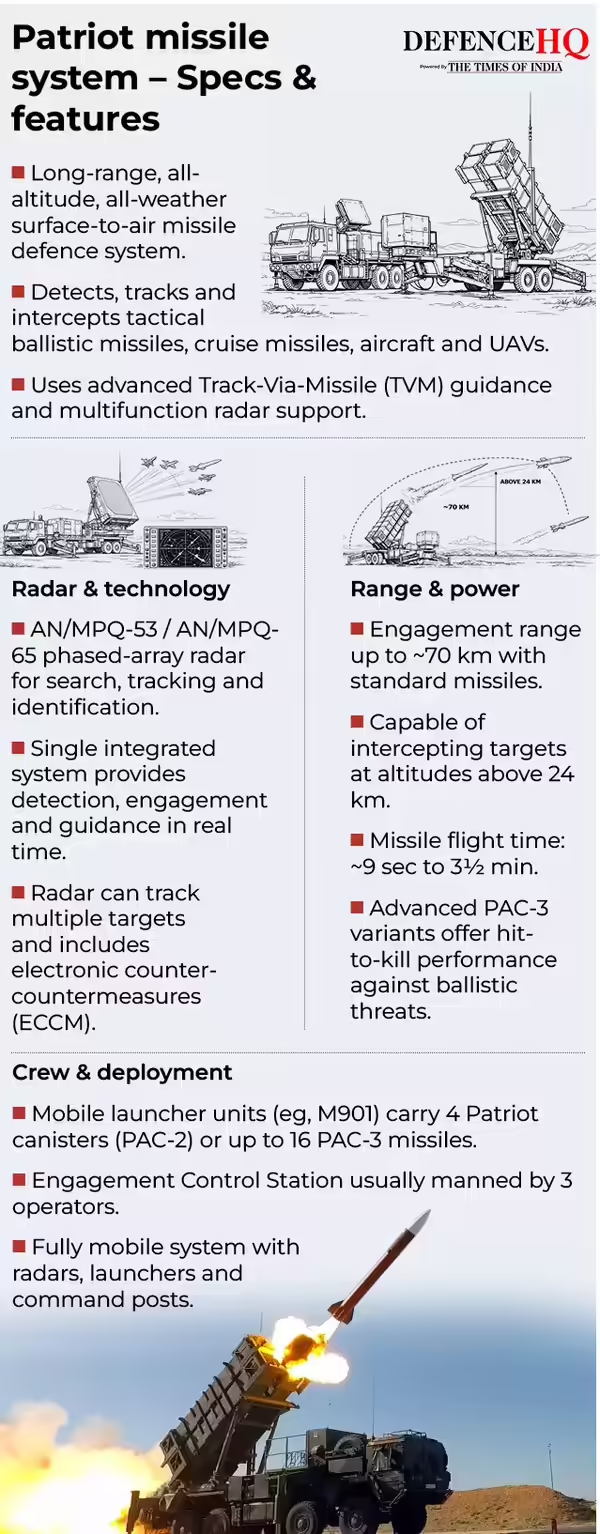
Patriot missile systems face perhaps the most complicated replenishment challenge because they are simultaneously required for US defence, Ukraine’s war against Russia and numerous allied militaries worldwide.Patriot interceptors have become one of the most heavily demanded missile-defence systems globally.CSIS estimates that rebuilding more than 1,000 Patriot interceptors used during the Iran conflict could take until mid-2029.
.
The Army has requested a massive procurement of 3,203 Patriot missiles in FY2027 to accelerate recovery efforts.Lockheed Martin currently produces around 650 Patriot PAC-3 MSE interceptors annually, with roughly half allocated to US inventories and the remainder supplied to allies.The company hopes to eventually expand annual output to nearly 2,000 interceptors.However, the global queue remains enormous.Since 2020, US allies and partners have collectively ordered nearly 1,900 Patriot PAC-3 MSE interceptors in addition to hundreds of earlier Patriot variants.Ukraine also remains heavily dependent on Patriot systems to defend against Russian missile attacks.The report said Washington now faces difficult political and military decisions over whether to prioritise domestic needs, Ukraine or allied commitments.
Standard Missiles: SM-3 and SM-6
The report also examined ship-launched Standard Missiles, particularly the SM-3 and SM-6 interceptors used by US naval forces.These systems were not used as extensively during the Iran conflict because most US naval assets operated farther away in the Arabian Sea and eastern Mediterranean rather than inside the Persian Gulf.Still, rebuilding inventories may take until early 2029 because production cycles remain lengthy.The Pentagon requested 78 SM-3 Block IBs, 136 SM-3 Block IIAs and 540 SM-6 missiles in the FY2027 budget.CSIS observed that these systems require between 36 and 39 months before deliveries begin after funding is approved by Congress.
JASSM missiles: Faster recovery despite heavy usage
Not all missile systems face equally severe shortages. The Joint Air-to-Surface Standoff Missile (JASSM), a long-range stealth cruise missile used heavily during the Iran war, may recover more quickly because the United States already possessed relatively large inventories before the conflict.The Air Force has procured nearly 500 JASSMs annually over the past decade, and current production is believed to already be operating near surge capacity.Although more than 1,100 JASSMs were reportedly used during the Iran campaign, inventories are expected to recover within months to around a year as existing orders are delivered.However, allied demand remains significant. Poland alone ordered 821 JASSMs, while the Netherlands purchased another 120.
Precision Strike Missile: New weapon, smaller inventory
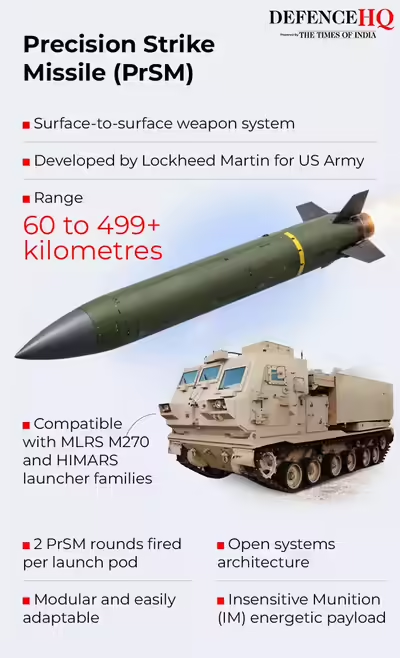
The Precision Strike Missile (PrSM), one of the US Army’s newest long-range strike systems, faces a different challenge.The missile only entered full production recently, meaning the prewar US inventory was relatively small.As a result, the total number expended during the Iran conflict was also limited.
.
CSIS estimates that rebuilding those stocks may take only several months.Unlike other systems, current PrSM production is focused almost entirely on replenishing US inventories because foreign export deliveries have not yet begun.
Why production cannot increase overnight
The report stressed that rebuilding stockpiles involves far more than simply allocating money.Modern missile systems depend on complicated supply chains involving electronics, rocket motors, specialised metals, guidance systems and highly trained workers.Even after Congress approves procurement budgets, defence companies require months to negotiate contracts before production begins.Additional delays emerge from manufacturing timelines and delivery schedules.According to CSIS, some missiles require more than three years between funding approval and actual delivery into military inventories.The Pentagon and defence contractors are now attempting to expand production capacity through new facilities and framework agreements with industry.Lockheed Martin alone says it plans to invest roughly $9 billion through 2030 to increase munitions production capacity across more than 20 US facilities.
China and Taiwan concerns intensify
The report’s broader warning centres on the Indo-Pacific. Military planners fear that depleted US inventories could weaken deterrence against China during a potential crisis over Taiwan.Chinese President Xi Jinping has repeatedly signalled that Beijing intends to ensure its military possesses the capability to seize Taiwan by force if necessary.Although analysts caution that this is not necessarily a hard invasion deadline, Washington increasingly views the Western Pacific as the most strategically important theatre for future conflict.CSIS argued that despite inventory concerns, the US military still retains major advantages, including extensive recent combat experience gained in operations involving Iran, Venezuela and the Houthis.