








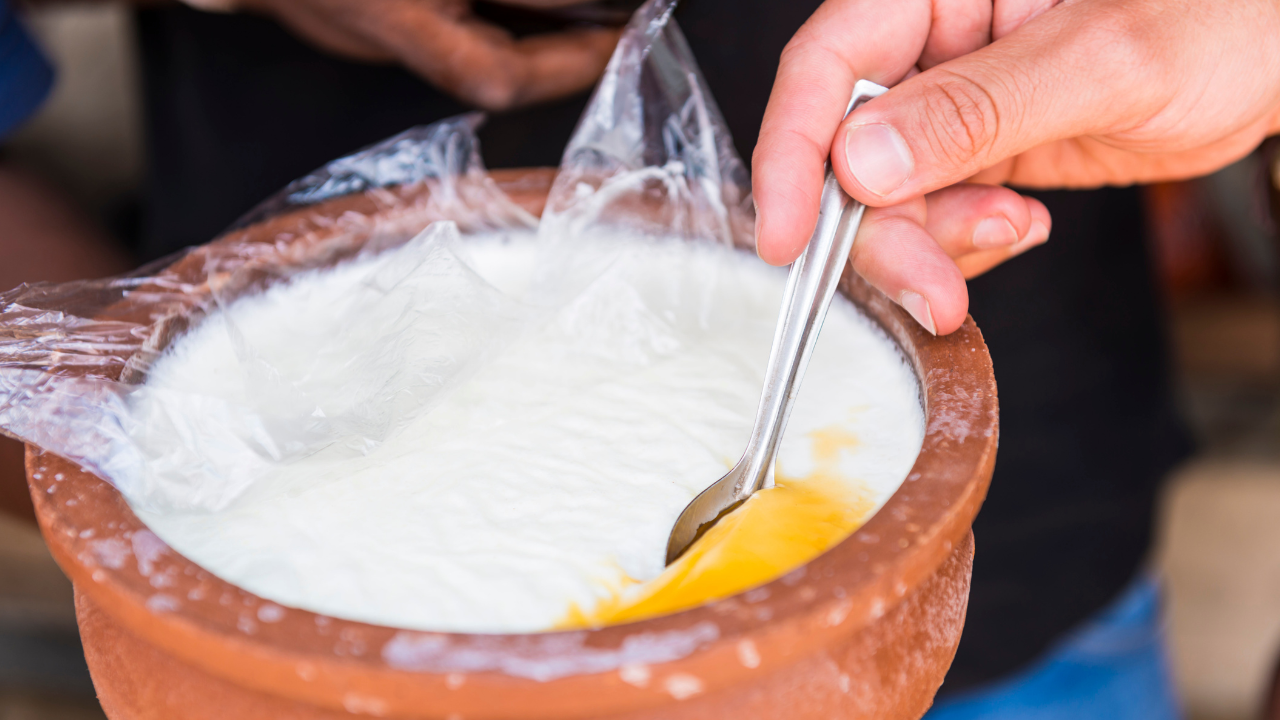
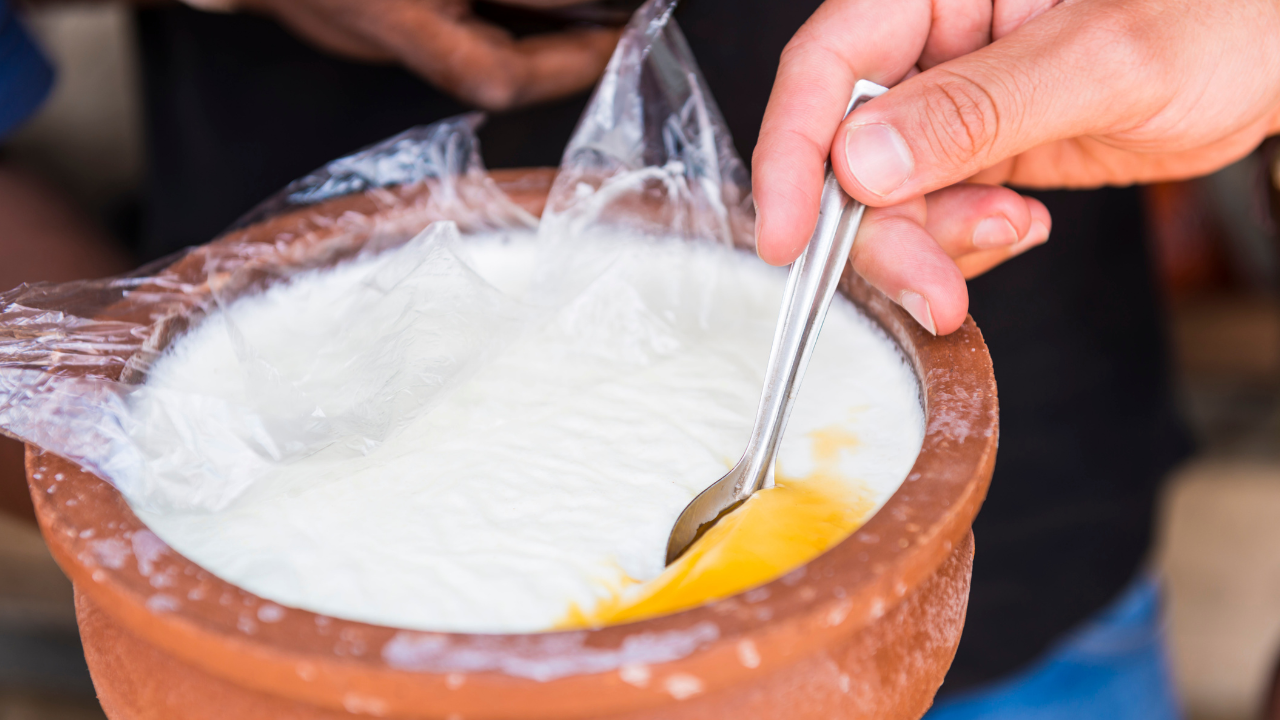
The first rule is simple: use less starter in summer. A small spoonful of fresh curd is often enough for a bowl of warm milk. Too much starter can make the curd set too quickly and become sour before it has a chance to develop a clean, mild taste.
Temperature control matters just as much. Milk should be warm, not hot, when you add the starter. If it is too hot, the bacteria can be damaged. If it is too cool, fermentation slows down too much and the curd may not set properly. Once the curd is set, move it to a cooler place or refrigerate it soon after it reaches the desired firmness.
The container also makes a difference. Use a clean, dry, non-reactive bowl or pot. Cover it lightly so dust does not enter, but do not trap excess heat for too long in a warm room. In peak summer, some households find that setting curd in a shaded corner or for a shorter period helps prevent over-fermentation.
Timing is everything. In hot weather, curd may set in a few hours, sometimes even faster. Check it earlier than you would in winter. Once it reaches the texture and sourness you like, refrigerate it right away. The fridge slows bacterial activity and helps preserve the taste.