







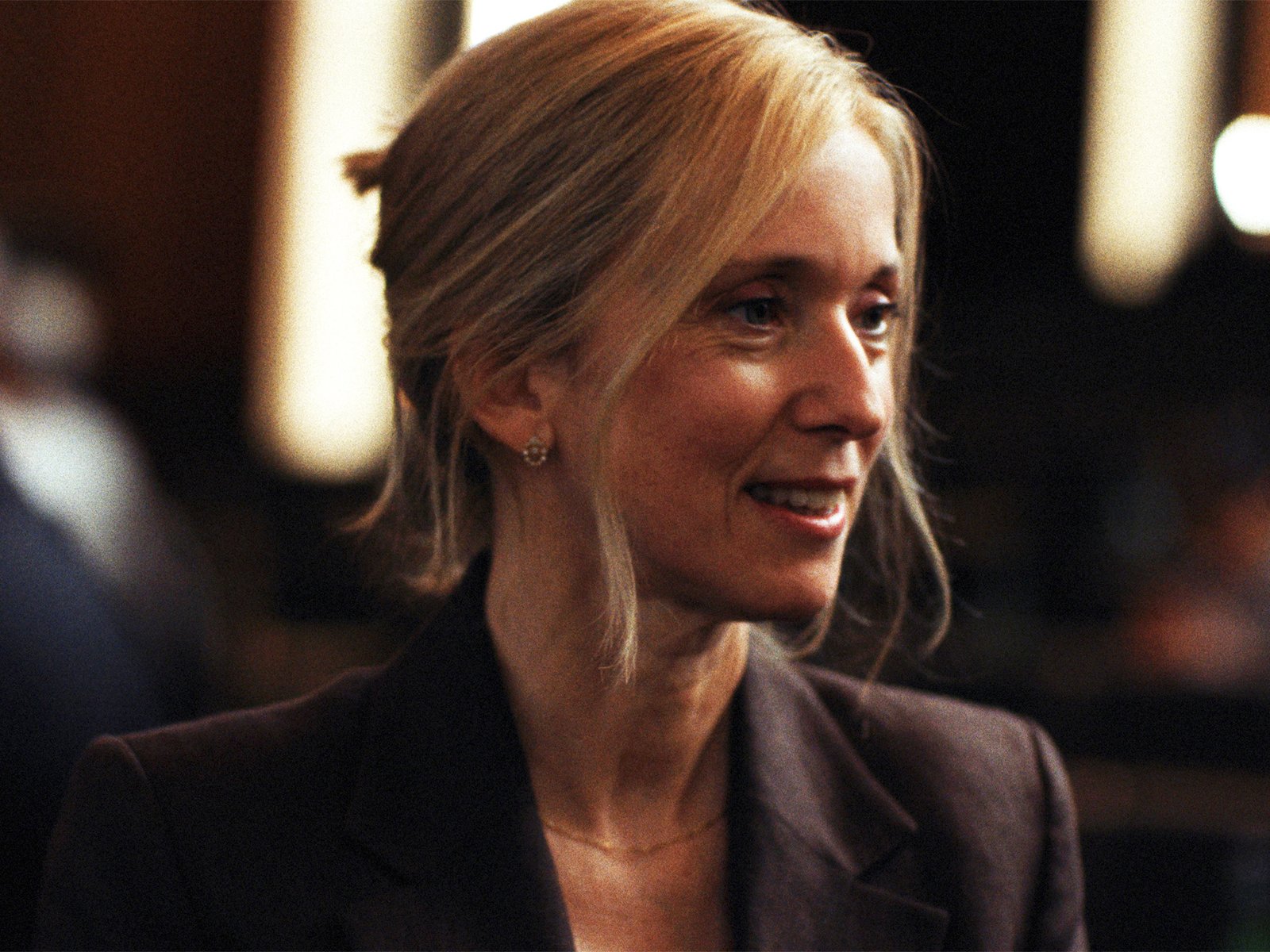
Of all the qualities of adulthood, one line from the torch-poem ‘If’ by Rudyard Kipling permeates the second feature by French actress-turned-auteur, Charline Bourgeois-Tacquet. Anchored by a committed performance from the stalwart Léa Drucker, the film’s deceptively breezy tone is held down by the gravity of her mature grace. Drucker is the embodiment of this line: If you can meet with triumph and disaster and treat those two imposters just the same…
Triumph and disaster walk hand – in-hand for 55-year-old facial reconstruction surgeon Gabrielle. Whether dealing with the relentless chaos of a public hospital or navigating her complex family set-up, someone else’s gain is frequently her loss, and vice versa. Symbiotic desire is rare and when the chance to explore this with a younger woman who is resolutely not her longtime male partner, a seam of lazy pleasure opens up in Gabrielle’s hectic existence.
Get more Little White Lies
Her life is presented through thematically linked chapters, with titles like ‘Where We Come From’ and ‘Loss of Control’ that unfold sequentially over a period of months in her hometown of Nice. The final coda ‘Sentimental Symposium’ occurs 15 months on from the previous one, and in the setting of Turin, Italy. Here, Gabrielle is star speaker at a symposium and here she re-encounters Frida (Mélanie Thierry), a female novelist who meant so much in the recent past.
Frida provides the narrative bookends for the film, arriving in chapter one ‘I Want It All’ as a novelist shadowing Gabrielle as research for her next book. She is introduced as just one more moving part in Gabrielle’s daily carousel of encounters. In the cinematic tradition of her countrymen, Éric Rohmer and Mia Hansen-Løve, Bourgeois-Tacquet drums up a fluid naturalistic drama. The minutiae of the everyday builds until a bigger picture reveals itself.
The key players in this bigger picture include Gabrielle’s longtime partner and his adult son from a previous relationship; her mother, who is succumbing to dementia; and, maybe the most significant one, her work husband of decades. Each of these characters comes with their own mini constellation of people. Gabrielle is the main character of this film, but she isn’t the main character for the other lives depicted. She talks frankly, but accepts her place in a chorus line of competing concerns.
Drucker shows how she feels before she says what she means so that we are watching not just a woman as she is, but a woman making decisions around how to perform her role in different scenarios. There is always somewhere to go next. She keeps on moving until Frida invites her to the Italian Alps. Drucker’s entire physicality changes as she finally breathes in the mountain air.
As in her charming first feature Anaïs in Love, Bourgeois-Tacquet avoids moralising on monogamy to offer an open-hearted depiction of a woman freestyling her way through tangled love lines. Perhaps the most telling creative choice, in a film that otherwise trucks in an unshowy visual language, is the golden-light-fuelled beauty of the sex scenes. Here Gabrielle dreams and does not make dreams her master.