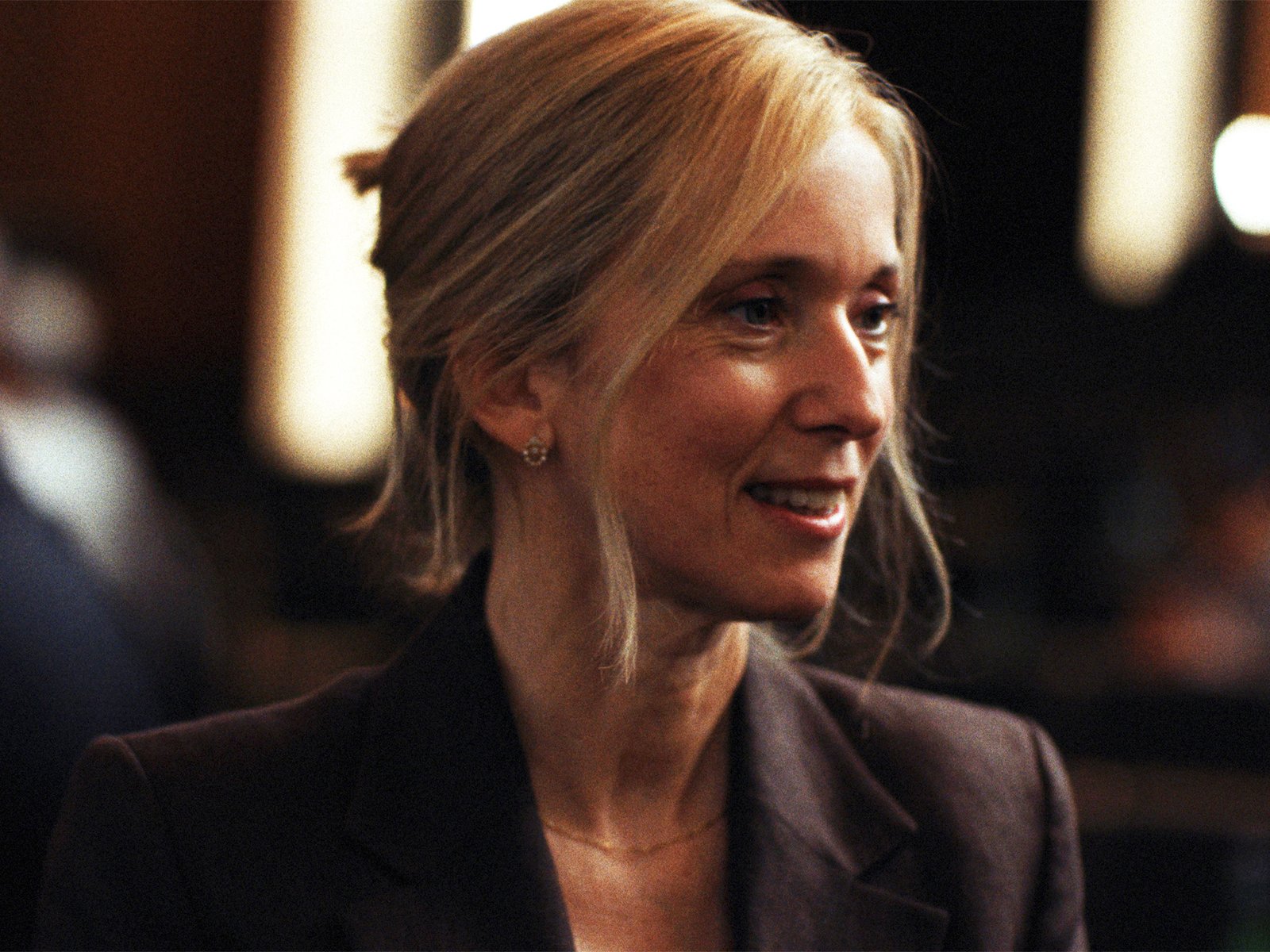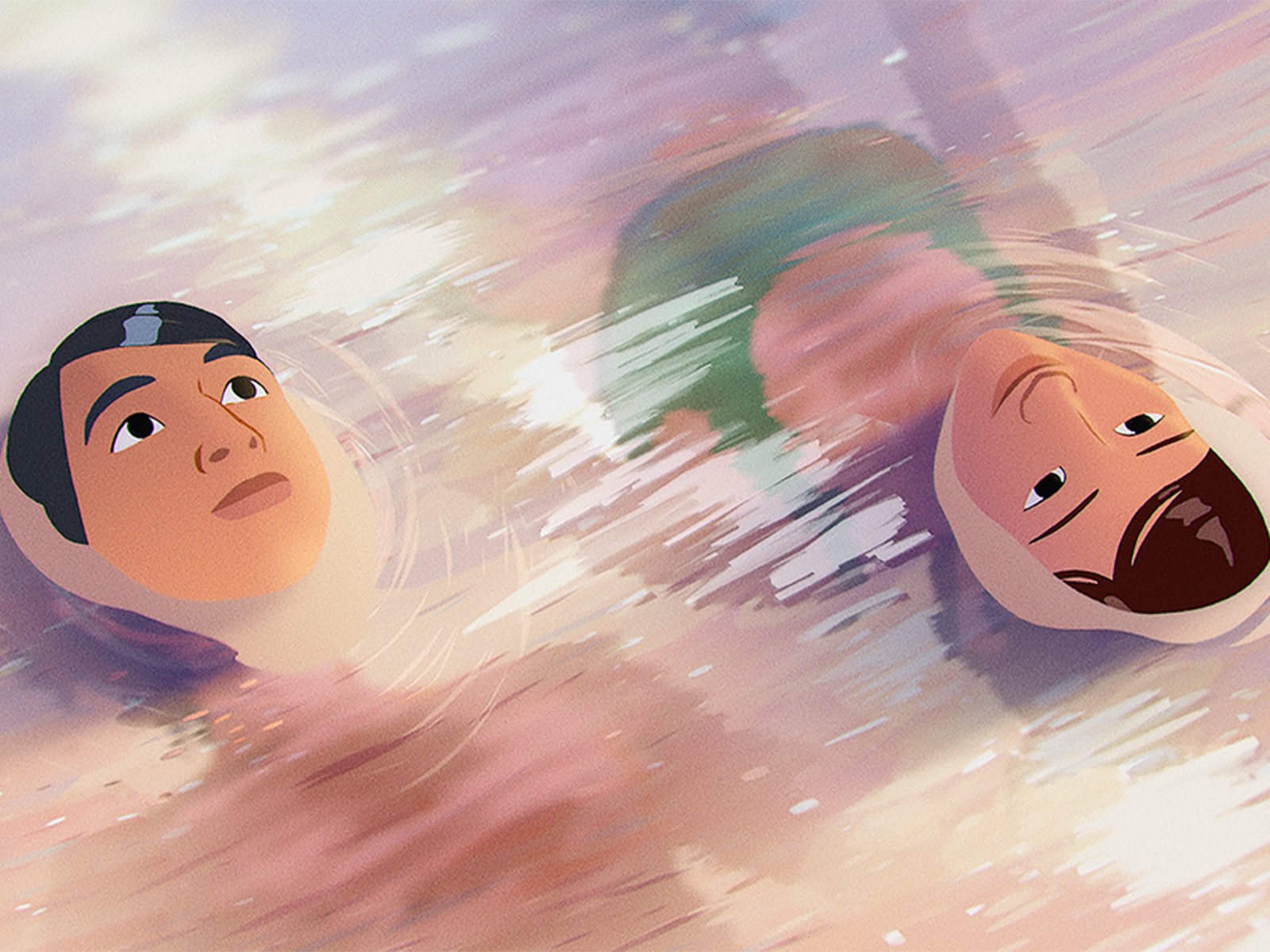








In its thirteenth year, the Chicago Critics Film Festival returned with one of its strongest line-ups to date, featuring multiple sold-out shows and an exciting line-up of in-person guests.
As Managing Editor, Brian Tallerico shared, “As headlines screech about the divide between critics and moviegoers, CCFF serves as a counterargument, bringing together people who write about movies, those who make them, and those who love them.” That dovetails with what Roger would say about movies being machines that generate empathy, acting as intermediaries between people who seem so different from each other and striving to show that they may be more connected than they think.
This question about critics versus creatives versus consumers was on my mind as I hit the red carpet on behalf of RogerEbert.com to speak with the talent in attendance. The festival was thrilled to bring Olivia Wilde, who directed and starred in “The Invite,” which screened on 35mm and served as the opening night film.

“When A Witness Recants” was the festival’s Centerpiece screening and brought director Dawn Porter to the Music Box. (Porter’s film also won the Documentary Audience Award.) The festival was thrilled to give hometown welcomes to three films that celebrated Midwestern creativity.
Directors Edd Benda and Stephen Holstad, as well as star Judy Greer, were in attendance for the Chicago premiere of “Chili Finger,” where many local cast and crew were present. The same can be said for the Chicago-shot and set film “Loafers,” which saw writer-director Zach Schnitzer and producer Nate Simon pack out the Music Box with the entire cast.
If I had a nickel for every time the closing-night film of the festival was acquired by a studio right before it screened, I’d have two nickels, which is not a lot, but it’s serendipitous that it happened twice. Following in the footsteps of last year’s “A Little Prayer,” Chicago-based director Joe Swanberg and producer and star Cory Michael Smith concluded proceedings with “The Sun Never Sets,” fresh off its acquisition from IFC.
Other guests included Anna Baumgarten, Carlos Lerma, Curtis Matzke, Nicholas J. Santore, Carter Amelia Davis Jet & Antonio L. Rodriguez, and Stephen Tronicek, who spoke about their respective short films.
Additional films of the line-up to note were Walter Thompson-Hernández’s “If I Go Will They Miss Me,” which won the Narrative Feature Audience Award, and Jet and Antonio L. Rodriguez’s “Glory/Us” won the Short Audience Award.
Below are excerpts from these creatives as they discuss Chicago memories, the role of criticism, and offer Easter eggs about filming their projects.
The following interview quotes have been edited and condensed for clarity.
Opening with “The Invite” and closing with “The Sun Never Sets” was fortuitous in more ways than one. Swanberg directed “Drinking Buddies,” in which Wilde co-starred, released in 2013. It was touching to witness the two of them reunite more than ten years later on the festival’s first day.

Speaking to RogerEbert.com, Wilde reflected on her joyful time filming the project in Chicago, sharing that she “had a great time going to all the breweries where we shot the film,” and also highlighted that she lived in Wicker Park while filming. That experience of spending a Summer filming, discussing, and doing life with dear collaborators has influenced her thoughts on criticism.
“The origin of film criticism started with filmmakers and Cahiers du Cinéma,” she shared. “Those people were such film lovers that they were making films, watching each other’s films, and writing about film. I love that aspect of film criticism: people who love films so much that they want to talk about them and they want to bring other people into the fold.” In addition to name-dropping Roger Ebert himself, Wilde also took time to mention Pauline Kael, finding people like them to be “So bold in their opinions, being their own rather than just following the crowd … in some ways it’s a dying art.”
Speaking to the project she brought to the festival, Wilde stressed that she hopes it reminds people it’s never too late for retransformation. Looking at the central couple, Joe (played by Seth Rogen) and Angela (played by her), she shared:
“The movie is about choices and helping ensure they’re authentic to you. If you make life choices out of obligation, you will end up unhappy and resentful. In my life, I’ve been really lucky to make choices based on what I dreamed of doing, and I try to remember to keep doing that because it’s easy to slide into a ‘This is who I should be, this is what I should be doing’ mentality. When you’re young, you have a bold sense of courage and ambition that you lose as you get older. This film is really saying, ‘Have you gotten to the point in your life when you realize you’re not living your own life and you’re actually allowed to change?’”

The hope for change, even if it seems distant or impossible, is a key theme that undergirds Dawn Porter’s “When A Witness Recants,” which focuses on the wrongful imprisonment of three innocent teenagers who were convicted of the murder of a 14-year old boy at a Baltimore middle school.
Festival programmer Erik Childress shared that the team programmed the project not just for its expert filmmaking but for its powerful message that though justice can be delayed, it won’t be forever denied. It’s a project deserving of being highlighted in the line-up, and for Porter, she hopes the project can put her in dialogue with her fellow creatives who have been getting at this issue from different vantage points.”
“You cannot tell too many stories about wrongful incarceration,” she shared. “I think we’re living in really difficult times, and it can be easy to think that justice is impossible. The people who have been doing civil rights work and legal reform have been doing it for decades. I hope this film is added to the film timeline. I think about the work of Steve James, Heidi Ewing, Rachel Brady, Liz Garbus, and Gita Gandbhir. The hope is that there’s always going to be a new group of young people, activists, or people who aren’t aware of what’s happening, and hopefully our films can bring those people over to be interested and active.”
She also hopes the project can serve as a source of encouragement for those experiencing injustice in the current criminal justice system. “I think we’ve got to work to make sure people aren’t convicted falsely in the first place, but short of that, it’s somebody’s life on the other end of the line, we have to show that the fight is worth it. How much time is too much to keep fighting for somebody?”
She also expressed gratitude for the work of critics, citing them as people who help shed light on all facets of a film production. “True criticism is valuable because it places your film within a canon. The film criticism that I’ve read–especially coming out of Sundance this year–was so sophisticated, and writers were doing a good job of seeing themes and understanding that there’s so much that goes into what we do.
“I appreciate how, when the critics acknowledge the score, the edit, the pacing … I mean, there are so many sleepless nights worrying about so many small things that I personally really appreciate it when someone notices that we’re not just putting up a camera and hoping for the best, that there’s so much thought that goes into what we do. Film critics help us. They’re megaphones for the audiences.”

This charitable disposition towards critics and their work was co-signed by the cast and crew of “Chili Finger,” even if the widening gap between creatives and critics was also facetiously acknowledged. Co-director and writer Stephen Helstad stated that although, as the maker of the film, he’s had to separate himself from the critique and “make the movie that we want to make and think that will resonate with the audience,” the rest is out of the filmmakers’ hands.
“Critics fill an interesting gap in giving shape to the life of a film once it’s been unleashed upon the public,” Helstad explained. “They are instrumental and can serve as a filter for wider audiences; people may not hear about our film. So in that sense, critics, I hope you really like ‘Chili Finger.”
Co-director Edd Benda echoed similar sentiments expressed by Porter, sharing, “What’s cool is when people care. What’s fun is that we made this film for audiences, and is there a greater gift than somebody who really sits there and thinks about it in the way critics do.” He jokingly caveats, “I’m saying this all in my early interaction with critics … ask me again in a decade.”
During the filming of “Chili Finger,” star Judy Greer stayed in Roger Ebert’s childhood home. “The production rented me this Airbnb. They gave me a couple of options, and I obviously had to stay in Roger’s home. There’s a plaque on the sidewalk in the front of the house that demarcates this as his home and a fair amount of paraphernalia in the house that was kind of fun and not crazy … there was good juju,” she summarized.
“Loafers,” a Chicago-set production that focuses on two best friends dealing with post-grad haze, was made “with friends, no money, and because we love movies,” according to writer-director Zach Schnitzer, and he was grateful for the ways the festival has helped put more visibility on the project and helped him think about the film in ways he hadn’t previously considered.
“This festival has put more eyes on this film, and as a result, the writing that has come out of it has put the project in conversations with films I love. That’s something I’m incredibly grateful for. The company that they have listed amongst is a group of people that I’m very grateful to be listed amongst, not side-by-side comparisons or anything, but I’m very grateful that the inspirational mentions of people like Richard Linklater or the Duplass Brothers are like, ‘We can see that you like their movies.’ And that is an honor to me because I do. I really love those movies.
“The intention of making this movie was much simpler. We made this film because we liked movies and we wanted to make one. We wanted to tell this sort of personal story, and everything that’s happened afterward has been just a gift and something unexpected.”
Sharing more about criticism, as a young filmmaker, he expressed a gratitude for the vital way in which criticism is a part of the ecosystem of art making “There’s a million purposes for art, but I think one of the purposes that art serves is to create discussions that can cause positive change in the world, and I think that criticism is a vital element of that and a very necessary piece to that sort of response and growth that art can offer society.”
He also cited gratitude for the training critics undergo and how their familiarity with film validates a project in a way other types of writing may not. “It means something very different to get a four-star review from a critic than it does to get a four-star review from an average moviegoer,” he shared.

Speaking about “The Sun Never Sets,” director Joe Swanberg (who has a cameo in “Loafers”) shared that, having grown up in the era of Siskel and Ebert and having written film criticism himself, he knew from an early age that critics were a big part of filmmaking. “Certainly, with my early movies, I was positive or negative, thrilled just to get any reviews of my movies. Even negative … just watch ‘em, baby?”
Producer and actor Cory Michael Smith jokingly co-signed, sharing, “Well, in terms of the economy, critics are essential because they help keep therapists for actors employed.” He then shared that he has appreciated growing alongside critics as both actor and critic develop their craft. “What’s nice is that when you find a few critics who you typically agree with, and you appreciate their point of view, and you can sort of follow them through their career in a way that they follow you. So there’s some respect. Occasionally, I will read a review where I’m like, ‘Yeah, they nailed all the weaknesses of the movie. That’s exactly what I think is wrong with it, too. I guess we didn’t get away with it.’”
Smith also divulged how working on “The Sun Never Sets” came at a pivotal point in his life in that it was sandwiched between two other projects—“Mountainhead” and Jeremy Saulnier’s upcoming horror action thriller film “October”—that could not be more different, but that ultimately complemented his experience.
“Every project, for better or worse, kind of informs the next one. I believe there’s no character bleed, but sometimes there is. It was really nice to go from playing the richest man in the world in “Mountainhead” to playing a broke dope with a bad credit score in “The Sun Never Sets.” That really set me up for “October.”
“We all collaborated to plan out your year,” Swanberg joked in response.
“There’s actually kind of more of a through line,” Smith quipped back. “This past year, I was spoiled by real gentlemen … incisive, thoughtful, big-hearted gentlemen.”
“The Sun Never Sets” is a homecoming in more ways than one, in that it reunites Swanberg with DP Eon Mora, who was an assistant to the DP for “Drinking Buddies.” “It’s been seven or eight years since then. So I think both of us have gone and done a lot of other things, and so it’s nice to return to it and to feel like the flow was still there,” Mora shared.
He spoke about filming in Alaska, where the film is set, and said he hopes to return there. “What was interesting was the time of year that we’re shooting in; it was late spring. I think our last day of shooting was the Solstice, so the longest day of the year. It’s these long days where we had to think, ‘How is this movie going to exist where the days never end, and the sun never goes away?’ We had to consider that as the film’s context and think through it from a lighting perspective. It was fun to think through how living in a place like that would affect the characters and their dispositions.”
Speaking about his cameo in “Loafers” and what makes him excited about supporting up-and-coming filmmakers, especially in Chicago, Swanberg shared, “I live in this city. I love this city. I believe in it having a strong and vibrant film community. I love acting, so I’m really always happy to show up in that role and support,” he jokes.
“There’s nothing better than a group of people just out of film school who have all that enthusiasm, youthful energy. I’m happy to place myself around happy, enthusiastic young people, even if I can just vampirically suck a little bit of their energy.”
The 2026 Chicago Critics Film Festival was held May 1–7, at the Music Box Theatre in Chicago. All photography credited to Kate Scott.